
Updated October 2026 · 10 min read
Yes. In California, your employer can be legally responsible for sexual harassment by customers, clients, patients, vendors and other non-employees if it knew or should have known about the harassment and failed to take immediate and appropriate corrective action. The rule is written directly into the Fair Employment and Housing Act (FEHA), at Government Code section 12940(j)(1). “The customer is always right” is not a legal defense.
This matters because harassment by outsiders is common in jobs where workers depend on the public: servers who rely on tips, hotel housekeepers who work alone in guest rooms, nurses and caregivers, retail clerks, salespeople with big accounts and drivers who go into people’s homes. Many are told to “just ignore it.” California law says otherwise.
This guide explains when harassment by customers in California becomes your employer’s legal problem, who is protected, what your employer must do, and how to report it and protect your claim.
- Your employer can be liable for harassment by customers, clients, patients and vendors if it knew or should have known and failed to take immediate and appropriate corrective action (Gov. Code 12940(j)(1)).
- FEHA protects employees, applicants, unpaid interns, volunteers and certain independent contractors, and its harassment rules apply to employers with one or more workers.
- A single serious incident can be enough, and the standard does not change by type of workplace, so “it comes with the job” is not a defense (Gov. Code 12923).
- Complaining about a customer is protected activity; cutting your shifts, tips or accounts because you reported can be illegal retaliation (Gov. Code 12940(h)).
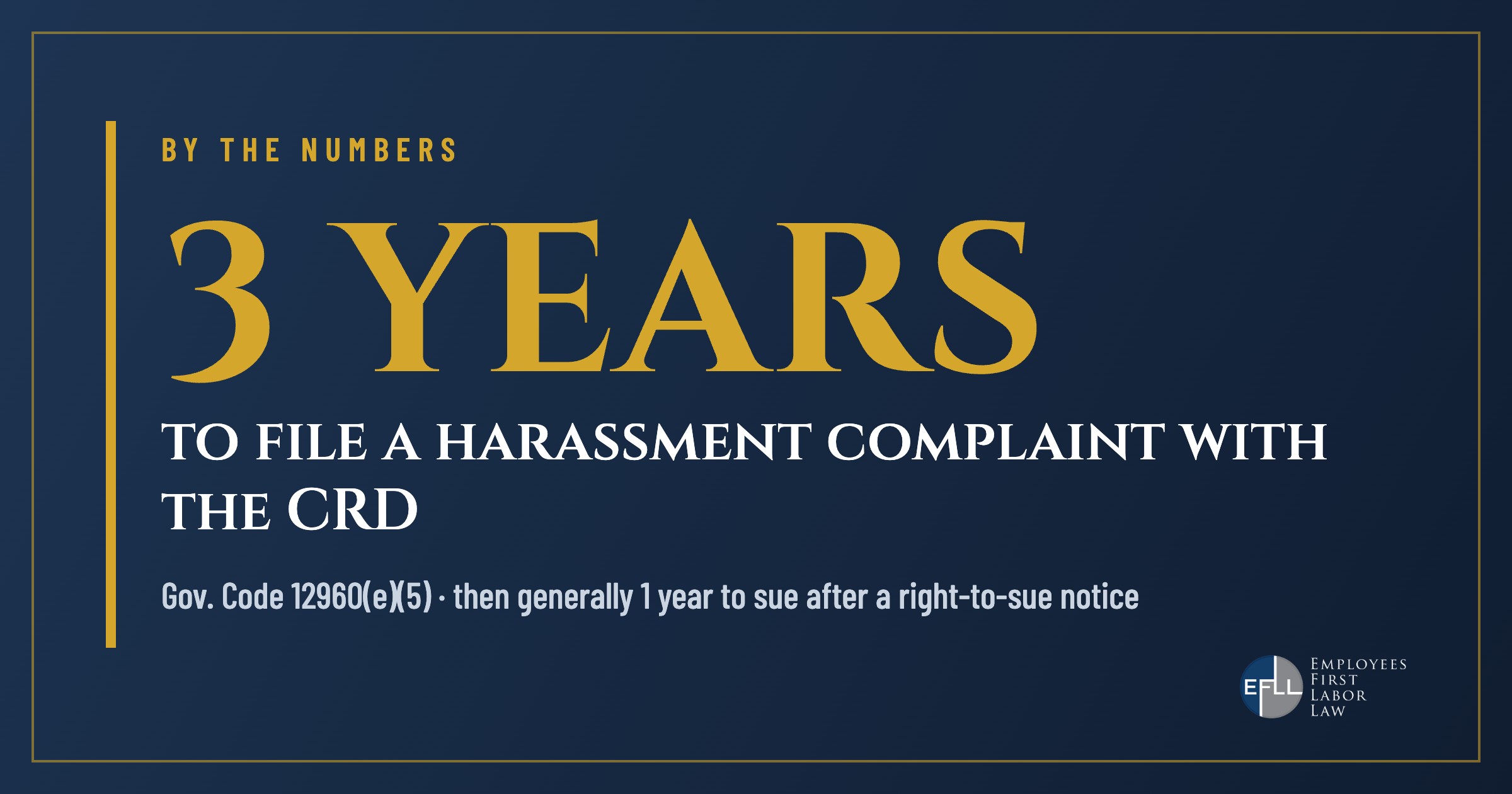
- You generally have 3 years to file with the Civil Rights Department, then 1 year after a right-to-sue notice to file in court.
Can my employer be liable for harassment by a customer in California?
Yes. Under Government Code section 12940(j)(1), an employer “may also be responsible for the acts of nonemployees” who harass employees, applicants, unpaid interns or volunteers, or contractors in the workplace. Liability attaches when two things are true:
- Knowledge: the employer, or its agents or supervisors, knew or should have known about the conduct; and
- Failure to act: the employer failed to take immediate and appropriate corrective action.
This is the same standard California uses when the harasser is a coworker. It is different from harassment by a supervisor, where the employer’s responsibility is much stricter. Our guide to who is liable for sexual harassment in California compares all three situations.
The statute adds one more factor for outsiders: in cases involving non-employees, courts consider “the extent of the employer’s control and any other legal responsibility” the employer has over those people. A restaurant can refuse service; a hospital may have less control over a confused patient, but it still has to respond reasonably.
The same subdivision also says an employer “shall take all reasonable steps to prevent harassment from occurring,” and that you do not have to lose a tangible job benefit, such as pay or a promotion, to prove harassment.
Who counts as a non-employee harasser?
A non-employee is anyone who harasses you at work but isn’t on your employer’s payroll. Common examples include:
- Restaurant and bar customers, hotel guests and retail shoppers
- Clients and accounts that a salesperson, consultant or account manager is assigned to
- Patients, residents and their family members in hospitals, clinics, nursing homes and home care
- Vendors, suppliers, delivery drivers and maintenance contractors who come onto the worksite
- Property owners or residents where you clean, repair, install or deliver
If a manager watched it happen, a coworker reported it, or the same customer had already bothered other staff, a court may find the employer “should have known” even before you made a formal complaint.
Who is protected under FEHA
FEHA’s harassment ban is broader than most employment laws. Under Government Code section 12940(j)(1), it protects:
- Employees, including part-time, seasonal and temporary workers
- Applicants, for example a job candidate harassed during an interview or a working trial shift
- Unpaid interns and volunteers
- A person providing services pursuant to a contract, which section 12940(j)(5) limits to independent contractors who control how the work is done, run an independently established business and meet the other statutory criteria
The harassment rules also reach small businesses. For purposes of harassment only, section 12940(j)(4)(A) defines “employer” as anyone regularly employing one or more persons, or regularly receiving services from one or more contractors, with limited exceptions such as certain nonprofit religious organizations. A family restaurant with a single server is covered.
If you drive, deliver or provide home services through a company and are labeled an “independent contractor,” don’t assume the law leaves you out. Your status may be disputed, and you may be covered either as an employee or as a contractor under section 12940(j)(5). See our guide to independent contractor misclassification.
If you reported it and nothing changed, or you were punished for speaking up, talk to us. Your consultation is free and confidential.
What counts as sexual harassment by a customer?
Sexual harassment generally includes unwelcome sexual advances, requests for sexual favors and other verbal, visual or physical conduct of a sexual nature. Under section 12940(j)(4)(C), harassment “because of sex” also includes gender harassment and harassment based on pregnancy, childbirth or related conditions, and it “need not be motivated by sexual desire.” For the basics, see understanding sexual harassment.
In customer cases, conduct often looks like this:
- Repeated comments about your body or clothing, or sexual “jokes” at the counter or table
- Touching, grabbing, brushing against you or blocking your path
- Requests for dates or sex, sometimes tied to a tip, a sale or a renewed contract
- Exposure, or a guest answering the door undressed after being told housekeeping is coming
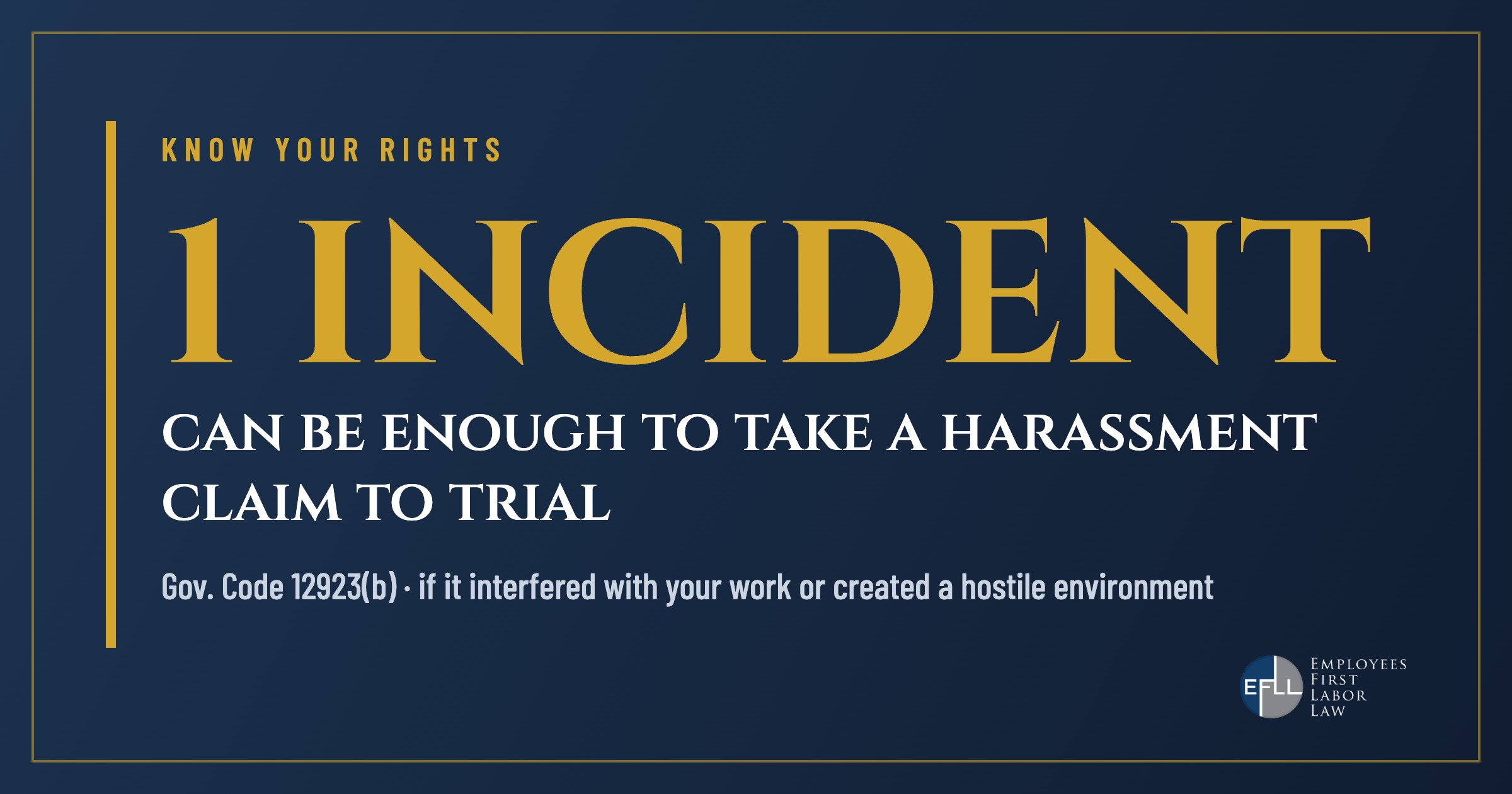
Government Code section 12923, which took effect in 2019, sets out the Legislature’s standards for harassment cases. A single incident can be enough to create a triable issue of a hostile work environment if it unreasonably interfered with your work or created an intimidating, hostile or offensive environment (section 12923(b)). And section 12923(d) states that the legal standard for sexual harassment “should not vary by type of workplace.” It doesn’t matter that bars, kitchens or sales floors may have tolerated this kind of talk in the past.
💡 Example: Maria is a server at a busy restaurant (a hypothetical). A regular customer comments on her body every visit and twice puts his hand on her waist. She tells her manager in a text message. The manager replies that the customer “tips well” and keeps seating him in her section. The harassment continues. Because the manager knew and the restaurant took no corrective action, the restaurant may be liable under Government Code 12940(j)(1). If the manager later cuts Maria’s shifts because she complained, that may be a separate retaliation claim under section 12940(h).
Restaurants, retail, hotels, healthcare and other high-risk jobs
The legal rule is the same in every industry, but the facts differ. The table shows examples of steps an employer can take; it is not a checklist from the statute. What is “appropriate” depends on the employer’s control and the seriousness of the conduct.
| Setting | Common situation | Steps an employer can take |
|---|---|---|
| Restaurants and bars | Customers touch or proposition servers, bartenders or hosts; managers tolerate “regulars” | Warn or remove the customer, refuse future service, have a manager take over the table, reseat sections without cutting the worker’s tips or shifts |
| Retail and grocery | Shoppers follow, film or make sexual comments to clerks | Security or manager response, banning the shopper, not leaving workers alone at closing |
| Hotels and hospitality | Guests expose themselves to or corner housekeepers and room service staff | Team cleaning, a way to call for help, removing or banning the guest, reporting to police when appropriate |
| Healthcare and home care | Patients, residents or family members grope or make sexual comments to nurses, aides and caregivers | Care-plan changes, chaperones or paired staffing, reassignment with no loss of pay, limiting visitor access |
| Sales and client services | A key client demands dates or makes sexual remarks to an account rep | Telling the client to stop, moving the account to a manager without penalizing the worker’s commissions, ending the relationship |
| Delivery, drivers and field work | Customers harass workers inside homes or vehicles | Blocking the customer, allowing workers to leave unsafe jobs without penalty, investigating reports promptly |
One principle runs through every row: the fix should stop the harasser, not punish the person who reported it. Moving you to a worse shift, a lower-tip section or a smaller territory can make things worse and may itself be unlawful.
What your employer must do to prevent and correct it
Beyond the corrective-action rule, Government Code section 12940(k) makes it unlawful for an employer to “fail to take all reasonable steps necessary to prevent discrimination and harassment from occurring.”
The Civil Rights Department’s regulations spell out part of that duty. Under California Code of Regulations, title 2, section 11023, employers must have a written harassment, discrimination and retaliation prevention policy that, among other things:
- States that the law prohibits coworkers and third parties, as well as supervisors and managers, with whom the employee comes into contact from engaging in prohibited conduct
- Creates a complaint process with a timely response and impartial investigations, and lets employees complain to someone other than their immediate supervisor
- Promises that appropriate remedial measures will be taken if misconduct is found
- Makes clear that employees won’t be retaliated against for complaining or participating in an investigation
When harassment turns into threats or physical contact, other California laws may also apply. Labor Code section 6401.9 requires most employers to maintain a workplace violence prevention plan, and it specifically covers “Type 2” violence by customers, clients, patients, students, inmates or visitors. (Many health care facilities are instead covered by a separate Cal/OSHA standard.) Under Code of Civil Procedure section 527.8, an employer, or in some cases a union representative, can seek a workplace restraining order on behalf of an employee who has suffered harassment, unlawful violence or a credible threat of violence at work.
Retaliation after you report a customer
Workers who complain about a customer often worry about losing hours, tips or the account. Government Code section 12940(h) makes it unlawful to discharge, expel or otherwise discriminate against anyone because they opposed harassment, filed a complaint, testified or assisted in a proceeding under FEHA. Reporting harassment by a customer to your manager or HR is protected activity.
Retaliation can be subtle: fewer shifts, a lower-tip section, a lost account, a sudden bad review, or discipline for something that was overlooked before. If it happens, write down the dates and keep copies. Learn more about retaliation claims in California.
Your FEHA claim in a customer case is usually against your employer. Depending on the facts, a customer who touches or threatens you may also face separate civil claims or criminal charges.
What to do if a customer or client harasses you
You don’t have to handle this alone or wait for it to get worse. These steps protect both your safety and your claim:
- Get to safety first. If you are touched, cornered or threatened, leave the area and get a manager, security or police.
- Report it to your employer, in writing if you can. A short text or email to your manager or HR with the date, the customer and what happened puts the employer on notice. Follow your company’s complaint process, and use another channel if your direct supervisor is the problem. Our step-by-step guide to reporting sexual harassment walks through it.
- Ask for a specific fix. For example, ask that the customer be banned, that a manager serve the account, or that you not be sent to that location alone.
- Keep a private log. Write down each incident, who saw it and what your employer did. Save messages, receipts, schedules and tip records on a personal device or account you control.
- Watch for retaliation. Note any change in hours, sections, accounts or treatment after you complained.
- Take care of your health. If the harassment affects your sleep, mood or work, see a doctor or counselor.
- Talk to an employment lawyer early. A lawyer can explain your options and help you meet the filing deadline with the Civil Rights Department.
Deadlines and what you can recover
Before suing under FEHA, you generally must file a complaint with the California Civil Rights Department (CRD) and obtain a right-to-sue notice. Under Government Code section 12960(e)(5), a FEHA complaint must be filed within three years from the date the unlawful practice occurred. You can request an immediate right-to-sue notice, and once the CRD issues it, you generally have one year from the date of that notice to file a lawsuit (Government Code section 12965(c)). See our guide to the sexual harassment statute of limitations in California.
If your claim succeeds, FEHA remedies can include lost wages, compensation for emotional distress and, in appropriate cases, punitive damages. Under Government Code section 12965(c)(6), a court may, in its discretion, award the prevailing party reasonable attorney’s fees and costs, including expert witness fees. An employer that wins generally can recover fees and costs only if the court finds the case was frivolous, unreasonable or groundless when brought, or that the employee kept litigating after it clearly became so. Read more about employment law damages in California.
Frequently asked questions
Is my employer responsible for harassment by customers in California?
It can be, if it knew or should have known about the harassment and failed to take immediate and appropriate corrective action (Government Code section 12940(j)(1)). Courts also consider how much control the employer had over the harasser.
My manager says harassment from customers is “part of the job.” Is that true?
No. Government Code section 12923(d) says the legal standard for sexual harassment should not vary by type of workplace, and the employer must take all reasonable steps to prevent harassment (section 12940(k)). The fact that harassment is common in an industry does not make it legal.
Does one incident count, or does it have to happen many times?
A single incident can be enough to create a triable issue of a hostile work environment if it unreasonably interfered with your work or created an intimidating, hostile or offensive environment (Government Code section 12923(b)).
I’m an unpaid intern or volunteer. Am I protected?
Yes. FEHA’s harassment provisions expressly cover unpaid interns and volunteers, as well as applicants and certain independent contractors (Government Code section 12940(j)(1) and (j)(5)).
Can I be fired for complaining about a customer?
Not legally because of the complaint. Government Code section 12940(h) prohibits retaliation against anyone who opposes harassment or files a complaint. If your hours, tips or job change after you report, talk to an attorney promptly.
Related guides
 Workers only. Never employers.
At Employees First Labor Law, we represent California workers only, never employers. Our team has recovered more than $200 million for our clients, and we prepare every case as if it is going to trial. We have offices in Pasadena, Irvine, Long Beach, Pomona, Riverside, Bakersfield and Fresno, and we serve workers throughout California. Meet our team.





We help California servers, nurses, caregivers, retail and hotel workers, salespeople and drivers hold employers accountable when they ignore harassment by customers, clients and patients. We can explain your options, protect your deadlines and pursue lost wages, emotional distress damages and fees.
- ✅ Free, confidential consultation
- ✅ We represent workers only, never employers
- ✅ Se habla español: Empleados Primero
This article provides general information about California law and is not legal advice for any specific situation. Reading it does not create an attorney-client relationship. Past results do not guarantee a similar outcome.