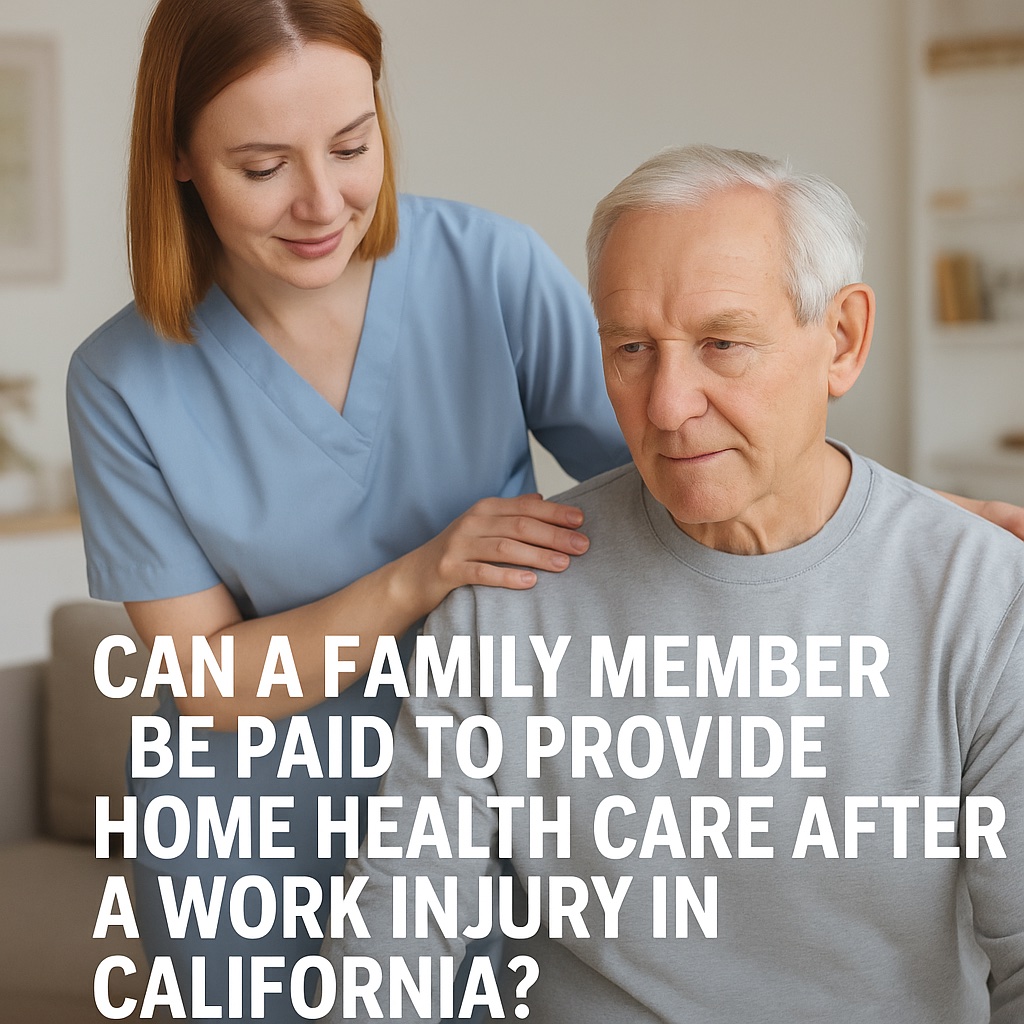
When a serious workplace injury leaves someone unable to care for themselves, it’s often a family member who steps in — helping with meals, bathing, mobility, medication, and more. But did you know that California workers’ compensation law allows family caregivers to be paid for that care in certain cases?
This type of support is known as attendant care or in-home health assistance, and when properly documented, it can be reimbursed just like any other medical treatment under Labor Code § 4600.
At Employees First Labor Law, we’ve helped injured workers and their families secure these benefits — often after insurance adjusters wrongly denied or ignored them.
What Is Family-Provided Attendant Care?
Attendant care refers to non-medical services provided to help an injured worker function in daily life. These services may include:
- Bathing, grooming, and dressing assistance
- Help using the restroom or managing hygiene
- Mobility/transfers between bed and chair
- Meal preparation and feeding
- Monitoring and supervision (especially with head injuries or cognitive issues)
- Medication reminders and wound support
- Help attending physical therapy or follow-up appointments
These are tasks normally performed by a home health aide or certified caregiver. If a family member is providing these services, they may be entitled to payment from the workers’ compensation insurer — but it’s not automatic.
When Can a Family Member Get Paid?
There must be a prescription for care
The injured worker’s primary treating physician must recommend in-home care in writing. Ideally, the prescription should include:
- Types of tasks needed (e.g., bathing, mobility)
- Number of hours per day
- Duration (e.g., “daily for 4 weeks” or “until further notice”)
This shows the care is medically necessary, not just helpful.
The care must substitute for paid professional services
If a nurse or home health aide would otherwise be hired, the family caregiver is performing a reimbursable function under the law.
The care must be properly documented
The family member should keep daily logs showing:
- The date and time care was provided
- The tasks performed
- The total hours worked each day
This documentation will support a claim for retroactive or ongoing payment.
How Much Can a Family Caregiver Be Paid?
Family members are typically paid at a reasonable hourly rate, based on what an equivalent caregiver in your area would earn. The rate depends on:
- The nature of the care (basic vs. skilled)
- Local market standards (often $18–30/hour in LA)
- Whether the caregiver is licensed (not required, but can increase rate)
The payment isn’t meant to be profit — it’s compensation for time, labor, and burden that would otherwise be paid to an outside professional.
Why Insurance Companies Deny These Claims
Unfortunately, insurance carriers often reject or underpay these benefits. Common tactics include:
- “Gratuitous care” argument: Claiming the family member never expected to be paid
- “Not medically necessary” defense: Claiming the injured worker doesn’t require in-home support
- Demanding licensing: Insisting that care must come from a licensed professional (not true under CA law)
- No prescription: Denying payment if there’s no written doctor’s order — even if care was clearly needed
Can You Get Paid for Past Care?
Yes — but it’s more complicated.
You may be able to claim retroactive payment for unpaid care if:
- You can show it was prescribed or obviously necessary
- You have some record or log of the hours worked
- You or your attorney can prove that the care prevented the need for skilled facility admission
The key is documentation and legal strategy — and that’s where we come in.
How EFLL Can Help
At Employees First Labor Law, we know how to fight for injured workers and their families. If you or a loved one is:
- Already providing unpaid home care
- Facing an unfair denial from the insurance company
- Unsure how to get a prescription for attendant care
- Looking to maximize the settlement value of attendant care hours
—we can help.
Our team will work with your treating doctor, gather the right medical documentation, prepare time logs, and push the insurer to authorize and pay for your care — past and future.
Helping a Loved One Recover from a Work Injury?
If you’re a family caregiver, your time and labor matter — and the law says you deserve to be compensated. Don’t let the insurance company take advantage of your generosity.
Call EFLL today. We’ll fight to make sure your care is paid for — and that the workers’ comp system works for your family.

Contact EFLL for a free consultation today.
We’ll fight to get your treatment approved and ensure your recovery isn’t left in the hands of an adjuster.