
Updated October 2026 · 10 min read
In most cases, no: California law protects you from a defamation lawsuit when you report sexual harassment honestly and without malice, and a harasser who sues anyway can end up paying your attorney’s fees and more. Civil Code 47.1 makes a good-faith report about sexual harassment, sexual assault or discrimination you experienced a privileged communication, and Civil Code 47 adds separate protection for complaints to your employer, to government agencies and in court.
Many workers stay silent because a supervisor or coworker has warned them, directly or through a lawyer’s letter, that speaking up will get them sued. That threat is often a pressure tactic. If you report facts you have a reasonable basis to believe, through the right channels, the law is on your side.
This guide explains what defamation actually requires, how the California privileges work, where the protection ends, how an anti-SLAPP motion can end a retaliatory lawsuit early, and how to report in a way that keeps you protected.
- An honest report of sexual harassment you experienced is privileged under Civil Code 47.1 when made without malice by someone with a reasonable basis to complain, even if no formal complaint was filed.
- A harasser who sues over a 47.1-privileged statement and loses owes your attorney’s fees and costs plus treble damages for the harm the lawsuit caused.
- Complaints to your employer are protected by Civil Code 47(c), and statements in court and other official proceedings by Civil Code 47(b).
- California’s anti-SLAPP law (Code of Civil Procedure 425.16) lets you move to strike a retaliatory lawsuit early, generally within 60 days of service.
- The protection does not cover statements you know are false or made with malice, so stick to facts and report through official channels.
What a defamation claim requires in California
Defamation is a false statement that damages someone’s reputation. California divides it into two kinds (Civil Code 44): libel, which is written or otherwise fixed, like an email, text, letter or post (Civil Code 45), and slander, which is spoken (Civil Code 46).
Both statutes define defamation as a “false and unprivileged” publication. Those two words are the heart of your protection:
- False. A true statement of fact is not defamation. If your supervisor really did send you sexual messages, saying so is not defamatory.
- Unprivileged. Even a statement that turns out to be mistaken is not defamation if the law makes it privileged. The privileges discussed below cover most of the ways workers report harassment.
The statement must also reach someone other than the person it is about and tend to injure that person, for example in their occupation. An accusation of harassment can meet that test, which is why the privileges matter. A defamation suit generally must be filed within one year (Code of Civil Procedure 340(c)).
Can you be sued for defamation for reporting sexual harassment? Civil Code 47.1
California added Civil Code 47.1, effective January 1, 2024 (AB 933), to stop defamation suits from being used to silence people who speak up. It says a communication made by an individual, without malice, regarding an incident of sexual assault, harassment or discrimination is privileged under Civil Code 47.
Three details define who is covered:
- A reasonable basis. The protection applies to someone who has, or at any time had, a reasonable basis to file a complaint of sexual assault, harassment or discrimination, whether or not a complaint was ever filed (Civil Code 47.1(c)). You do not have to file with HR or a government agency first.
- Factual information about your own experience. A protected “communication” is factual information related to an incident experienced by the person making it (Civil Code 47.1(d)). It includes workplace harassment or discrimination, an employer’s failure to prevent it, and retaliation for reporting or opposing it, as described in Government Code 12940.
- Without malice. The statute does not protect statements made with malice. In general terms, that means statements you know are false, statements made with reckless disregard for whether they are true, or statements made out of ill will rather than to report what happened.
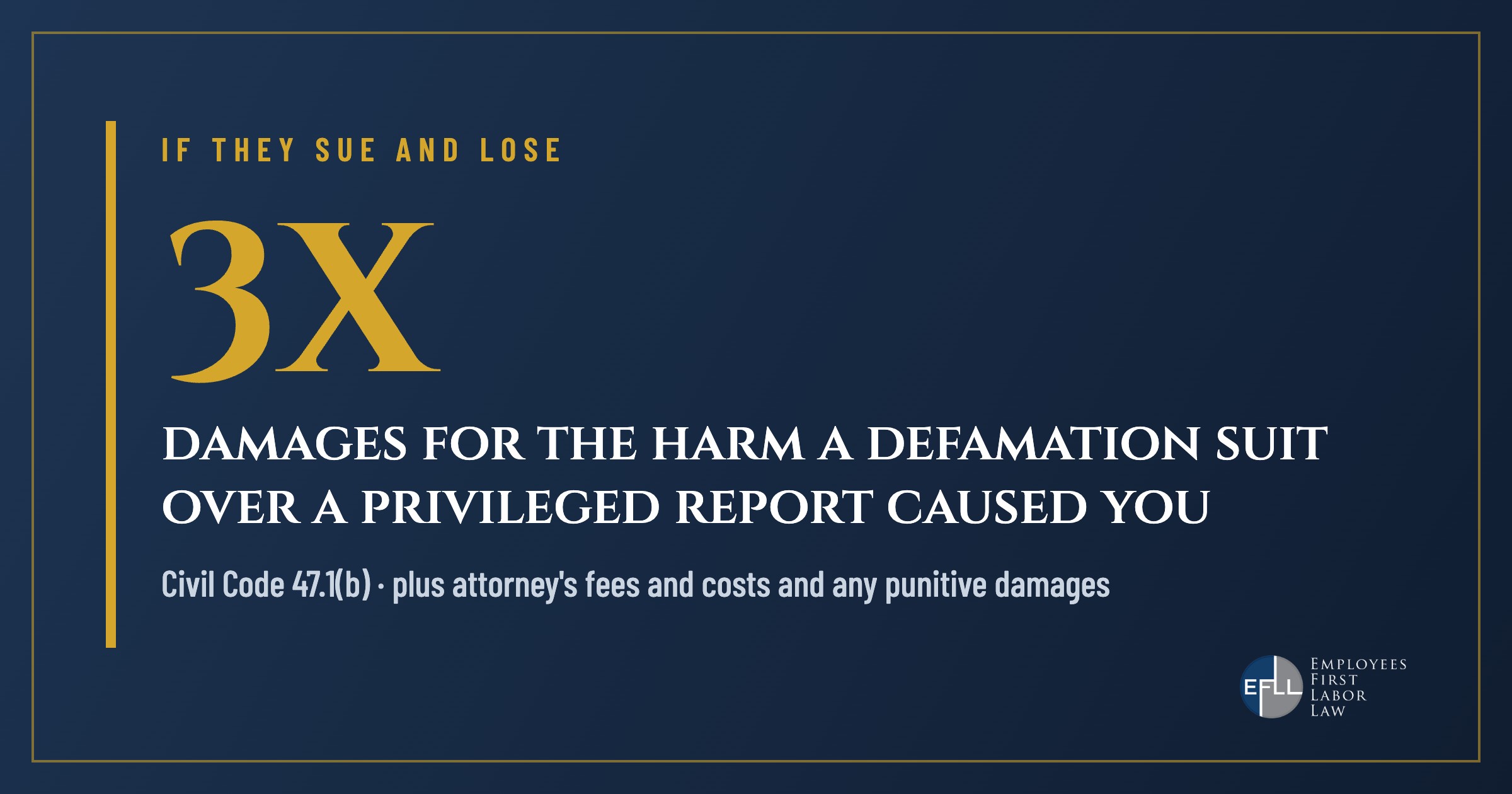
The law also has teeth. A defendant who wins a defamation suit brought over a communication privileged under Section 47.1 is entitled to reasonable attorney’s fees and costs, plus treble damages for any harm caused by the defamation action, in addition to punitive damages available under Civil Code 3294 and any other relief the law allows (Civil Code 47.1(b)).
Other privileges: complaints to HR, the CRD and the courts
Section 47.1 sits on top of older protections in Civil Code 47 that cover the most common ways workers report harassment.
Complaints to your employer: Civil Code 47(c)
The “common interest” privilege expressly includes a complaint of sexual harassment by an employee, without malice, to an employer based upon credible evidence, and communications between the employer and interested persons, without malice, about that complaint. Reporting to HR, a manager or a company hotline, and answering questions in an HR investigation, fit squarely here. This privilege can also protect a coworker who reports harassment they witnessed, which matters because Section 47.1 is limited to incidents the speaker personally experienced.
Government agencies and court cases: Civil Code 47(b)
Statements made in any judicial proceeding, legislative proceeding or “other official proceeding authorized by law” are privileged under Civil Code 47(b). Unlike 47(c) and 47.1, the general rule in 47(b) does not depend on whether the statement was made without malice. What you say in a lawsuit you file is covered, and complaints to government agencies, such as a complaint with the California Civil Rights Department (CRD), can fall within it as well. Narrow exceptions exist, such as knowingly false reports of a crime to law enforcement (Civil Code 47(b)(5)).
A cease-and-desist letter or defamation threat after a harassment complaint is often a pressure tactic, and it can be retaliation. Talk to us in a free, confidential consultation before you respond or retract anything.
Where you report and how you are protected
Exact coverage depends on the facts, so treat this table as a starting point.
| Where or how you speak up | Main protection | Key condition |
|---|---|---|
| Complaint to HR, a manager or a company hotline | Civil Code 47(c); Civil Code 47.1 | Without malice; based on credible evidence (47(c)) or a reasonable basis (47.1) |
| Statements in an HR investigation interview | Civil Code 47(c) | Without malice |
| Complaint to the CRD or another government agency | Civil Code 47(b); Civil Code 47.1 | Official proceeding authorized by law |
| Lawsuit or court testimony | Civil Code 47(b) | Made in a judicial proceeding |
| Telling family, friends, a therapist or coworkers about what happened to you | Civil Code 47.1 | Factual, about your own experience, without malice |
| Public posts or statements to the media | Civil Code 47.1 may apply; higher risk | Facts only, no malice; get legal advice first |
Separately, your employer cannot require you, as a condition of employment, to stay silent about working conditions (Labor Code 232.5), and it cannot punish you for opposing harassment or filing a complaint (Government Code 12940(h)).
How an anti-SLAPP motion can end a retaliatory lawsuit
A lawsuit filed to punish someone for speaking up is often called a SLAPP (strategic lawsuit against public participation). California’s anti-SLAPP statute, Code of Civil Procedure 425.16, lets a defendant file a special motion to strike early in the case.
It covers claims arising from protected speech or petitioning, which includes statements made before, or in connection with an issue under consideration or review by, a legislative, executive or judicial body or other official proceeding authorized by law (425.16(e)). A CRD complaint or a lawsuit fits those categories. Whether a purely internal HR complaint qualifies depends on the facts and should be evaluated by a lawyer.
Once the motion is filed, the person suing you has to show a probability of prevailing on the claim, or the claim is struck (425.16(b)(1)). Other features help the person being sued:
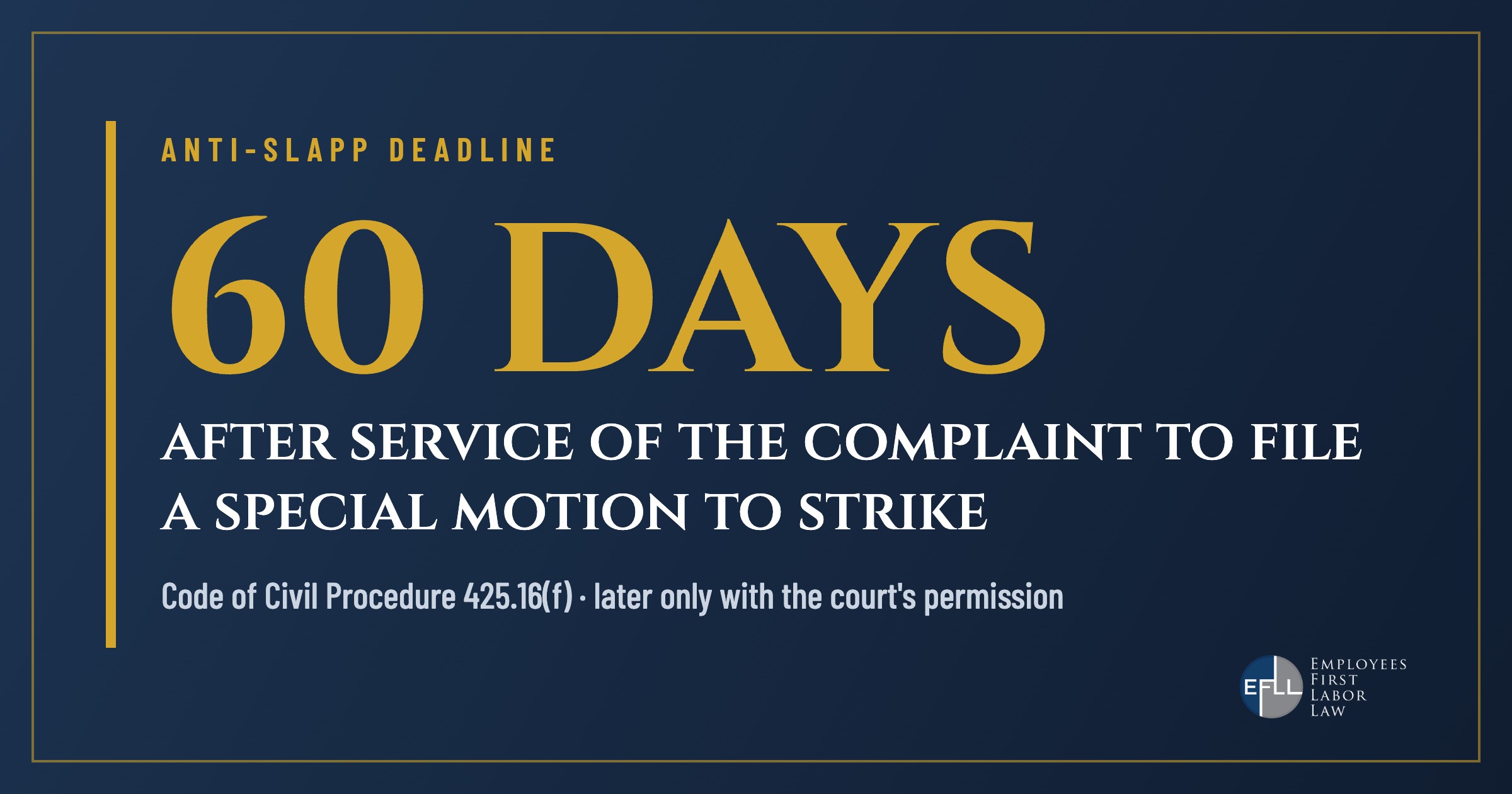
- The motion may be filed within 60 days of service of the complaint, or later with the court’s permission (425.16(f)).
- Discovery is generally stayed while the motion is pending (425.16(g)), so you are not buried in depositions and document demands.
- A defendant who wins the motion is entitled to recover attorney’s fees and costs (425.16(c)(1)).
- An order granting or denying the motion can be appealed (425.16(i)).
Because the privileges make it hard for a harasser to show a likely win, this is a powerful shield. If you are served, contact a lawyer right away.
Where the protection ends
The privileges are strong, but they are not unlimited. You lose protection, or take on real risk, in situations like these:
- Knowingly false accusations. Inventing or exaggerating events you know did not happen is malice. None of the privileges is meant to protect a deliberate lie.
- Reckless claims. Repeating rumors as fact, or accusing someone without any basis, can look like reckless disregard for the truth.
- Going beyond your own experience under 47.1. Section 47.1 covers factual information about an incident you experienced. Statements about what happened to someone else rely on other privileges, which are narrower.
- Labels and insults. Stick to what happened. “He sent me three texts asking me to his hotel room” is a factual report; name-calling and sweeping claims about someone’s character add risk without adding protection.
Public accusations on social media deserve particular care. Section 47.1 is not limited to private reports, but a public post is permanent and invites scrutiny of every word. Reporting through HR, the CRD or a lawyer usually protects you better.
How to report sexual harassment safely
Following a few habits keeps your report clearly inside the privileges and builds your case at the same time. For a fuller walk-through, see our step-by-step guide to reporting sexual harassment.
- Write down the facts while they are fresh. Dates, times, places, exact words, who was present, and how it affected your work.
- Keep the evidence. Save texts, emails, chat messages and screenshots with dates. Our guide to online and remote harassment covers digital evidence, including the limits on recording calls.
- Report through official channels. Use the employer’s complaint procedure: HR, a manager, or the hotline named in the policy. Put the complaint in writing and keep a copy.
- Describe what happened, not conclusions. Facts, quotes and dates are stronger, and safer, than labels.
- Be careful about who else you tell. Talking to family, a counselor or a lawyer is normal and protected when factual. Broadcasting accusations at work or online adds risk.
- Do not sign anything under pressure. If you are asked to sign a statement, retraction or agreement, get advice first.
- Watch the deadlines. A CRD complaint for harassment generally must be filed within three years (Government Code 12960(e)(5)). See our guide to sexual harassment deadlines.
💡 Example: Maria, a hypothetical office worker, emails HR describing three dates on which her manager made sexual comments about her body, quoting what he said and attaching two text messages. A week later, the manager’s lawyer sends her a letter threatening a defamation suit unless she withdraws the complaint. Maria’s email is a complaint of sexual harassment to her employer based on credible evidence and made without malice (Civil Code 47(c)), and it describes an incident she experienced and had a reasonable basis to report (Civil Code 47.1). If the manager sued and lost, he could owe Maria her attorney’s fees and costs plus treble damages for the harm the suit caused.
Threats of a lawsuit can be retaliation
Under the Fair Employment and Housing Act, it is unlawful for an employer or any person to discharge, expel or otherwise discriminate against someone because they opposed practices FEHA forbids or filed a complaint, testified or assisted in a proceeding (Government Code 12940(h)). An employer or manager who uses lawsuit threats to force a worker to drop a complaint may be adding to its liability. Learn more on our retaliation claims page.
Agreements do not have to silence you either:
- An employer cannot require you, in exchange for a raise or bonus or as a condition of employment, to sign a nondisparagement agreement that has the purpose or effect of denying your right to disclose information about unlawful acts in the workplace. Covered agreements must say, in substance, that nothing prevents you from discussing or disclosing information about unlawful acts such as harassment or discrimination (Government Code 12964.5(a)(1)(B)).
- A settlement agreement cannot prevent disclosure of factual information about sexual harassment or workplace harassment, discrimination or retaliation claims filed in court or in an administrative action, although you can ask for a provision protecting your own identity (Code of Civil Procedure 1001). See our guide to NDAs in sexual harassment settlements.
Frequently asked questions
Can my harasser sue me for defamation for reporting sexual harassment in California?
Anyone can file a lawsuit, but a defamation claim over an honest report usually fails. Reports to your employer, to the CRD and in court are generally privileged under Civil Code 47, and factual statements about harassment you experienced are privileged under Civil Code 47.1 when made without malice by someone with a reasonable basis to complain. A harasser who loses a suit over a 47.1-privileged statement owes your attorney’s fees and costs plus treble damages.
Do I have to prove the harassment happened to be protected?
No. Section 47.1 protects people who have, or had, a reasonable basis to file a complaint, whether or not they filed one. The 47(c) privilege for complaints to an employer requires credible evidence and no malice, not proof that would win at trial. What you cannot do is knowingly make things up.
Can I tell coworkers or post about what happened?
Factual statements about your own experience can be privileged under Section 47.1, but the more widely you share, the more scrutiny each statement gets. Talk with a lawyer before posting publicly or contacting the media.
What if I am already being sued or threatened with a lawsuit?
Do not ignore it and do not retract your complaint without advice. An anti-SLAPP motion generally must be filed within 60 days of service of the complaint, and the threat itself may be evidence of retaliation. Contact an employment lawyer as soon as you receive a demand letter or lawsuit.
Does the protection cover a coworker who witnessed the harassment?
Section 47.1 is limited to incidents the speaker experienced, but a witness who reports harassment to the employer without malice is generally protected by the common-interest privilege in Civil Code 47(c), and statements in a CRD proceeding or a lawsuit are covered by Civil Code 47(b). FEHA also protects people who assist or testify in a proceeding from retaliation (Government Code 12940(h)).
Related guides
 Workers only. Never employers.
At Employees First Labor Law, we represent California workers only, never employers. Our team has recovered more than $200 million for our clients, and we prepare every case as if it is going to trial. We have offices in Pasadena, Irvine, Long Beach, Pomona, Riverside, Bakersfield and Fresno, and we serve workers throughout California. Meet our team.







If you reported sexual harassment and now face a defamation threat, a lawsuit, or retaliation at work, we can explain how Civil Code 47 and 47.1 and the anti-SLAPP law protect you. Our attorneys represent California workers in harassment and retaliation claims and can help you hold your employer accountable.
- ✅ Free, confidential consultation
- ✅ We represent workers only, never employers
- ✅ Se habla español: Empleados Primero
This article provides general information about California law and is not legal advice for any specific situation. Reading it does not create an attorney-client relationship. Past results do not guarantee a similar outcome.