


Updated October 11, 2026 · 8 min read
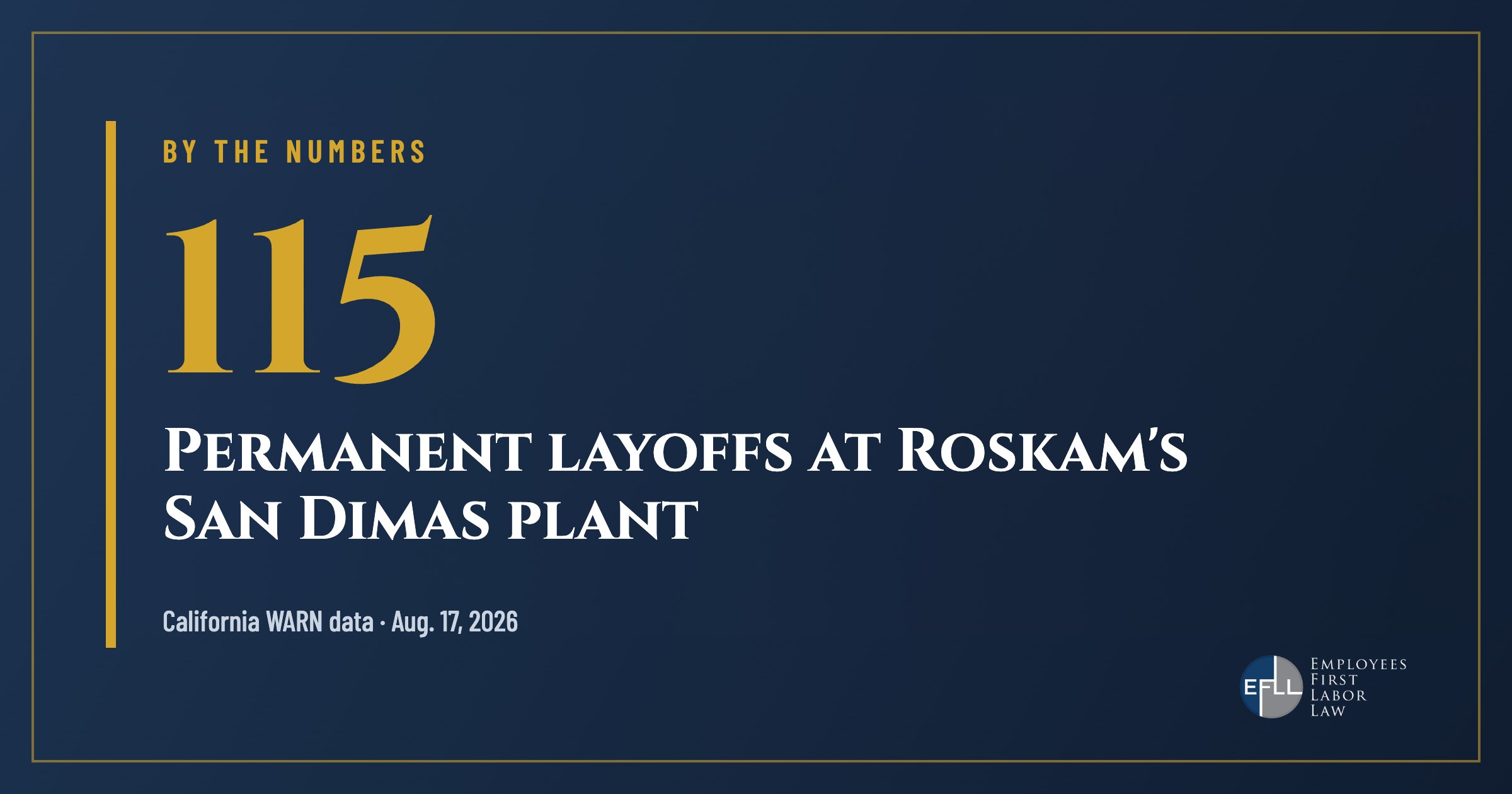
Roskam Foods has shut down its cereal and granola plant in San Dimas and moved the work to Grand Rapids, Michigan. A California WARN notice filed Aug. 17, 2026 lists 115 permanent layoffs at 305 South Acacia Street, effective Oct. 2, 2026.
Roskam, a contract food manufacturer founded in 1923, makes cereals, baked snacks and other products for food brands and retailers. The San Dimas plant came to Roskam when it bought Organic Milling a few years ago, and the WARN filing still lists the employer as Roskam Baking Company dba Organic Milling. For the San Gabriel Valley, that is 115 manufacturing jobs gone.
This post covers what Roskam announced, whether the notice timing raises a Cal-WARN question, what you are owed in your final paycheck, and which wage, break and injury claims you can still bring after the plant closes.
- 115 permanent layoffs at Roskam’s San Dimas plant, according to a California WARN notice filed Aug. 17, 2026.
- The company is moving all cereal and granola production to Grand Rapids, Michigan, citing network optimization, automation and ingredient sourcing.
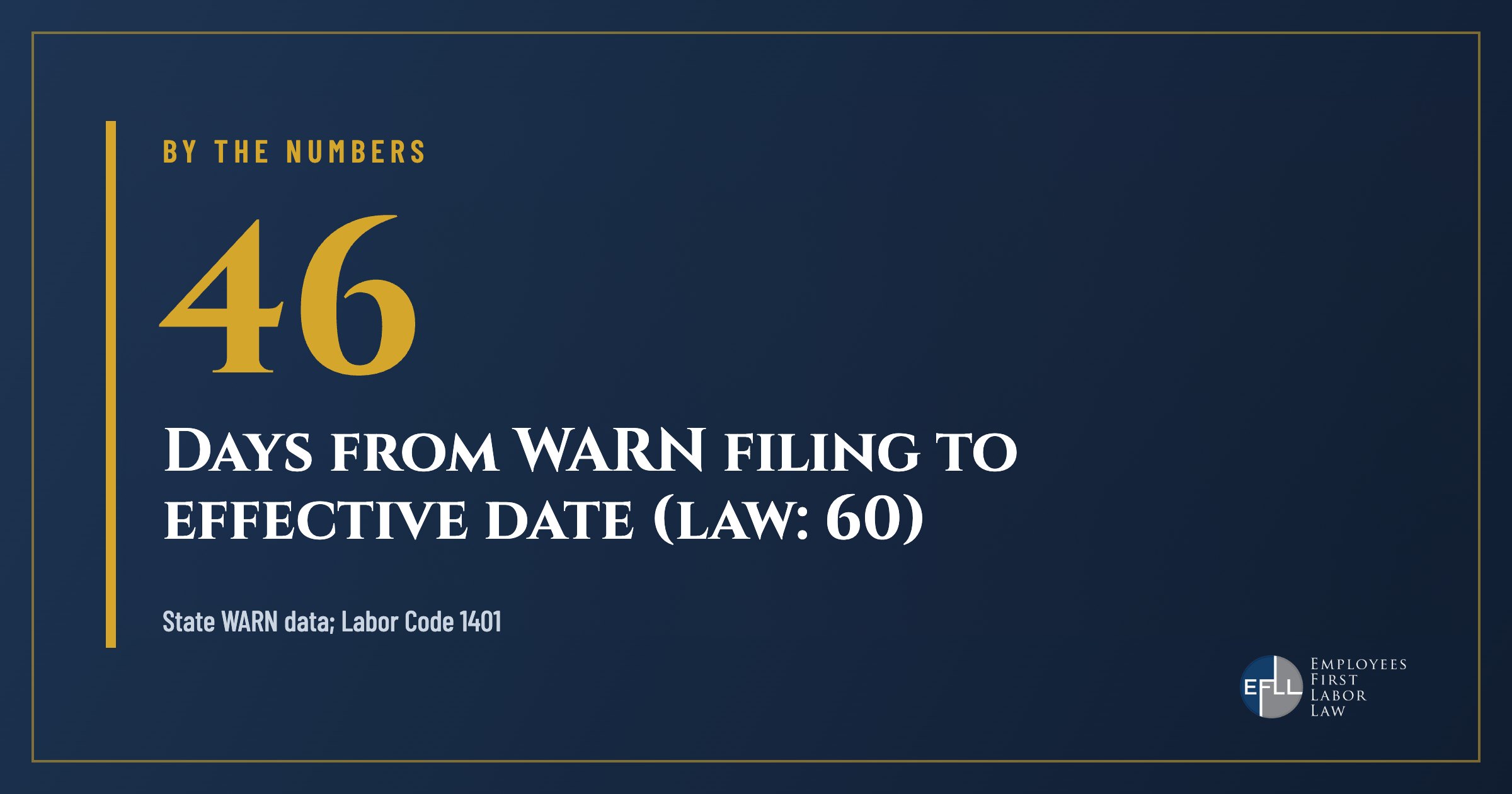
- Cal-WARN generally requires 60 days’ notice before a closure or relocation. Aug. 17 to Oct. 2 is about 46 days, so workers should ask when they got notice and what they were paid.
- Your final pay, including unused vacation, was due on your last day. Late final pay can add up to 30 days’ wages in penalties.
- Unpaid overtime and missed meal and rest breaks can generally be claimed for three years, sometimes four, even after the plant is closed.
What happened
On Aug. 17, Roskam announced that it would close the San Dimas facility and centralize its cereal and granola production at its Grand Rapids campus. It described the move as part of a broader “network optimization” strategy. The company said Grand Rapids is better set up for ingredient sourcing, production resources and automation. It also said putting all of the work in one Midwest site would let it make full use of new capital investment in cereal and granola manufacturing.
Roskam said production had already moved to Michigan and expected the move to be finished by Oct. 1. It also said it had notified affected employees, completed its WARN filings, and was working with other local employers to help San Dimas workers find jobs.
The state WARN record lists 115 permanent layoffs at the Acacia Street plant, filed Aug. 17, with an effective date of Oct. 2, 2026. Roskam has not publicly said whether it offered severance, whether any workers were offered transfers to Michigan, or how long workers stayed on payroll.
| Date | Event | Source |
|---|---|---|
| 1923 | Roskam founded | Just Food; The Shelby Report |
| 2022 or 2023 | Roskam acquires Organic Milling and its San Dimas plant (reports differ on the year) | Trade press |
| Aug. 17, 2026 | Roskam announces the closure; Cal-WARN notice filed for 115 permanent layoffs | Company release; state WARN data |
| Oct. 1, 2026 | Company’s target date to finish moving production to Grand Rapids | Company release |
| Oct. 2, 2026 | Effective date listed in the WARN notice | State WARN data |
| Oct. 16, 2026 | 60 days after the Aug. 17 filing date | EFLL calculation |
What this means for San Dimas workers
If you worked at the Acacia Street plant, you are probably one of the 115 workers in the WARN filing. By now your job has likely ended. That does not end your rights. Several claims survive a plant closure.
Three questions matter most. Did you get the full 60 days’ notice or pay in place of it? Was your final paycheck complete and on time? And were you paid correctly while you worked there? Long shifts, mandatory overtime and pressure to keep the line running through breaks are common in food plants, and that is where wage violations tend to happen.
Our California layoff tracker lists other WARN notices statewide as they are filed.
Your rights after a plant closure
Cal-WARN notice and back pay
California’s WARN Act covers worksites with 75 or more employees. It applies to a plant closure (which the statute calls a termination) and to a relocation of 100 miles or more, no matter how many workers are affected. Moving production to Michigan could fit either. Under Labor Code 1401, the employer must give written notice at least 60 days before the closure or relocation takes effect.
The state record shows the notice filed Aug. 17 and an effective date of Oct. 2. That is about 46 days, not 60. That gap alone does not prove a violation. Workers may have received notice before the filing date, and many employers pay workers through the full 60 days.
If notice was short, Labor Code 1402 lets each affected worker recover back pay and lost benefits for each day of the shortfall, up to 60 days, minus wages and certain voluntary payments the employer made for that period. The key question: were you paid through about Oct. 16? If not, you may be owed the difference. A court can also award attorney’s fees (Labor Code 1404). Our Cal-WARN notice rights guide explains how these claims work.
Your final paycheck and vacation
When an employer lays you off, every dollar you earned is due on your last day (Labor Code 201). That includes accrued, unused vacation or PTO at your final rate (Labor Code 227.3). If the employer pays final wages late, or pays less than you are owed, you may be entitled to a waiting-time penalty of up to 30 days of your daily wages. See our guide to Labor Code 203 waiting-time penalties.
Overtime, meal and rest breaks under Wage Order 1
Food plants like this one are generally covered by Wage Order 1 for the manufacturing industry. It requires overtime after 8 hours in a day or 40 in a week, and double time after 12 hours. It also requires a 30-minute meal break before the end of the fifth hour of work and a paid 10-minute rest break for every four hours or major fraction of four hours. For each day a break is missed, cut short or interrupted, the employer owes an extra hour of pay.
These claims do not disappear when a plant closes. Claims for unpaid wages, overtime and break premiums can generally be brought for three years. Adding an unfair competition claim can sometimes reach back four years. Common problems in food plants include unpaid time putting on protective gear, time rounding, automatic meal deductions and breaks cut short by line demands.
Severance and the release
California does not require severance pay. If Roskam offers severance, it will usually be in exchange for a release of your claims, which can include the WARN, wage and break claims above. California law (Gov. Code 12964.5) requires the employer to tell you that you have the right to talk to a lawyer and to give you at least five business days to decide. If you are 40 or older and part of a group layoff, federal law gives you at least 45 days to consider the agreement and 7 days to revoke after signing. Before you sign, read our severance agreement review guide.
Workplace injuries before the closure
If you were hurt at the plant, including back, shoulder, wrist or knee injuries from repetitive production work, you may still be able to file a workers’ comp claim after your job ends. Claims filed after a layoff notice face extra hurdles. They are generally still allowed if, for example, the employer knew about the injury before the layoff notice, medical records show the injury came first, or the injury happened between the notice and your last day. Report any injury in writing as soon as you can. A workers’ compensation lawyer in Pomona can tell you whether your claim is still timely.
Unemployment benefits
Workers who lose their jobs in a closure are generally eligible for unemployment insurance through the EDD. File as soon as your job ends. Learn more about collecting unemployment after a job loss.
Find out whether your notice, final paycheck and past pay hold up under California law before you sign anything. Our Pomona and Pasadena offices are minutes away, and the consultation is free and confidential.
What to do now
- Find your WARN notice. Write down the date you actually received it, and keep the letter or text message.
- Gather your pay records. Save pay stubs, timecards, schedules and your final check. They are the evidence for overtime and break claims.
- Check your last pay dates. Compare what you were paid after Oct. 2 with the 60-day window, and make sure your final check included all unused vacation.
- Write down missed breaks and off-the-clock work. Note how often breaks were skipped or cut short, and any work done off the clock.
- Do not rush a severance release. Use the full review period and have it checked before you give up claims.
- Report any injury and file for unemployment. Tell the company in writing about any work injury, and apply with the EDD.
- Talk to a local lawyer. An employment lawyer in Pomona can review your records at no cost.
Frequently asked questions
How many jobs did the Roskam San Dimas closure cut?
The California WARN notice filed Aug. 17, 2026 lists 115 permanent layoffs at 305 South Acacia Street in San Dimas, effective Oct. 2, 2026.
Did Roskam give 60 days’ notice?
The filing and effective dates in the state record are about 46 days apart. Whether a worker is owed WARN back pay depends on when that worker got notice and whether they were paid through the full 60 days, which has not been reported. Check your own notice letter and pay stubs.
Can I still sue for unpaid overtime if the plant is closed?
Generally, yes. The company still exists and still operates in Michigan. Wage and break claims can generally go back three years, sometimes four, so you should not wait.
Do I have rights if I am not a U.S. citizen?
Yes. California wage, break, final pay and workers’ comp protections apply regardless of immigration status. Hablamos español. Visite Empleados Primero para una consulta gratuita.
Sources
- Food Processing: Roskam Foods to close San Dimas, California, cereal and granola plant
- Food Engineering: Roskam Foods to close California plant as part of cereal production consolidation
- Just Food: US cereal maker Roskam Foods to close factory
- The Shelby Report: Roskam Foods to centralize cereal, granola production in Michigan
- edhat: Roskam Foods San Dimas closure
- LayoffTracker: Roskam Baking Company dba Organic Milling, San Dimas WARN notice
- California EDD: WARN layoff notices
- California DIR: IWC Wage Order 1 (Manufacturing Industry)
Related guides
 Workers only. Never employers.
At Employees First Labor Law, we represent California workers only, never employers. Our team has recovered more than $200 million for our clients, and we prepare every case as if it is going to trial. We have offices in Pasadena, Irvine, Long Beach, Pomona, Riverside, Bakersfield and Fresno, and we serve workers throughout California. Meet our team.






If you are one of the Roskam workers who lost your job when the San Dimas plant closed, or any San Gabriel Valley manufacturing worker facing a layoff, we can review your WARN notice, final paycheck, pay records and any severance agreement at no cost. We help California workers pursue WARN Act back pay, unpaid overtime, missed break premiums and waiting-time penalties.
- ✅ Free, confidential consultation
- ✅ We represent workers only, never employers
- ✅ Se habla español: Empleados Primero
This article provides general information about California law and is not legal advice for any specific situation. Reading it does not create an attorney-client relationship. Past results do not guarantee a similar outcome.


