


Updated October 11, 2026 · 8 min read
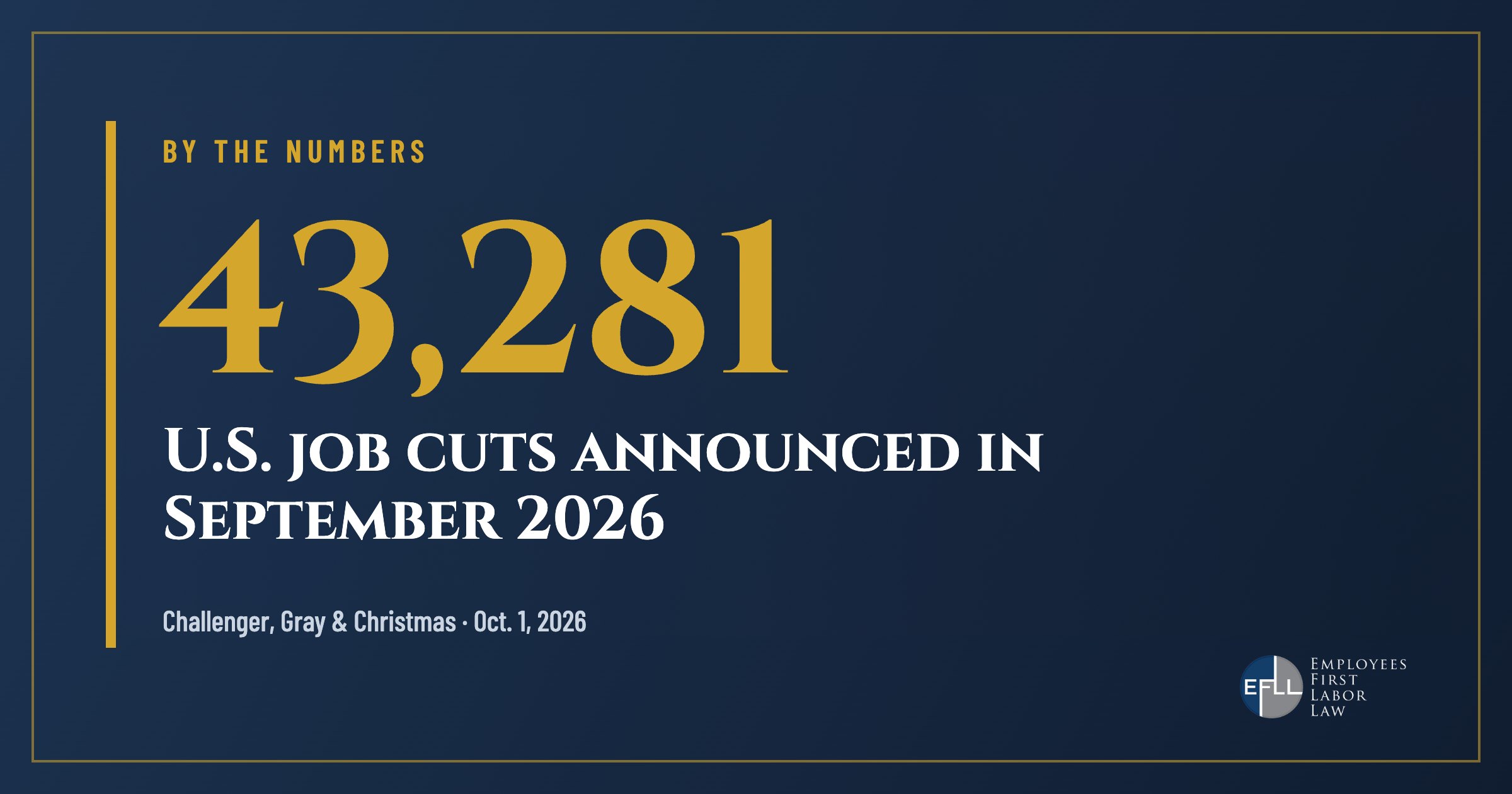
U.S. employers announced 43,281 job cuts in September 2026, down 18% from August, according to the monthly report Challenger, Gray & Christmas released Oct. 1. But planned hiring was the weakest for any September since 2011, and California again led the nation in announced cuts for the year.
On the surface, that is good news. Through September, employers have announced 573,195 cuts, 39% fewer than the 946,426 announced in the first nine months of 2025. The catch is on the other side of the ledger. Employers announced plans to hire 90,787 workers in September, 23% fewer than a year earlier, and seasonal hiring has been unusually thin. Andy Challenger, the firm’s chief revenue officer, summed up the mood: “Companies are in a wait-and-see period right now.”
For a California worker who gets a layoff notice this fall, fewer layoffs do not help much if there are also fewer openings to land in. The longer a job search might take, the more the severance package matters. This post covers the September numbers, what they mean for California, and what to check before you sign a severance agreement and release.
- Challenger counted 43,281 announced job cuts in September, down 18% from August and the lowest September total since 2022.
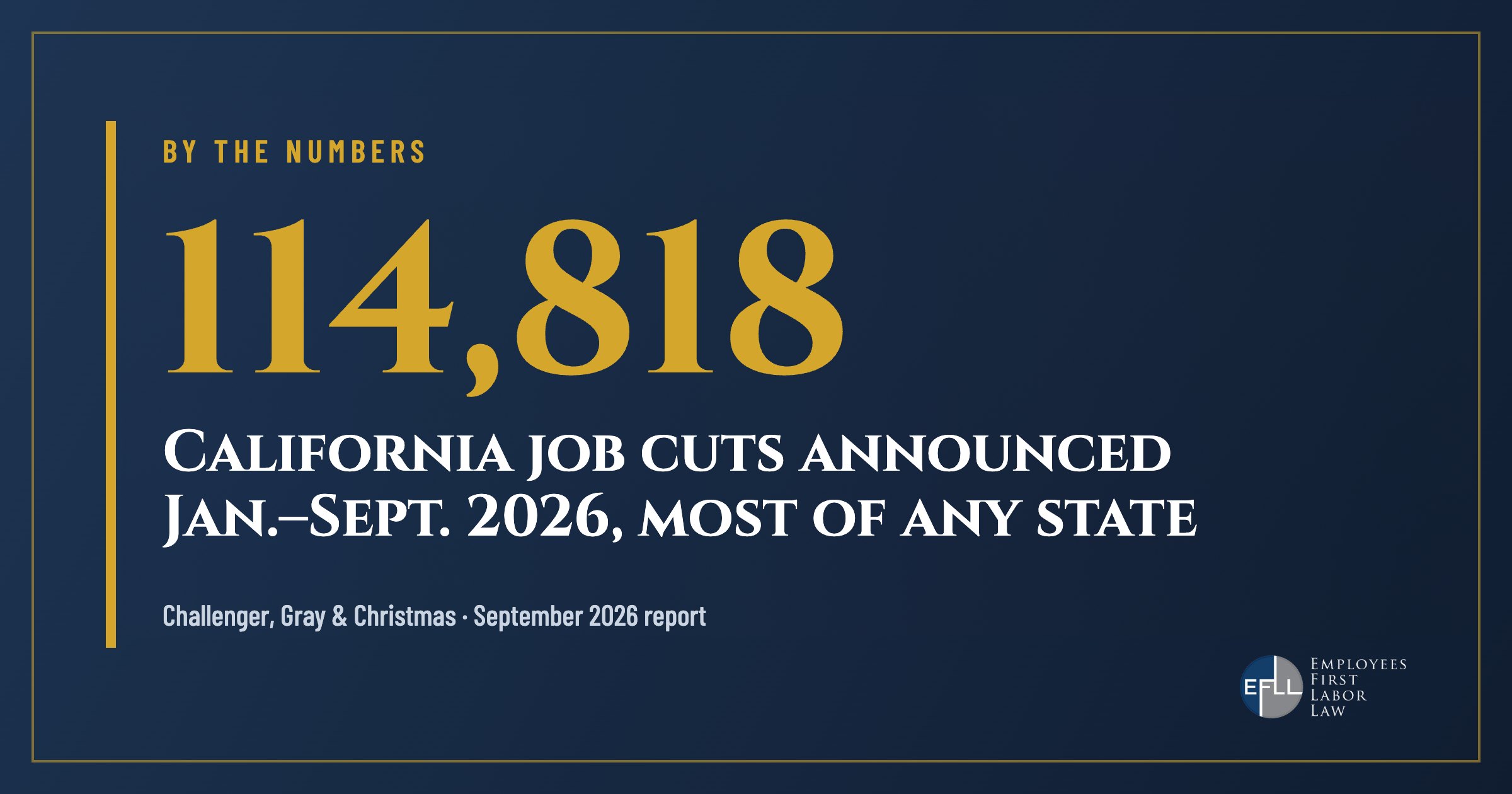
- California had 9,920 cuts in September and 114,818 so far in 2026, the most of any state, though down from 144,528 a year earlier.
- Planned hiring of 90,787 was the lowest for a September since 2011, so laid-off workers may face a slower job search.
- Artificial intelligence remains the leading cited reason for cuts in 2026, at 120,136 cuts, about 21% of the total.
- Before you sign a release, know your deadlines: at least five business days under California law, and 45 days plus 7 to revoke for workers 40 and older in a group layoff.
What happened
Challenger, Gray & Christmas, an outplacement firm, tracks job cuts and hiring plans that U.S. employers announce. Its September report, released Oct. 1, found 43,281 announced cuts, down from 52,881 in August and 54,064 in September 2025.
Much of the year-over-year drop reflects government, where announced cuts are down 92% from 2025. Excluding government, 2026 cuts are down about 15% from last year, not 39%, and tech, transportation, fintech and food employers have all announced more cuts than at this point in 2025.
Technology again led all industries. Tech employers announced 10,799 cuts in September, up 77% from August, and 165,925 for the year, 29% of all 2026 cuts and up 54% from the same point in 2025.
The reasons shifted. “Market and economic conditions” was the top reason in September, cited for 8,789 cuts, followed by closings, a downturn in demand and restructuring. AI was cited for 3,961 September cuts, about 9% of the month. For the year, AI is still the leading reason, cited for 120,136 cuts, about 21% of the total.
Most of September’s 90,787 planned hires were in retail. Hiring plans for the year are only 3% above 2025, after running well ahead earlier in the year.
| Measure | Figure | Comparison |
|---|---|---|
| U.S. job cuts, September 2026 | 43,281 | Down 18% from August; down 20% from Sept. 2025 |
| U.S. job cuts, Jan.–Sept. 2026 | 573,195 | Down 39% from 946,426 in 2025 |
| California job cuts, September 2026 | 9,920 | Second among states, behind Washington |
| California job cuts, Jan.–Sept. 2026 | 114,818 | Most of any state; down from 144,528 in 2025 |
| Technology cuts, September 2026 | 10,799 | Up 77% from August |
| AI-cited cuts, Jan.–Sept. 2026 | 120,136 | About 21% of all cuts; top reason for the year |
| Hiring plans, September 2026 | 90,787 | Lowest September since 2011 |
What this means for California workers
California is where many of these cuts land. Challenger’s state table shows 9,920 California cuts in September and 114,818 for the year, about one in five announced U.S. cuts. That is about 21% fewer than at this point in 2025, but no other state comes close for the year. Only Washington, at 10,680, had more cuts than California in September.
Many of the California notices behind those numbers come from tech. In recent weeks we have covered Workday’s Pleasanton layoffs and Oracle’s latest Bay Area cuts. You can follow every new filing on our California Layoff Tracker, which is updated daily from state WARN data.
The bigger point is timing. When employers are cautious about hiring, finding the next job can take longer. That makes severance, final pay and unemployment benefits more important, and makes it riskier to sign away claims for a small payment because you feel rushed.
AI is part of the story as well. Starting Jan. 1, 2027, SB 951 will require Cal-WARN notices to say when a layoff is caused by AI or automation. Read more in our post on California’s AI layoff disclosure law.
Your rights before you sign a severance release
Time to review and the right to a lawyer
California does not require employers to pay severance. When they offer it, the money is usually conditioned on signing a release of claims. Under Gov. Code 12964.5, a separation agreement that releases discrimination and similar claims must tell you that you have the right to consult a lawyer and give you at least five business days to consider it. You can sign sooner, but only if that choice is knowing and voluntary, not pressured by a threat to pull the offer. The same law requires any confidentiality or non-disparagement clause to make clear you can still disclose information about unlawful acts in the workplace.
Extra protections if you are 40 or older
Under the federal Older Workers Benefit Protection Act, a valid waiver of age discrimination claims must advise you in writing to consult a lawyer. In a group layoff, you get at least 45 days to consider the agreement (21 days for an individual separation) and 7 days to revoke after signing. The employer must also list the job titles and ages of the people selected for the layoff and those not selected. A release also cannot stop you from filing a charge with the EEOC.
What you generally cannot sign away
Some rights cannot be bargained away in a severance agreement. Under Labor Code 206.5, an employer cannot require you to release a claim for wages that are due unless those wages have been paid, and such a release is void. Agreements can settle a genuine, good-faith dispute over whether wages are owed, so the details matter. A private release also cannot waive your right to unemployment insurance, and a workers’ compensation claim cannot be settled without approval from the Workers’ Compensation Appeals Board (Labor Code 5001).
Cal-WARN notice and back pay
If your worksite has 75 or more employees, a layoff of 50 or more within 30 days generally requires 60 days’ written notice under Cal-WARN. Workers who do not get proper notice may recover back pay and benefits for each day of the notice shortfall, up to 60 days. See our guide to Cal-WARN notice rights.
Final pay and unemployment
When you are laid off, all earned wages, including accrued, unused vacation or PTO, are due on your last day (Labor Code 201 and 227.3). Late final pay can trigger waiting-time penalties. Our guide to final paycheck rules explains how. You can usually file for unemployment right away. Under EDD guidance, severance paid under an employer plan generally does not reduce benefits, and neither does Cal-WARN back pay. Pay in lieu of notice that an employer is required to give under a plan or policy can delay benefits for the weeks it covers. See how unemployment works after a job loss.
Your leverage
A severance offer is often a starting point. Your leverage usually comes from claims you could bring if you do not sign. Examples include being chosen because of age, disability, pregnancy, race or medical leave; retaliation for a complaint; unpaid overtime; or being misclassified as exempt or as an independent contractor. If wage violations affected co-workers too, the Private Attorneys General Act (PAGA) may allow you to seek civil penalties for violations affecting you and others. Whether a claim is strong depends on the facts. Our severance agreement review guide walks through what to look for.
Before you sign a release, find out whether the offer reflects what your claims may be worth and whether your notice and final pay were handled correctly. Get a free, confidential consultation.
What to do now
- Do not sign on the spot. Use the full review period.
- Save your records. Keep your notice letter, severance agreement, offer letter, pay stubs, time records, equity statements and performance reviews in a personal file.
- Check your final paycheck. Make sure it includes all wages and unused vacation or PTO and arrives on your last day.
- If you are 40 or older, review the age disclosure list that comes with a group layoff release.
- Write down possible claims. Note any unpaid overtime, missed breaks, complaints you made, leave you took or comments about age or other protected traits.
- File for unemployment with the EDD as soon as your job ends.
- Get a free legal review before you sign, so you know whether to ask for more.
Frequently asked questions
How many job cuts did California have in September 2026?
Challenger’s report shows 9,920 announced cuts in California in September and 114,818 for January through September, the most of any state. The figures reflect announced plans, which can differ from WARN filings and from when people actually lose their jobs.
Can I negotiate my severance?
Often, yes. Employers pay severance mainly to get a release, so if you have a possible claim, such as age discrimination, retaliation or unpaid overtime, you may be able to negotiate a better package. A lawyer can tell you whether asking makes sense.
Will severance stop my unemployment benefits?
Usually not. Under EDD guidance, severance paid under an employer plan generally does not reduce unemployment benefits. Pay in lieu of notice that the employer was obligated to give can delay benefits for the period it covers. How your payment is described and why it was paid can matter.
Sources
- Challenger, Gray & Christmas: Job cuts fall in September; hiring plans up 3% over 2025 (Oct. 1, 2026)
- Challenger, Gray & Christmas: September 2026 full report with tables (PDF)
- TheStreet Pro: Job cuts hit 4-year low while full-year hiring plummets
- California EDD: WARN layoff notices
- California EDD: Benefit Determination Guide on severance and pay in lieu of notice
- Reed Smith: California expands restrictions on non-disclosure provisions (SB 331)
- Epstein Becker Green: EEOC guidance on waivers in severance agreements
- Littler: California amends its WARN Act again (SB 951)
Related guides
 Workers only. Never employers.
At Employees First Labor Law, we represent California workers only, never employers. Our team has recovered more than $200 million for our clients, and we prepare every case as if it is going to trial. We have offices in Pasadena, Irvine, Long Beach, Pomona, Riverside, Bakersfield and Fresno, and we serve workers throughout California. Meet our team.







If you have been laid off in California or handed a severance agreement, we can review your notice, final paycheck and release at no cost before you sign. We help California workers pursue unpaid wages, WARN Act back pay and damages for discriminatory or retaliatory layoffs.
- ✅ Free, confidential consultation
- ✅ We represent workers only, never employers
- ✅ Se habla español: Empleados Primero
This article provides general information about California law and is not legal advice for any specific situation. Reading it does not create an attorney-client relationship. Past results do not guarantee a similar outcome.


