

Updated October 11, 2026 · 8 min read
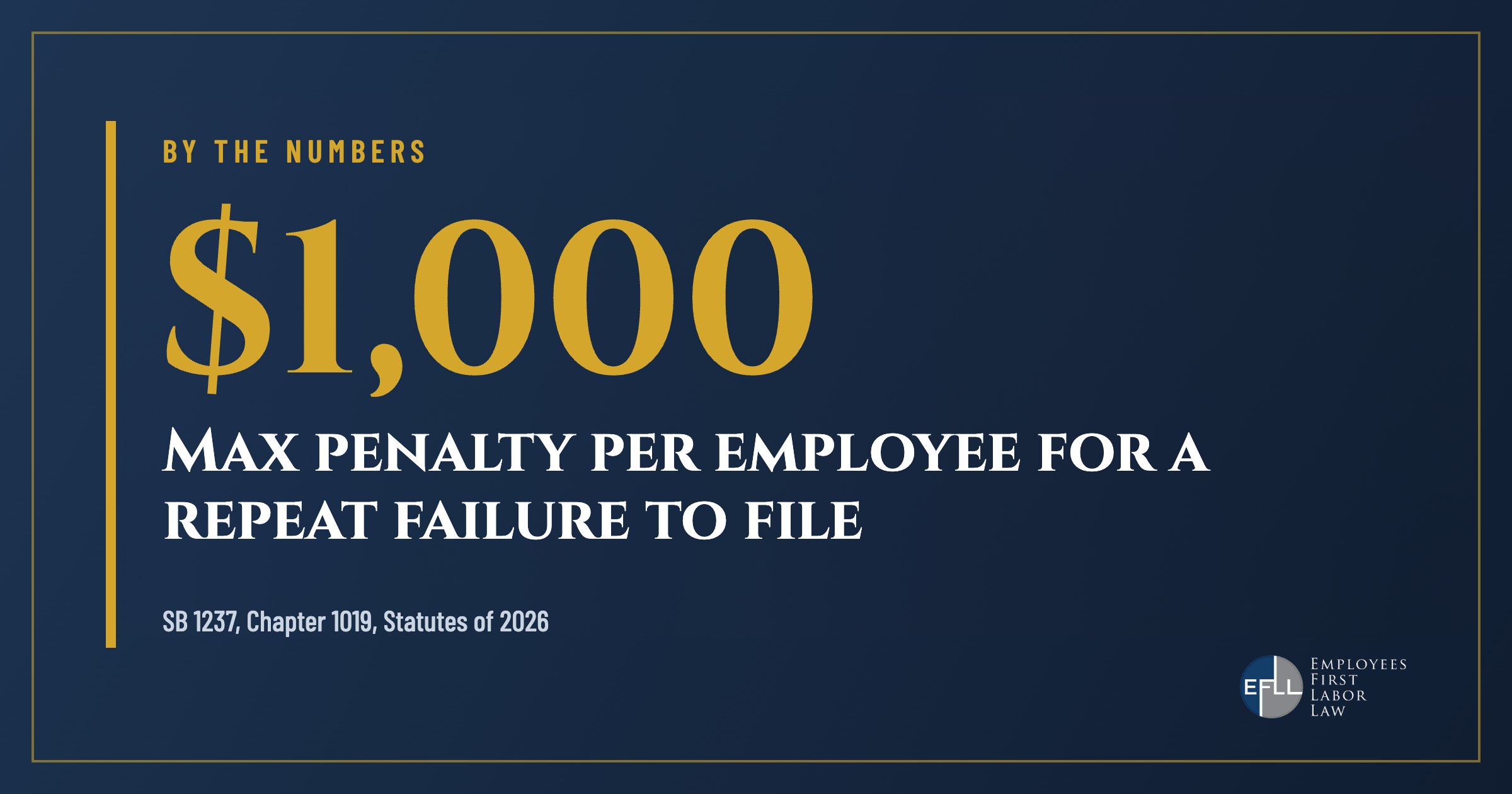
Governor Gavin Newsom signed Senate Bill 1237 on Sept. 30, 2026, raising the maximum penalty for a large employer that fails again to file its required pay data report with the California Civil Rights Department (CRD) from $200 to $1,000 per employee. The new rule takes effect Jan. 1, 2027.
California has required large private employers to report pay by sex, race and ethnicity since 2021. Supporters argued the old penalties were low enough that some companies could treat skipping the report as a cost of doing business. The law also requires the CRD to publish, every year, how many pay data reports it received.
This post explains what SB 1237 changes, how California’s pay data law works, what the reports can and cannot tell you about your own paycheck, and how to use the Equal Pay Act and pay transparency rules if you think you are underpaid.
- SB 1237 (Blakespear) was signed Sept. 30, 2026 and takes effect Jan. 1, 2027.
- The penalty for a repeat failure to file a pay data report rises to up to $1,000 per employee; a first failure stays at up to $100 per employee.
- Employers with 100 or more employees, or 100 or more workers hired through labor contractors, must report pay by sex, race and ethnicity each May.
- Individual employer reports are confidential. The CRD publishes only statewide aggregate data, so you cannot look up your company’s report.
- Your strongest tools are the Equal Pay Act, the right to discuss pay, and the right to request your job’s pay scale.
What happened
Sen. Catherine Blakespear introduced SB 1237 on Feb. 19, 2026. It was sponsored by Power California Action and Hispanas Organized for Political Equality (HOPE). It passed the Senate 29–6 in May and the Assembly 59–19 on Aug. 25, and the Senate approved the final version 30–10 on Aug. 26. Newsom signed it on Sept. 30 as Chapter 1019, Statutes of 2026.
The final law makes two changes to Government Code 12999, the pay data reporting statute:
- Higher repeat penalty. A court may now impose up to $1,000 per employee for a subsequent failure to file, up from $200. The first-failure penalty stays at up to $100 per employee. Penalties go to the state’s Civil Rights Enforcement and Litigation Fund.
- A public count of reports. The CRD must publish each year the total number of pay data reports submitted, in aggregate form that cannot be tied to any single business or person.
Supporters pointed to a gap in the numbers. According to the sponsors and the Senate Judiciary Committee analysis, employers reported pay data for about 7.9 million workers in 2023, while about 8.3 million people worked for covered businesses, not counting contract workers. That suggests pay data for at least 400,000 workers was missing. The committee analysis listed no known opposition.
| Date | Event |
|---|---|
| 2022 | SB 1162 adds labor contractor reports and mean and median hourly pay to the pay data law |
| Oct. 13, 2025 | SB 464 signed: penalties become mandatory on CRD request; job categories to expand from 10 to 23 in 2027 |
| Jan. 1, 2026 | SB 464 mandatory penalties and SB 642 Equal Pay Act and pay scale changes take effect |
| May 13, 2026 | Deadline to file 2025 pay data reports with the CRD |
| Sept. 30, 2026 | Newsom signs SB 1237 (Chapter 1019) |
| Jan. 1, 2027 | SB 1237 takes effect; SB 464 expands job categories to 23 |
How California pay data reporting works
Under Government Code 12999, every private employer with 100 or more employees must file an annual pay data report with the CRD. A separate report is required if the employer has 100 or more workers hired through labor contractors, and the employer must name those contractors. Companies with more than one location file for each establishment.
The report is due on or before the second Wednesday of May and covers the prior calendar year. The employer picks one “snapshot” pay period between Oct. 1 and Dec. 31 and reports, for each job category, how many employees fall into each federal pay band by race, ethnicity and sex. Since SB 1162 (2022), employers must also report the median and mean hourly rate for each race, ethnicity and sex combination within each job category, plus total hours worked.
The 2026 cycle. The CRD opened its online portal for 2025 data on Feb. 2, 2026, and the filing deadline was May 13, 2026. This cycle still used 10 job categories.
Recent and coming changes. SB 464, signed Oct. 13, 2025, already requires a court to impose penalties when the CRD asks, removing the court’s discretion, and requires employers to store demographic data separately from personnel files. Starting Jan. 1, 2027, it also expands the job categories from 10 to 23. Combined with SB 1237, an employer that fails to file again after a prior failure faces a mandatory penalty of up to $1,000 per employee if the CRD seeks it.
What this means for California workers
Pay data reports help the CRD spot employers with pay gaps by sex, race or ethnicity that may be worth investigating. Higher penalties should push more employers to file.
Be clear about what is and isn’t public. Your employer’s individual report is confidential. The statute bars the CRD from making individually identifiable information public, except as needed in an enforcement proceeding, and exempts it from the California Public Records Act. The CRD publishes only statewide aggregate data. SB 1237 adds a yearly count of reports filed, not company names or company-level results.
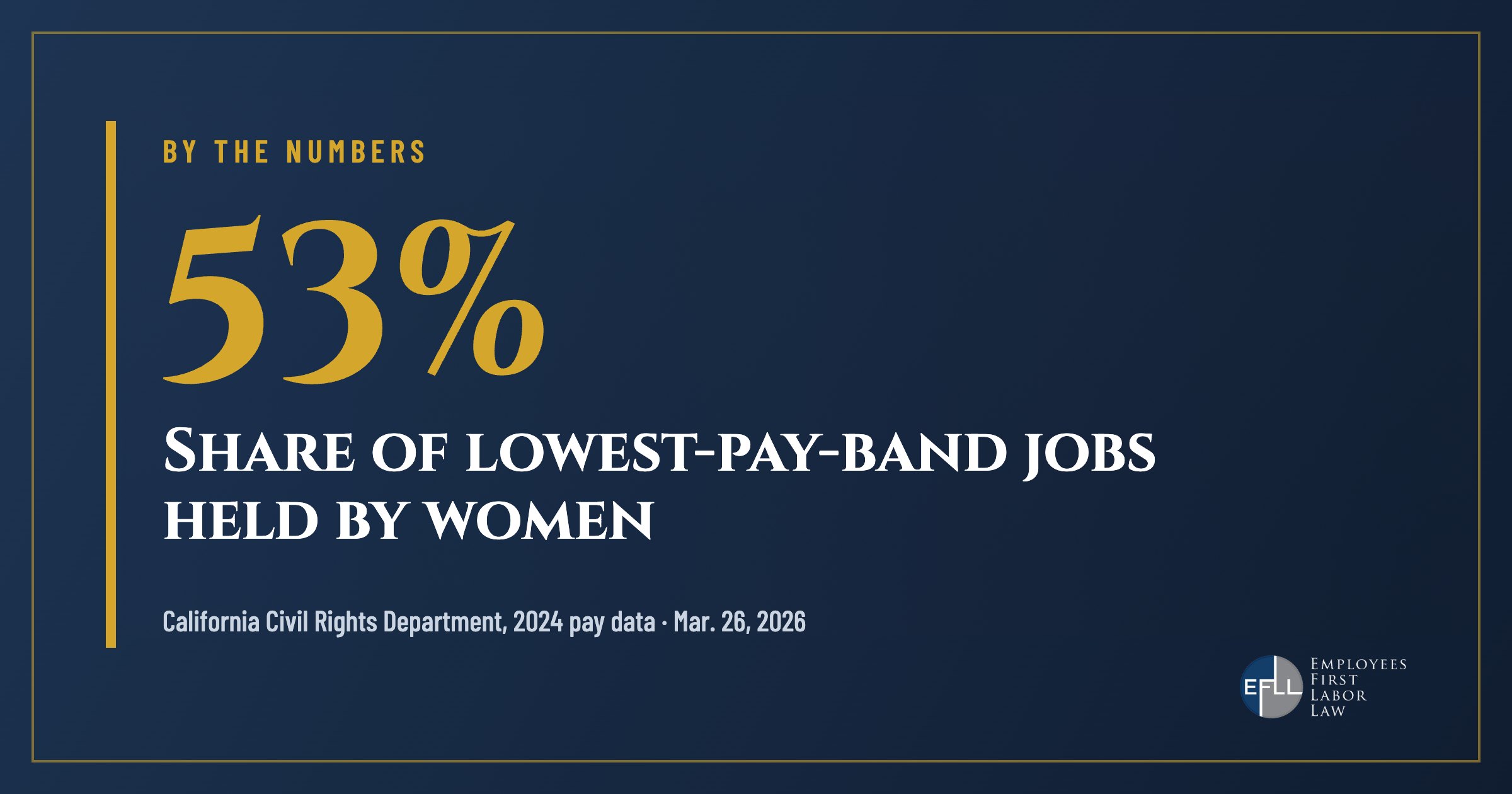
The aggregate data still show wide gaps. The CRD’s March 2026 release of 2024 data, covering nearly 8 million workers at large employers, found that women held 53% of jobs in the lowest pay band (about $32,239 a year or less) even though they were 47% of the workforce in the data. Men held 63% of senior executive roles. About 1 in 20 Latino workers were in the highest pay band, compared with about 1 in 3 white and Asian workers.
For your own paycheck, the laws that matter most are the Equal Pay Act and the pay transparency rules, which you can enforce yourself.
Your pay equity rights
Equal pay for substantially similar work
Labor Code 1197.5 bars employers from paying you less than employees of another sex, or of another race or ethnicity, for substantially similar work. That means work that is similar in skill, effort and responsibility under similar conditions. Job titles don’t control; what you actually do does. The employer must prove that the entire gap is explained by seniority, merit, production, or a bona fide factor such as education or training that is job-related. You do not have to prove the employer intended to discriminate. See our guide to the California Equal Pay Act.
How long you have
Since SB 642 took effect Jan. 1, 2026, you generally have three years from the last discriminatory paycheck to file, and you can recover pay for the whole period the violation lasted, up to six years. “Wages” for this purpose includes all forms of pay, such as bonuses, stock and benefits. Remedies include the unpaid difference, interest, an equal amount as liquidated damages, and attorney’s fees in court.
No salary history, and a right to the pay scale
Under Labor Code 432.3, employers may not ask about your salary history or rely on it to decide whether to hire you or what to offer. Under the Equal Pay Act, prior salary alone cannot justify a pay gap. Employers with 15 or more employees must include a good-faith pay range in job postings, and any current employee can ask for the pay scale for their own position. Learn more about California pay transparency and salary range rules.
The right to talk about pay
You can disclose your own wages, ask coworkers about theirs, and encourage others to use their rights. An employer cannot ban these conversations (Labor Code 1197.5 and 232). Read more about your right to discuss pay at work.
Protection from retaliation
It is illegal to fire, demote or punish you for asking about pay, requesting a pay scale or raising an equal pay complaint. Retaliation complaints to the Labor Commissioner generally must be filed within one year. Pay discrimination based on sex, race or ethnicity can also violate the Fair Employment and Housing Act (Government Code 12940), which has its own deadlines and remedies. See our overview of retaliation claims in California.
California’s Equal Pay Act lets you recover up to six years of lost pay, plus liquidated damages. Find out where you stand in a free, confidential consultation.
What to do now
- Ask for your pay scale in writing. Email HR and request the pay scale for your position under Labor Code 432.3. Save the reply.
- Compare notes with coworkers. Talking about pay is protected. Note what people in similar roles earn, including bonuses and equity, and compare actual duties, not titles.
- Keep records. Save offer letters, pay stubs, reviews, job postings for your role and any written pay ranges in a personal file, not only on a work device.
- Watch for retaliation. Note the date of any schedule change, write-up or demotion after you raise pay questions.
- Act within the deadlines. Equal Pay Act claims generally run three years from the last unequal paycheck. If you are considering a FEHA claim, learn how to file a CRD complaint and get a right-to-sue notice.
- Get a free legal review before you resign or sign a release, which could waive your claims.
Frequently asked questions
Can I see my employer’s pay data report?
Not from the state. Individual reports are confidential and exempt from public records requests. The CRD publishes only statewide aggregate data. In a lawsuit, your attorney may be able to seek your employer’s pay records through discovery, depending on the case.
Does SB 1237 give me a new right to sue?
No. The penalties are sought by the CRD in court and go to a state enforcement fund, not to individual workers. Your own claims come from the Equal Pay Act, FEHA and related laws.
When is the next pay data report due?
Reports are due on the second Wednesday of May each year, which in 2027 falls on May 12. The 2027 reports will be the first filed after SB 1237 takes effect and the first to use the 23 new job categories.
Sources
- Ogletree Deakins: California governor signs array of employment bills
- LegiScan: SB 1237 chaptered text (Chapter 1019, Statutes of 2026)
- LegiScan: SB 1237 bill history and votes
- Senate Judiciary Committee: SB 1237 bill analysis
- HOPE: SB 1237 (Blakespear) fact sheet
- LegiScan: SB 464 chaptered text (Gov. Code 12999)
- California Civil Rights Department: Large employers, it’s time to report your annual pay data
- California Civil Rights Department: New data shows ongoing gender and race pay divide
- California Labor Commissioner: Equal Pay Act FAQ
- Littler: Changes in store for California pay data reporting, pay transparency and pay equity
Related guides
 Workers only. Never employers.
At Employees First Labor Law, we represent California workers only, never employers. Our team has recovered more than $200 million for our clients, and we prepare every case as if it is going to trial. We have offices in Pasadena, Irvine, Long Beach, Pomona, Riverside, Bakersfield and Fresno, and we serve workers throughout California. Meet our team.







If you suspect you are paid less than coworkers of another sex, race or ethnicity for substantially similar work, or you were punished for asking about pay, we can review your pay records and job duties at no cost. We help California workers recover unpaid wages, liquidated damages and other remedies under the Equal Pay Act and FEHA.
- ✅ Free, confidential consultation
- ✅ We represent workers only, never employers
- ✅ Se habla español: Empleados Primero
This article provides general information about California law and is not legal advice for any specific situation. Reading it does not create an attorney-client relationship. Past results do not guarantee a similar outcome.


