
Updated October 2026 · 6 min read
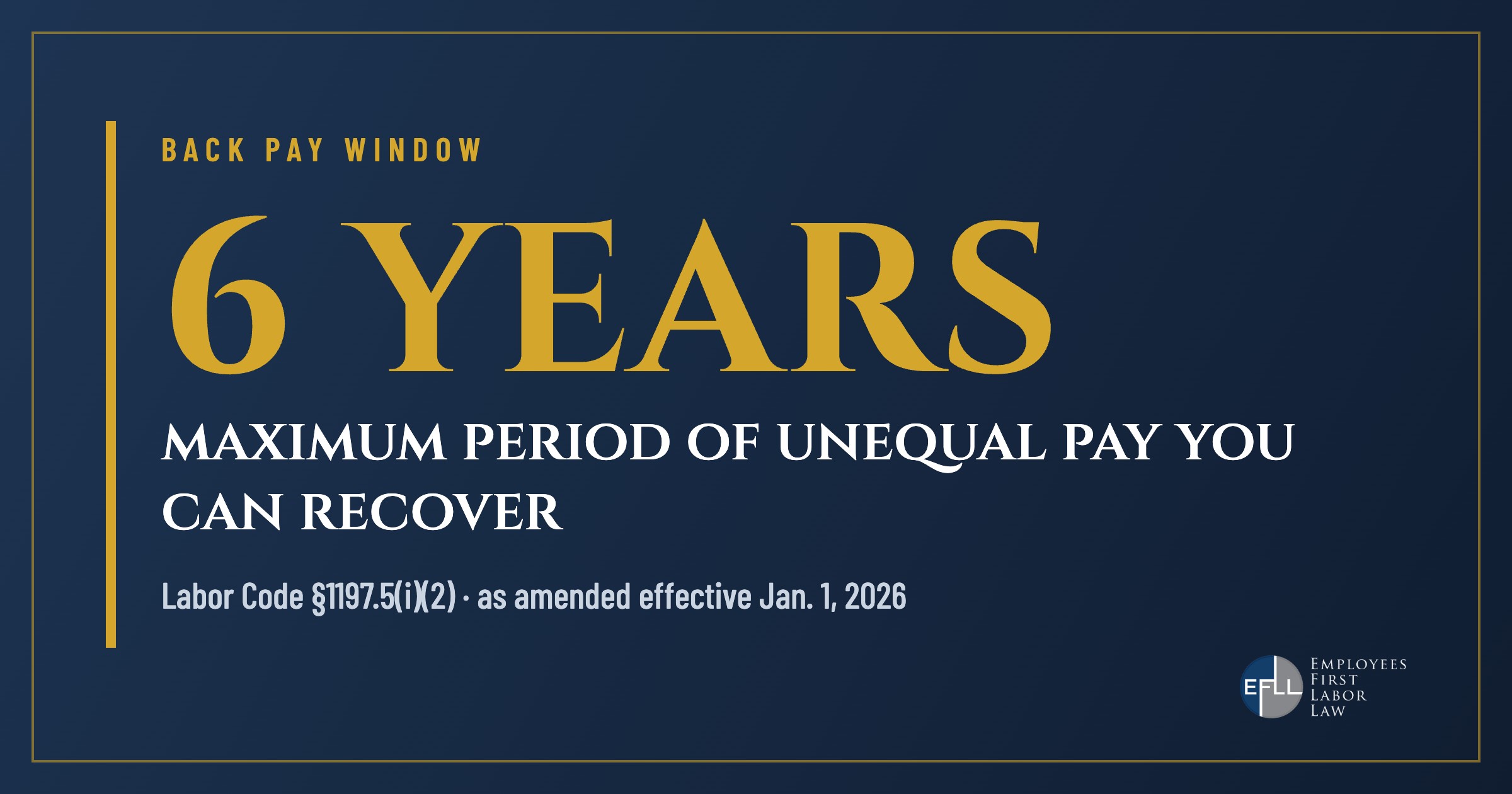
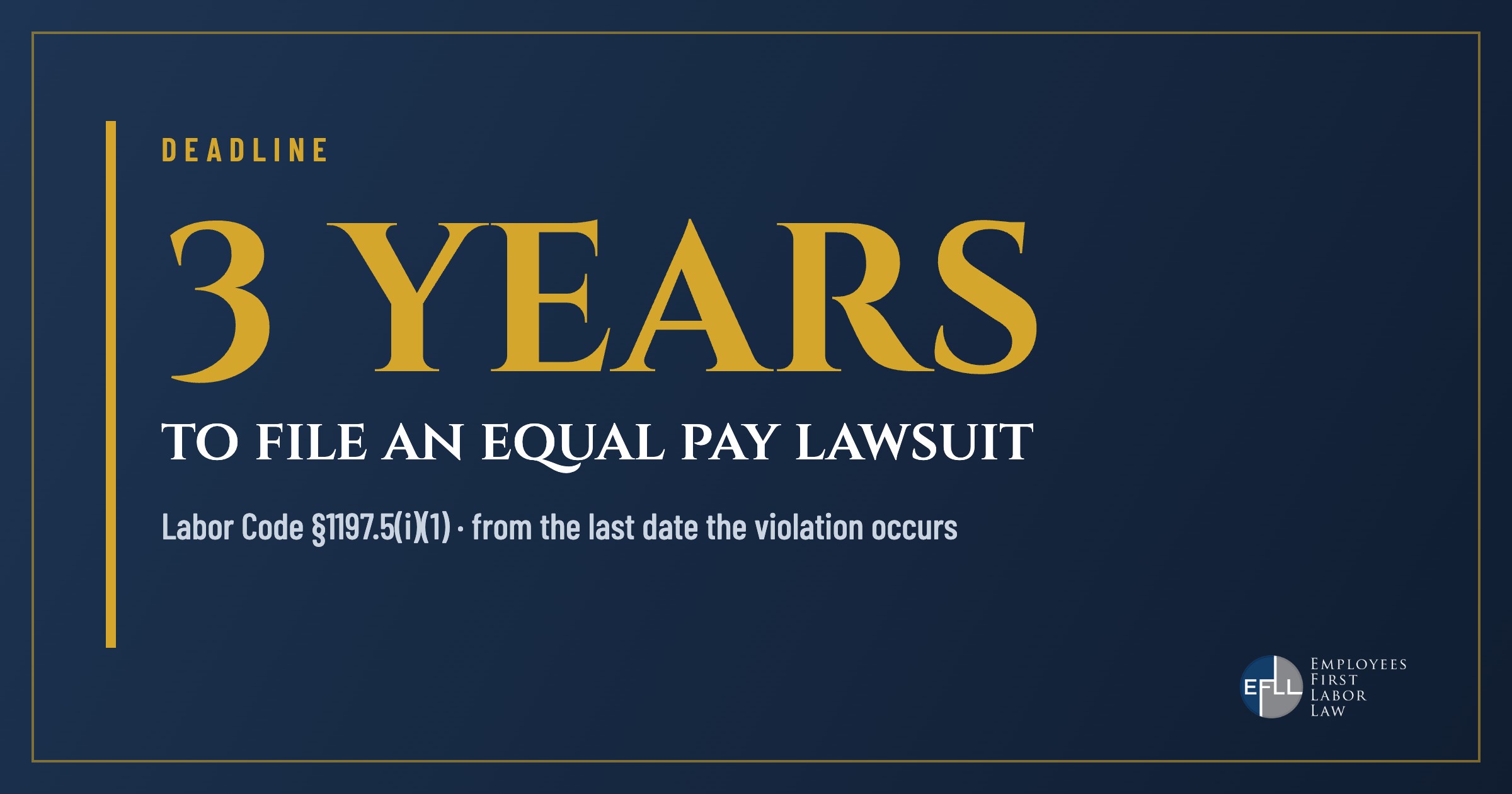
California Labor Code §1197.5, the California Equal Pay Act, prohibits employers from paying employees less than employees of another sex, race or ethnicity for substantially similar work, unless the employer proves the entire pay gap is explained by a legitimate factor such as seniority, merit, production or a job-related factor other than sex, race or ethnicity. As of January 1, 2026, you have three years to sue and can recover back pay for up to six years.
Pay gaps are easy to miss and expensive to ignore. A gap of $600 a month over three years is $21,600 in lost wages, and the Equal Pay Act adds an equal amount as liquidated damages, plus interest and attorney’s fees.
This guide explains what §1197.5 says, who it covers, what counts as a violation, the employer’s defenses, the remedies, the new deadlines and related laws on pay transparency and pay data. For job-posting pay ranges, see our guide to the California pay transparency and salary range law.
- Labor Code §1197.5 bars paying employees less than coworkers of another sex, race or ethnicity for substantially similar work.
- The employer must prove the entire gap is explained by seniority, merit, production or a job-related bona fide factor, and prior salary cannot justify it.
- You can recover the unpaid wages, an equal amount in liquidated damages, interest and attorney’s fees.
- Since January 1, 2026, you have 3 years to sue and can recover for up to 6 years; each paycheck can restart the clock.
- Retaliation within 90 days of protected activity is presumed, and employers cannot ban wage discussions.
What Labor Code §1197.5 says
Subdivision (a) says an employer “shall not pay any of its employees at wage rates less than the rates paid to employees of another sex for substantially similar work, when viewed as a composite of skill, effort, and responsibility, and performed under similar working conditions.” Subdivision (b) applies the same rule to race and ethnicity.
A few phrases do most of the work:
- “Substantially similar work.” The jobs do not have to be identical or have the same title. The comparison looks at the skill, effort and responsibility the work requires, taken together, and whether it is done under similar working conditions.
- “Wage rates.” As amended effective January 1, 2026 by Senate Bill 642, “wages” and “wage rates” include all forms of pay, including salary, overtime pay, bonuses, stock, stock options, profit sharing and bonus plans, life insurance, vacation and holiday pay, cleaning or gasoline allowances, hotel accommodations, reimbursement for travel expenses, and benefits.
- “Sex.” Has the same meaning as in the Fair Employment and Housing Act (Gov. Code §12926).
Who §1197.5 covers
The Equal Pay Act applies to both public and private employers in California, with no minimum number of employees. It protects current and former employees, and comparisons can be made with coworkers of another sex, race or ethnicity who do substantially similar work for the same employer.
What counts as a violation, and the employer’s defenses
A violation occurs when you are paid less than a coworker of another sex, race or ethnicity for substantially similar work and the employer cannot justify the difference. The burden is on the employer. It must show that:
- The pay difference is based on one or more of these factors: a seniority system; a merit system; a system that measures earnings by quantity or quality of production; or a bona fide factor other than sex, race or ethnicity, such as education, training or experience.
- Each factor it relies on is applied reasonably.
- The factors account for the entire pay difference.
The “bona fide factor” defense is narrow. It applies only if the factor is not based on or derived from a sex-, race- or ethnicity-based pay difference, is job related, and is consistent with a business necessity. The defense fails if you show an alternative business practice would serve the same purpose without producing the pay gap.
Prior salary is off the table: “Prior salary shall not justify any disparity in compensation.” An employer may consider a current employee’s existing salary in a compensation decision only if any resulting pay difference is justified by the listed factors.
💡 Example: Ana, a hypothetical project coordinator, earns $5,000 a month. A male coordinator hired the same year, with similar duties and responsibilities, earns $5,600. If the employer cannot prove the $600 monthly gap is fully explained by a permitted factor, three years of the gap is $21,600 in back wages. With an equal amount in liquidated damages, the total is $43,200, plus interest and attorney’s fees.
Equal pay claims can double your back pay through liquidated damages. Get a free, confidential case review.
Remedies and penalties
An employee paid less than the law requires may recover, under §1197.5(c) and (h):
- The balance of wages owed, including interest.
- An equal amount as liquidated damages, which effectively doubles the back pay.
- Costs of suit and reasonable attorney’s fees.
An agreement to work for less does not waive the claim. You cannot recover twice for the same violation under both California law and the federal Equal Pay Act (§1197.5(j)).
Retaliation and wage discussions
Under §1197.5(k), an employer cannot fire, discriminate or retaliate against you for taking action to invoke or assist in enforcing the Equal Pay Act. If the employer takes adverse action within 90 days of that protected activity, there is a rebuttable presumption in favor of your claim. The employer also cannot prohibit you from disclosing your own wages, discussing others’ wages, asking about a coworker’s wages, or helping others exercise their rights. Remedies include reinstatement, lost wages and work benefits with interest, and equitable relief.
Deadlines and where to file
| Claim | Deadline | Source |
|---|---|---|
| Lawsuit for unequal pay | No later than 3 years after the last date the cause of action occurs | §1197.5(i)(1) |
| How far back you can recover | The entire period of the violation, up to 6 years | §1197.5(i)(2) |
| Lawsuit for retaliation | No later than 1 year after the cause of action occurs | §1197.5(k)(3) |
| Employer’s duty to keep pay records | 3 years | §1197.5(e) |
The 2026 amendments also define when a pay claim “occurs”: when an unlawful compensation decision or practice is adopted, when you become subject to it, or when you are affected by it, “including each time wages, benefits, or other compensation is paid.” Each paycheck can restart the clock. The “continuing violation” doctrine and the “discovery rule” may also apply.
You can file a complaint with the Division of Labor Standards Enforcement (the Labor Commissioner’s office), which investigates it and keeps the complaining employee’s name confidential until it establishes the complaint’s validity, or you can go to court. If the Labor Commissioner’s office brings a lawsuit on your behalf, your consent to that suit waives your own lawsuit under subdivision (h) unless the action is dismissed without prejudice, although you can intervene, or file your own action if the agency’s suit is not resolved within 180 days. Accepting a full payment supervised and approved by the division also waives your own lawsuit.
Related sections: pay data, pay transparency and FEHA
- Pay data reporting (Gov. Code §12999). Private employers with 100 or more payroll employees, and private client employers with 100 or more workers hired through labor contractors, must report pay and demographic data to the Civil Rights Department each year. Reports for 2025 were due May 13, 2026.
- Pay transparency (Labor Code §432.3). Rules on pay scales in job postings and on request. See our pay transparency guide.
- Recordkeeping (§1197.5(e)). Employers must keep records of wages, wage rates, job classifications and other terms and conditions of employment for three years.
- FEHA. Pay discrimination can also be a claim under the Fair Employment and Housing Act, with its own filing process through the Civil Rights Department. See our workplace discrimination page.
If you were pushed out after raising a pay concern, our guide on retaliation claims in California explains your options.
Frequently asked questions
What is the statute of limitations for the California Equal Pay Act?
Since January 1, 2026, you must file within three years after the last date the cause of action occurs, and you can recover for the entire period of the violation up to six years. Each paycheck affected by an unlawful pay decision counts as an occurrence.
Do the jobs have to be identical?
No. The test is “substantially similar work,” viewed as a composite of skill, effort and responsibility, performed under similar working conditions. Different job titles do not defeat a claim.
Can my employer pay me less because of my salary at my last job?
No. Section 1197.5 says prior salary shall not justify any pay disparity.
Can I talk about my pay with coworkers?
Yes. Your employer cannot prohibit you from disclosing your own wages, discussing or asking about coworkers’ wages, or helping others enforce their rights under the Equal Pay Act.
Does the Equal Pay Act cover benefits and bonuses?
Yes. “Wages” and “wage rates” include salary, overtime, bonuses, stock and stock options, profit sharing, life insurance, vacation and holiday pay, certain allowances, travel reimbursement and benefits.
What can I recover if I win?
The wages you were shorted plus interest, an equal amount in liquidated damages, and your costs and reasonable attorney’s fees.
Related guides
 Workers only. Never employers.
At Employees First Labor Law, we represent California workers only, never employers. Our team has recovered more than $200 million for our clients, and we prepare every case as if it is going to trial. We have offices in Pasadena, Irvine, Long Beach, Pomona, Riverside, Bakersfield and Fresno, and we serve workers throughout California. Meet our team.







If you are paid less than coworkers of another sex, race or ethnicity for substantially similar work, we can evaluate your claim for back pay, liquidated damages and fees, and protect you from retaliation.
- ✅ Free, confidential consultation
- ✅ We represent workers only, never employers
- ✅ Se habla español: Empleados Primero
This article provides general information about California law and is not legal advice for any specific situation. Reading it does not create an attorney-client relationship. Past results do not guarantee a similar outcome.