
Updated October 2026 · 6 min read
California Labor Code section 6310 makes it illegal for anyone to fire or “in any manner discriminate against” an employee for making a safety or health complaint, whether to Cal/OSHA, another government agency, the employer, or the employee’s representative. Its companion, section 6311, protects workers who refuse to perform work that would violate a safety law and create a real and apparent hazard.
These two sections matter because safety problems are often first noticed by the people doing the work. If you are punished for speaking up, section 6310 entitles you to reinstatement and the wages and benefits you lost. But the deadlines are short: one year for a Labor Commissioner complaint, and 30 days if you also want to use the federal complaint process.
This guide explains what sections 6310 and 6311 say, who they cover, what counts as a violation, the remedies and how to file. If you work in health care, see also our page on Health and Safety Code 1278.5 whistleblower protection.
- Labor Code 6310 bars firing or “in any manner” discriminating against you for an oral or written safety complaint to Cal/OSHA, another agency, your employer or your representative.
- It also protects reporting a work injury or illness, asking for injury records, serving on a safety committee, and testifying in a safety proceeding.
- Section 6311 is different: it protects refusing to do work that would violate a safety law and create a real and apparent hazard.
- Remedies include reinstatement and lost wages and benefits; willfully refusing to rehire an employee found eligible is a misdemeanor.
- File a retaliation complaint with the Labor Commissioner within one year; a separate federal OSHA complaint has a 30-day window.
What Labor Code 6310 says
Section 6310 is part of the California Occupational Safety and Health Act, in Division 5 of the Labor Code. It was last amended effective January 1, 2021. Subdivision (a) protects an employee who has:
- Made any oral or written complaint to the Division of Occupational Safety and Health (Cal/OSHA), other government agencies responsible for workplace safety, the employer, or the employee’s representative.
- Started a proceeding about safety rights, testified or is about to testify, or exercised safety rights on behalf of themselves or others.
- Participated in a workplace health and safety committee.
- Reported a work-related death, injury or illness, requested access to injury and illness records, or exercised other rights under the federal Occupational Safety and Health Act.
Subdivision (b) gives a worker who is discharged, threatened with discharge, demoted, suspended or otherwise discriminated against for a bona fide safety complaint the right to reinstatement and reimbursement for lost wages and work benefits. Subdivisions (c) and (d) extend protection to family members and make client employers and multi-employer worksite employers responsible, and subdivision (e) covers most domestic workers.
Section 6310 vs. section 6311: complaining vs. refusing
| Labor Code 6310 | Labor Code 6311 | |
|---|---|---|
| What it protects | Complaining about or reporting unsafe conditions, injuries or illnesses; safety committee work; testifying | Refusing to perform work that would violate the Labor Code, a safety standard or a safety order |
| Key condition | A bona fide complaint about unsafe working conditions or practices | The violation would create a “real and apparent hazard” to you or coworkers |
| Prohibited conduct | Discharge or discrimination “in any manner” | Layoff or discharge, or not being paid, for the refusal |
| Remedy | Reinstatement plus lost wages and work benefits | Wages for the time you were without work |
The difference matters. Section 6311 doesn’t protect refusing any task you dislike. The work must actually violate a safety law or order, and the danger must be real and apparent. Raising the concern first, in writing if possible, also brings you within section 6310.
Who is covered
Sections 6310 and 6311 protect employees, including domestic work employees other than those providing publicly funded household services. Section 6310 says “no person” may retaliate, so it reaches the employer and anyone acting for it. It also holds responsible client employers that use staffing or labor contractors, and employers on multi-employer worksites such as construction projects.
One important exclusion: if the retaliation is for filing, or saying you’ll file, a workers’ compensation claim, that claim belongs under Labor Code 132a before the Workers’ Compensation Appeals Board. See our guide to workers’ comp retaliation claims under section 132a.
Safety retaliation cases move on short deadlines, especially if you want to use the federal option. We can review what happened in a free, confidential consultation.
What counts as a violation
- ✅ Firing, suspending or demoting a worker after a call to Cal/OSHA about missing machine guards.
- ✅ Cutting hours or moving a worker to worse shifts after they complained to a supervisor about heat, fumes or blocked exits.
- ✅ Threatening discipline for reporting an on-the-job injury, or for asking for the injury and illness log.
- ✅ Retaliating against a safety committee member for raising hazards.
- ✅ Laying off a worker who refused to enter an unshored trench that violated safety orders (section 6311).
Heat is a common example. Complaining about a lack of water, shade or rest in hot weather is a safety complaint; our page on workplace heat illness explains the underlying rules. Interfering with Cal/OSHA itself can carry separate consequences, as described in our article on AB 2321.
Remedies and penalties
- Reinstatement and reimbursement for lost wages and work benefits (section 6310(b)).
- Wages for time without work when you were laid off or discharged for a protected refusal (section 6311).
- Misdemeanor liability for an employer that willfully refuses to rehire or restore an employee found eligible through a grievance, arbitration or hearing.
- Through the Labor Commissioner: interest on lost wages, attorney’s fees for any hearing, posting of notices, and up to $100 a day (capped at $20,000) if an employer defies a court order to reinstate (Labor Code 98.7).
Section 6310 itself doesn’t contain a civil penalty. But a safety complaint to a government agency or to a supervisor is often also protected by Labor Code 1102.5, which adds a civil penalty of up to $10,000 per violation and attorney’s fees.
💡 Example: Rosa, a hypothetical machine operator earning $900 a week, reports a missing blade guard to Cal/OSHA. Two weeks later she is fired. She finds a new job at the same pay after 12 weeks. Her lost wages under section 6310 are $900 × 12 = $10,800, plus any lost benefits. If the facts also support a section 1102.5 claim, she may seek a civil penalty as well.
Deadlines and where to file
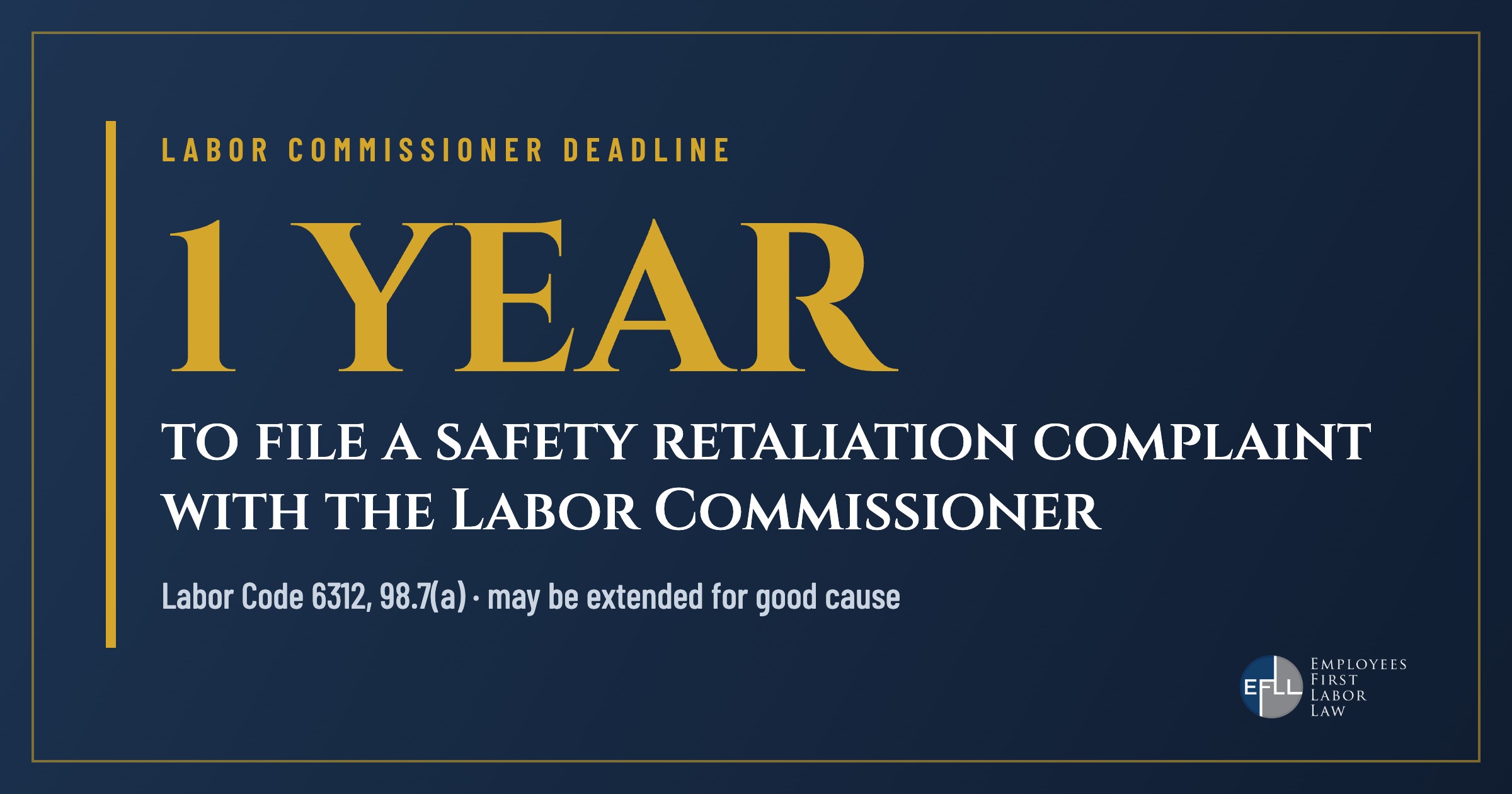
- Labor Commissioner: Labor Code 6312 lets you file a 6310 or 6311 complaint with the Labor Commissioner under section 98.7. The deadline is one year after the violation, extendable for good cause.
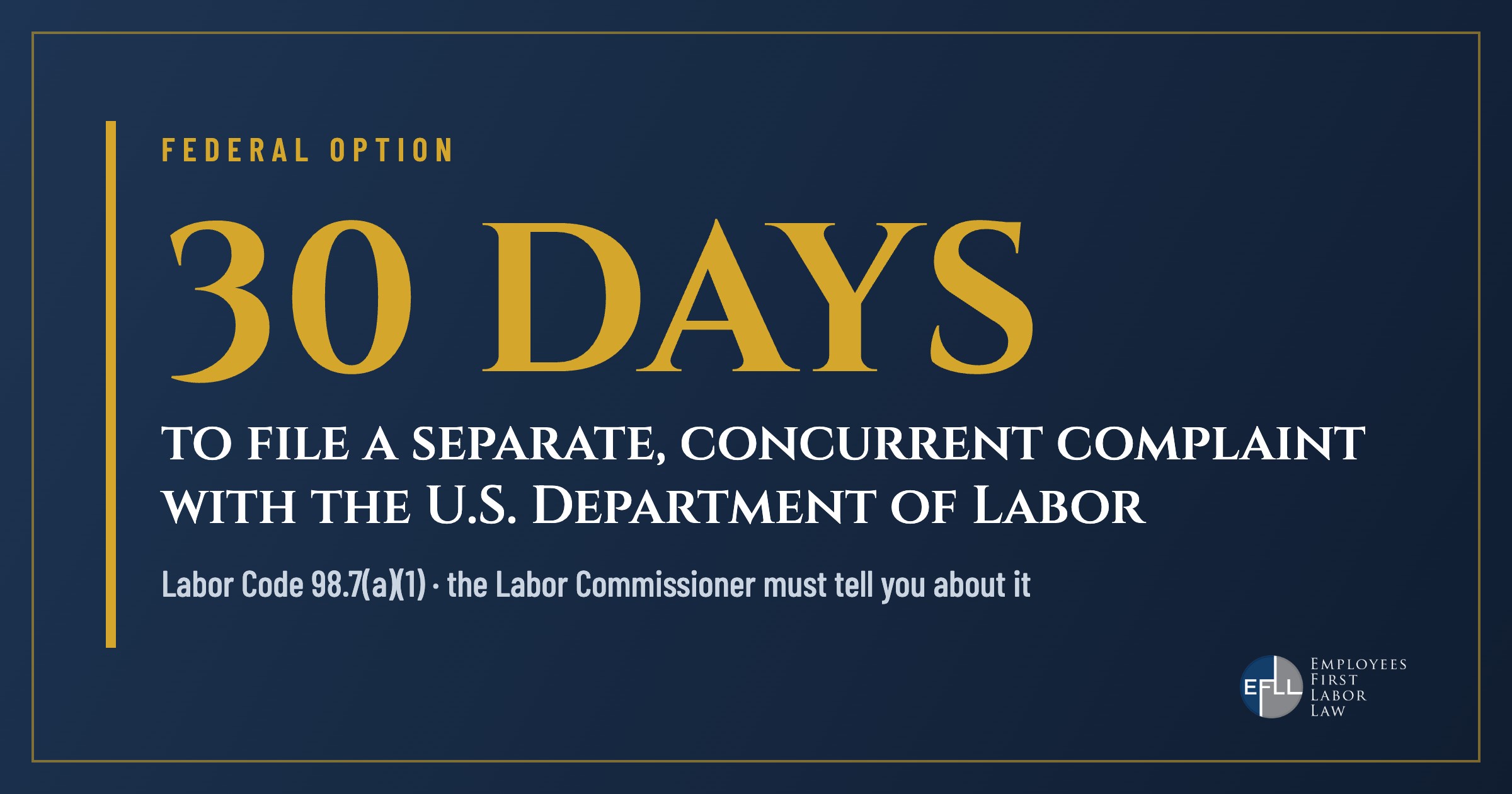
- Federal complaint: the Labor Commissioner must tell 6310 and 6311 complainants that they can file a separate, concurrent complaint with the U.S. Department of Labor within 30 days of the violation.
- Appeal: unlike most Labor Commissioner retaliation decisions, a determination in a 6310 or 6311 case can be appealed by the worker to the Director of Industrial Relations.
- Court: you don’t have to exhaust the Labor Commissioner process before suing (section 98.7(g)), and filing there pauses your court deadline while it is pending. Related claims, such as section 1102.5 or wrongful termination in violation of public policy, have their own deadlines.
The Labor Commissioner says it does not ask about immigration status and doesn’t require a Social Security number or photo ID to file a retaliation complaint.
Related sections
- Labor Code 6311: refusing hazardous work (above).
- Labor Code 6312 and 98.7: filing and investigation procedures.
- Labor Code 6400: the employer’s duty to provide a safe and healthful workplace.
- Labor Code 1102.5: general whistleblower protection, with a civil penalty.
- Labor Code 98.6: retaliation for exercising other Labor Code rights. See our Labor Code 98.6 explainer.
- Labor Code 132a: retaliation for workers’ comp claims, decided by the WCAB.
What to do if you were retaliated against
- Write down the hazard, when and to whom you reported it, and how (call, email, agency form).
- Take notes or photos of the hazard if you can do so safely and lawfully.
- Record every change after your complaint: schedule, assignments, write-ups, comments.
- If you refused a task, write down why it was dangerous and what rule it broke.
- Calendar the 30-day federal window and the one-year Labor Commissioner deadline.
- Talk to an employment lawyer about combining 6310 with section 1102.5 and other claims.
Frequently asked questions
Does Labor Code 6310 protect internal complaints to my supervisor?
Yes. Section 6310 protects oral or written complaints to Cal/OSHA, other safety agencies, your employer or your representative.
Can I refuse to do dangerous work?
Under section 6311 you can’t be laid off or fired for refusing work that would violate the Labor Code, a safety standard or a safety order, where the violation would create a real and apparent hazard to you or your coworkers.
What if I was fired for reporting a work injury?
Reporting a work-related injury or illness is protected by section 6310. If the retaliation was for filing a workers’ comp claim, that part of the case goes to the WCAB under section 132a.
Is there a penalty for safety retaliation?
Section 6310 provides reinstatement and lost wages and benefits. A civil penalty of up to $10,000 may be available if the same facts also violate Labor Code 1102.5.
How long do I have to file?
One year with the Labor Commissioner, and 30 days for a concurrent federal complaint. Don’t wait.
Related guides
 Workers only. Never employers.
At Employees First Labor Law, we represent California workers only, never employers. Our team has recovered more than $200 million for our clients, and we prepare every case as if it is going to trial. We have offices in Pasadena, Irvine, Long Beach, Pomona, Riverside, Bakersfield and Fresno, and we serve workers throughout California. Meet our team.






If you were fired, cut back or written up after reporting a safety hazard, an injury, or refusing truly dangerous work, we can review your rights under Labor Code 6310 and 6311 and related whistleblower laws. Our attorneys help California workers recover lost wages, benefits and penalties.
- ✅ Free, confidential consultation
- ✅ We represent workers only, never employers
- ✅ Se habla español: Empleados Primero
This article provides general information about California law and is not legal advice for any specific situation. Reading it does not create an attorney-client relationship. Past results do not guarantee a similar outcome.