

In this guide11 sections
- Key takeaways
- Common work-related respiratory illnesses
- How to prove a respiratory illness is work-related
- Deadlines for lung disease claims
- Presumptions for public safety workers
- COVID-19 and hospital workers
- Benefits you may receive
- Common insurer defenses
- Your right to a safe workplace
- Frequently asked questions
- Talk to a California workers’ comp lawyer
If your job caused or worsened a lung or breathing condition, such as asthma, COPD, silicosis or valley fever, California workers’ comp may cover your medical care, lost wages, permanent disability and, in fatal cases, death benefits for your family. Most respiratory illnesses are treated as occupational diseases: you prove the claim with medical evidence linking the illness to what you breathed at work. Certain firefighters and peace officers get a presumption for some conditions. The special COVID-19 presumptions ended on January 1, 2024.
Key takeaways
- You need medical evidence that workplace exposure was a contributing cause of your illness or made an existing condition worse.
- For an occupational disease, the date of injury is when you first had disability and knew, or should have known, it was caused by work; the one-year filing clock generally runs from there.
- Pneumonia, tuberculosis and some cancers are presumed work-related for many firefighters and peace officers (Labor Code §§3212, 3212.5, 3212.6, 3212.1).
- Temporary disability can last up to 240 weeks for pulmonary fibrosis and chronic lung disease, instead of the usual 104.
- Your employer must protect you from hazards like wildfire smoke, and can’t retaliate against you for raising safety concerns.
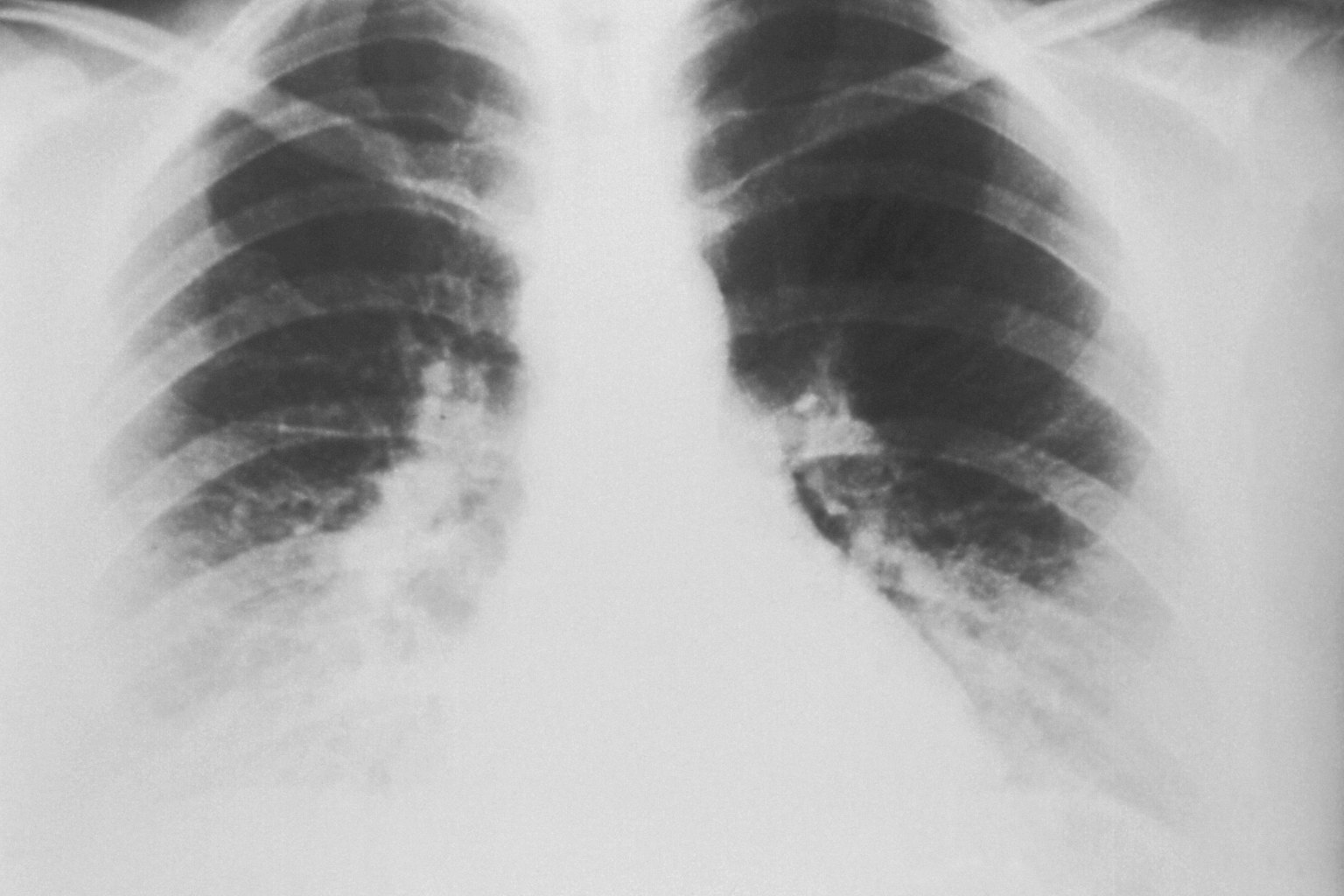
Common work-related respiratory illnesses
| Condition | Common workplace causes | Jobs often affected |
|---|---|---|
| Occupational asthma | Flour and grain dust, cleaning chemicals, isocyanates in paints, wood dust, animal dander | Bakers, janitors, auto body painters, woodworkers, lab and animal care workers |
| COPD and chronic bronchitis | Long-term dust, fumes and chemical vapors | Welders, miners, construction and manufacturing workers |
| Reactive airways dysfunction syndrome | A single high exposure to an irritant gas or chemical spill | Warehouse, plant and cleaning workers |
| Silicosis and asbestosis | Silica dust from cutting stone and concrete; asbestos in older buildings | Stone fabricators, construction, demolition and renovation workers |
| Valley fever | Fungal spores in soil stirred up by digging and wind | Construction, farm and solar workers in the Central Valley and Central Coast |
| Hypersensitivity pneumonitis | Mold and organic dust | Agricultural workers, workers in water-damaged buildings |
| Lung cancer | Asbestos, diesel exhaust, silica and other carcinogens | Mechanics, construction workers, firefighters |
See also our guide to chemical and toxic exposure at work.
How to prove a respiratory illness is work-related
Like any workers’ comp injury, your illness must arise out of and occur in the course of employment. Work doesn’t have to be the only cause: Appeals Board decisions say you need only show work was a contributing cause, supported by a medical opinion based on reasonable medical probability. Read more about AOE/COE.
Evidence that helps:
- A detailed exposure history. List every job, the substances you worked around, for how long, and what protection you had.
- Safety Data Sheets for chemicals used at work, and any air monitoring results.
- Medical records, including breathing tests, imaging and specialist opinions, especially records showing symptoms improving on days off.
- Witnesses and reports. Coworkers with similar symptoms, incident reports, and any Cal/OSHA complaints or citations.
- A medical-legal report. If causation is disputed, a Qualified or Agreed Medical Evaluator will usually decide the medical questions. See how QMEs and AMEs differ.
Deadlines for lung disease claims
Respiratory illnesses often develop slowly, so the “date of injury” isn’t the first day you coughed. Under Labor Code §5412, it is the date you first suffered disability from the illness and knew, or reasonably should have known, that it was caused by your work. From there:
- Tell your employer in writing as soon as you connect the illness to work; the general notice deadline is 30 days (Labor Code §5400).
- File a claim form; most claims must be filed within one year (Labor Code §5405).
- If a worker dies, a death claim generally must be filed within one year of the death and no more than 240 weeks after the injury (Labor Code §5406).
Presumptions for public safety workers
| Law | Condition | Who (summary) | How long it lasts after leaving the job |
|---|---|---|---|
| Labor Code §3212 | Pneumonia (also hernia and heart trouble) | Firefighters and law enforcement members of public agencies, including sheriff’s offices and the Highway Patrol | 3 months per full year of service, up to 60 months |
| Labor Code §3212.5 | Pneumonia (also heart trouble) | Full-time city police, Highway Patrol, sheriff’s and district attorney peace officers | 3 months per full year of service, up to 60 months |
| Labor Code §3212.6 | Tuberculosis | Police, firefighters, Highway Patrol members, correctional officers and others | 3 months per full year of service, up to 60 months |
| Labor Code §3212.1 | Cancer, including lung cancer | Active firefighters and certain peace officers exposed to a known carcinogen | 3 months per full year of service, up to 120 months |
These presumptions can be rebutted by the employer, but they shift the burden away from the worker. Most private-sector workers, and most public employees outside these roles, prove their claims with medical evidence instead.
COVID-19 and hospital workers
California’s COVID-19 presumptions, created in 2020, expired on January 1, 2024. According to the Department of Industrial Relations, workers can still establish that a COVID-19 claim is compensable under the standard rules for diseases, so long COVID and other complications may still be covered with medical proof of work exposure.
A 2025 bill, SB 632, would have created presumptions for hospital workers covering respiratory illnesses and other conditions. Its workers’ comp provisions were removed in June 2026, and they did not become law. See what happened to SB 632.
Benefits you may receive
- Medical treatment, such as pulmonary function testing, inhalers and other medications, oxygen therapy and pulmonary rehabilitation, approved through utilization review.
- Temporary disability while you can’t work, generally two-thirds of your average weekly wage, between $264.61 and $1,764.11 a week for 2026 injuries, according to the Department of Industrial Relations. It is generally limited to 104 weeks within five years, but up to 240 weeks for pulmonary fibrosis and chronic lung disease (Labor Code §4656(c)).
- Permanent disability if your lung function doesn’t fully recover.
- A $6,000 Supplemental Job Displacement Benefit voucher if you have permanent partial disability from a 2013-or-later injury and your employer doesn’t offer suitable work.
- Death benefits of $250,000 to $320,000 for dependents of workers who die, plus up to $10,000 for burial.
Estimate your benefits with our workers’ comp benefits calculator.
Common insurer defenses
- Smoking. Smoking doesn’t defeat a claim if work exposure also contributed. It may affect apportionment of permanent disability.
- Pre-existing asthma or allergies. Aggravation of an existing condition by work exposure can be compensable.
- “The exposure was minimal.” Exposure records, Safety Data Sheets, photos of conditions and coworker statements answer this.
- Delays in testing and specialist referrals. While the claim is being investigated, your employer must authorize up to $10,000 in treatment (Labor Code §5402).
Your right to a safe workplace
When the air quality index for fine particles from wildfire smoke reaches 151 or higher and workers can be expected to be exposed, Cal/OSHA’s wildfire smoke rule requires employers to monitor air quality, inform and train workers, use controls such as filtered buildings or schedule changes, and provide N95-type respirators for voluntary use. Above an AQI of 500, respirator use is mandatory. Construction employers in counties where valley fever is highly endemic, including Fresno, Kern, Kings, Madera, Merced, Monterey, San Joaquin, San Luis Obispo, Santa Barbara, Tulare and Ventura, must train workers on valley fever (Labor Code §6709). And your employer can’t fire or discriminate against you for complaining about safety (Labor Code §6310).
Here is a hypothetical. Rosa, a bakery worker in Fresno, develops wheezing and shortness of breath that improve on her days off. A pulmonologist diagnoses occupational asthma from flour dust. Her date of injury is when she first lost time from work and her doctor told her the cause was her job, and she files her claim within a year of that date.
Frequently asked questions
Can I file a claim if I smoke?
Yes. Smoking doesn’t automatically defeat a claim. If work exposure contributed to your illness, you may be entitled to benefits, though permanent disability may be apportioned.
My symptoms started years after I left the job. Is it too late?
Not necessarily. For occupational diseases, the deadline generally runs from when you first had disability and knew, or should have known, it was work-related.
Is long COVID covered by workers’ comp?
It can be, but there is no longer a COVID-19 presumption. You need medical evidence that you were exposed at work and that the illness caused your disability.
Can I sue my employer instead?
Generally no. Workers’ comp is usually the exclusive remedy against your employer, with limited exceptions. You may have a separate lawsuit against a third party, such as the manufacturer of a defective product.
What if my employer ignores wildfire smoke or dust hazards?
You can report the hazard to Cal/OSHA. Retaliation for safety complaints is unlawful, and you may have a separate claim if you are punished for speaking up.
Talk to a California workers’ comp lawyer
Employees First Labor Law represents workers exclusively, including workers with occupational lung and breathing illnesses. We offer free virtual consultations to review your exposure history, medical records and options. Contact us online or call (310) 853-3461.
This article is general information about California law as of 2026, not legal advice for your situation. Reading it does not create an attorney-client relationship.
