

In this guide10 sections
- Key takeaways
- Common knee and leg injuries at work
- Sudden injuries and injuries that build over time
- Benefits for knee and leg injuries
- Light duty and modified work
- Pain, depression and other consequences
- What to do after a knee or leg injury at work
- Common insurer arguments and how workers respond
- Frequently asked questions
- Talk to a California workers’ comp lawyer
If you hurt your knee or leg at work in California, workers’ compensation generally covers it, whether it happened in a single accident, such as a fall from a ladder, or built up over time from kneeling, squatting or standing on hard floors. You can receive medical care, including surgery when it’s reasonably required, wage replacement while you can’t work, and permanent disability if lasting limits remain. Report the injury to your employer in writing within 30 days and file a DWC-1 claim form.
Key takeaways
- Both sudden injuries and gradual “cumulative” injuries from repeated work activity are covered (Labor Code §3208.1).
- Your employer must provide treatment reasonably required to cure or relieve the effects of the injury (Labor Code §4600), and up to $10,000 in treatment while it decides your claim.
- Temporary disability pays two-thirds of your average weekly earnings, between $264.61 and $1,764.11 a week for 2026 injuries.
- A prior knee problem doesn’t automatically defeat your claim, but permanent disability may be apportioned between work and other causes (Labor Code §4663).
- Medical travel is reimbursed at 76 cents a mile for travel on or after July 1, 2026.
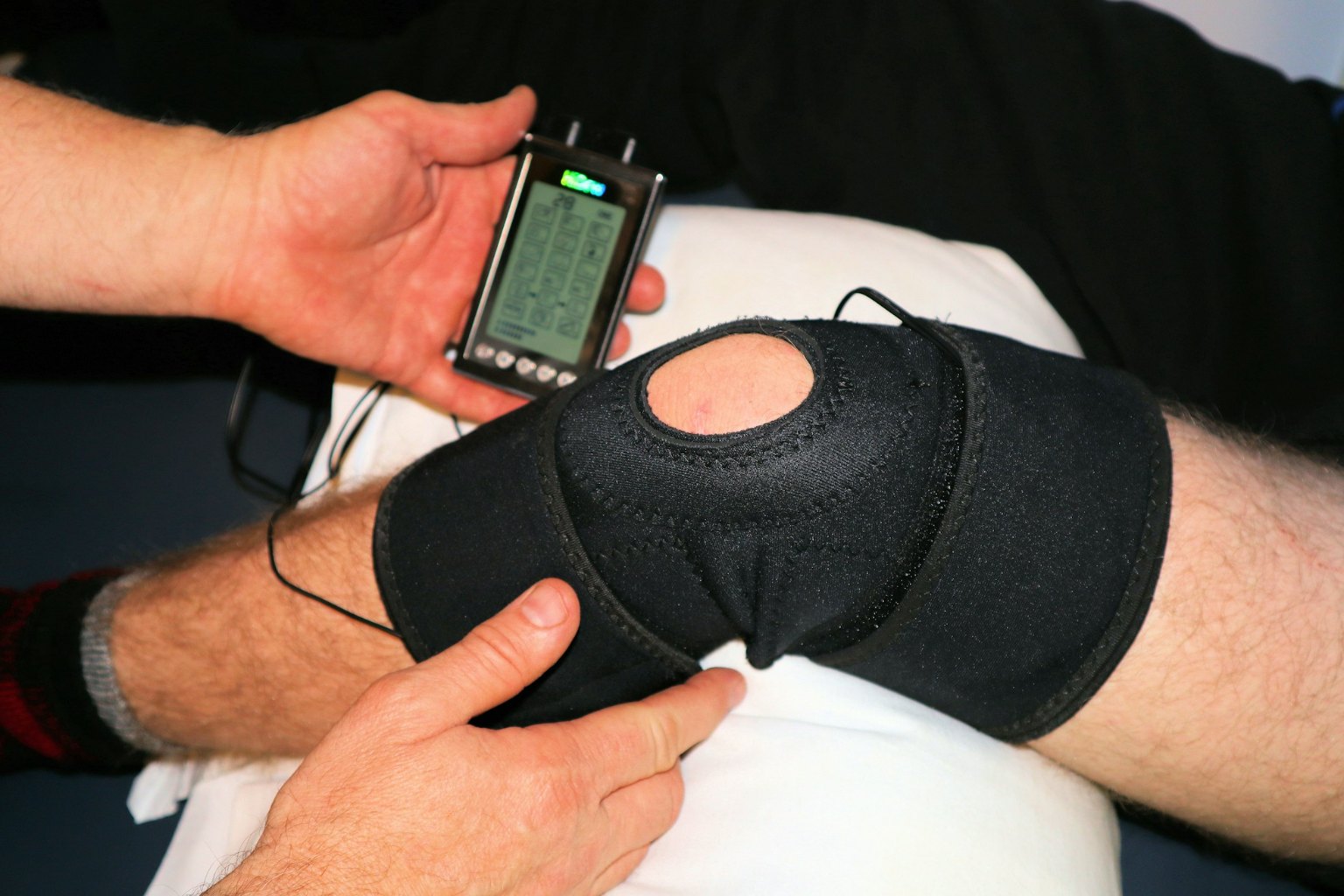
Common knee and leg injuries at work
| Injury | How it often happens at work |
|---|---|
| Meniscus tears | Twisting while lifting, squatting or pivoting; repeated kneeling |
| Ligament sprains and tears (ACL, MCL, PCL) | Slips, falls, awkward landings, getting off equipment |
| Patellar tendonitis and bursitis | Kneeling, climbing stairs or ladders, repeated squatting |
| Fractures of the kneecap, tibia or fibula | Falls from heights, vehicle accidents, falling objects |
| Hamstring and quadriceps strains | Lifting, pushing and sudden movements |
| Crush injuries and amputations | Forklifts, heavy machinery, pinch points |
| Circulation and vein problems | Long periods of standing in some jobs |
Warehouse workers, construction trades, housekeepers, nurses, delivery drivers and retail workers see many of these injuries.
Sudden injuries and injuries that build over time
Labor Code §3208.1 recognizes two kinds of injury. A specific injury comes from one incident, like stepping off a truck and feeling your knee give out. A cumulative injury comes from repetitive, physically traumatic activities over time, like years of kneeling to install flooring. Both are covered.
For a cumulative injury, the date of injury is generally when you first suffered disability and knew, or reasonably should have known, that work caused it (Labor Code §5412). Learn more about cumulative trauma and repetitive use injuries.
Hypothetical example: Rosa is a hotel housekeeper who kneels to clean tubs and floors dozens of times a shift. Her right knee aches for months before an MRI shows a meniscus tear. The insurer says the tear is “degenerative” and not from work. Rosa’s doctor explains that the repeated kneeling contributed to the tear. If work contributed, her claim can go forward as a cumulative injury, and arguments about her age or prior wear mainly affect how any permanent disability is apportioned.
Benefits for knee and leg injuries
- Medical treatment: doctor visits, imaging, physical therapy, injections, braces, and surgery when reasonably required. If your employer uses a medical provider network (MPN), you can choose doctors within the network after the first visit, and the MPN must offer second and third opinions. See medical treatment rights in California.
- Medical mileage: reimbursement for travel to treatment and medical-legal exams, at 76 cents a mile for travel on or after July 1, 2026.
- Temporary disability (TD): two-thirds of your average weekly earnings while you can’t work, within the 2026 range of $264.61 to $1,764.11 a week. TD is generally limited to 104 weeks within five years of the injury, but amputations are among the conditions allowed up to 240 weeks. See temporary disability benefits.
- Permanent disability (PD): if you have lasting impairment after reaching maximum medical improvement, such as reduced motion, instability or a knee replacement. For injuries on or after January 1, 2014, PD pays $160 to $290 a week for ratings under 100%, for a number of weeks set by your rating.
- Supplemental job displacement voucher: up to $6,000 for retraining if your injury was on or after January 1, 2013, you have a permanent partial disability and your employer doesn’t offer qualifying work. Voucher recipients may also qualify for a one-time $5,000 Return-to-Work Supplement.
To estimate your weekly benefits, try our workers’ comp benefits calculator.
Light duty and modified work
Many knee injuries come with restrictions such as no kneeling, no ladders or limited standing. If your employer offers work within those restrictions, full temporary disability generally stops. If the modified job pays less, you may receive temporary partial disability for the wage loss. If your employer can’t accommodate your restrictions, TD continues while you’re medically unable to do your usual job.
Pain, depression and other consequences
A serious leg injury can lead to chronic pain, depression or anxiety. Treatment for these consequences of a work injury is generally covered. For injuries on or after January 1, 2013, however, Labor Code §4660.1(c) generally doesn’t allow a psychiatric condition caused by a physical injury to increase your permanent disability rating, unless the injury was catastrophic or involved a violent act.
What to do after a knee or leg injury at work
- Get medical care and tell the provider exactly how the injury happened at work.
- Report the injury in writing. Labor Code §5400 calls for notice within 30 days. Late notice bars a claim only if the employer was misled or prejudiced (§5403), but don’t wait.
- File a DWC-1 claim form. Your employer must give you one within one working day after learning of the injury (see the DWC’s claim-filing steps). Keep a copy of what you return.
- Document everything: photos of the hazard, names of witnesses, your work schedule and a log of symptoms.
- Disclose prior injuries honestly. If asked, you must disclose prior permanent disabilities or impairments (Labor Code §4663(d)). Hiding an old knee injury can damage your credibility.
- Follow restrictions and keep appointments. Gaps in care give the insurer an opening.
If your employer doesn’t deny the claim within 90 days after you file the claim form, it is presumed covered. The general deadline to start a case before the Workers’ Compensation Appeals Board is one year from the date of injury, or from your last benefit payment or treatment (Labor Code §5405).
Common insurer arguments and how workers respond
- “It’s pre-existing arthritis.” A work injury that aggravates an existing condition can still be covered. Under §4663, the doctor must estimate how much of the permanent disability was caused by the work injury and how much by other factors, which may reduce the PD award but doesn’t erase the injury.
- “It didn’t happen at work.” Prompt reporting, witnesses and consistent medical histories answer this.
- “The MRI is normal.” Imaging isn’t the only evidence. Clinical exams, symptoms and function matter too.
- “Surgery isn’t necessary.” If utilization review denies your doctor’s surgery request, you can challenge it through independent medical review.
If your claim was rejected, see denied workers’ compensation claim.
Frequently asked questions
Is a knee injury from kneeling all day covered by workers’ comp?
Yes, it can be. Repetitive kneeling, squatting or climbing that wears down the knee over time can be a cumulative injury under Labor Code §3208.1, even without a single accident.
Will workers’ comp pay for knee surgery or a knee replacement?
Workers’ comp must provide treatment reasonably required to cure or relieve the effects of your work injury, which can include surgery. Requests go through utilization review, and denials can be challenged through independent medical review.
I hurt my knee playing sports years ago. Can I still file?
Yes. A prior injury doesn’t bar a new claim if work caused or aggravated your current condition. It may affect how permanent disability is apportioned, so disclose it honestly.
How much is a knee injury worth in workers’ comp?
It depends on your permanent disability rating, your earnings and your date of injury. Ratings for knee injuries vary widely with range of motion, stability and surgery. See how permanent disability ratings work.
Can I sue if someone other than my employer caused the injury?
Possibly. If a defective machine or a driver who isn’t your coworker caused the injury, you may have a separate personal injury claim in addition to workers’ comp.
Talk to a California workers’ comp lawyer
Employees First Labor Law represents workers exclusively, including injured workers in California workers’ comp cases. We offer free virtual consultations to review your knee or leg injury, your treatment and your benefits. Contact us online or call (310) 853-3461.
This article is general information about California law as of 2026, not legal advice for your situation. Reading it does not create an attorney-client relationship.
