

Updated October 11, 2026 · 8 min read
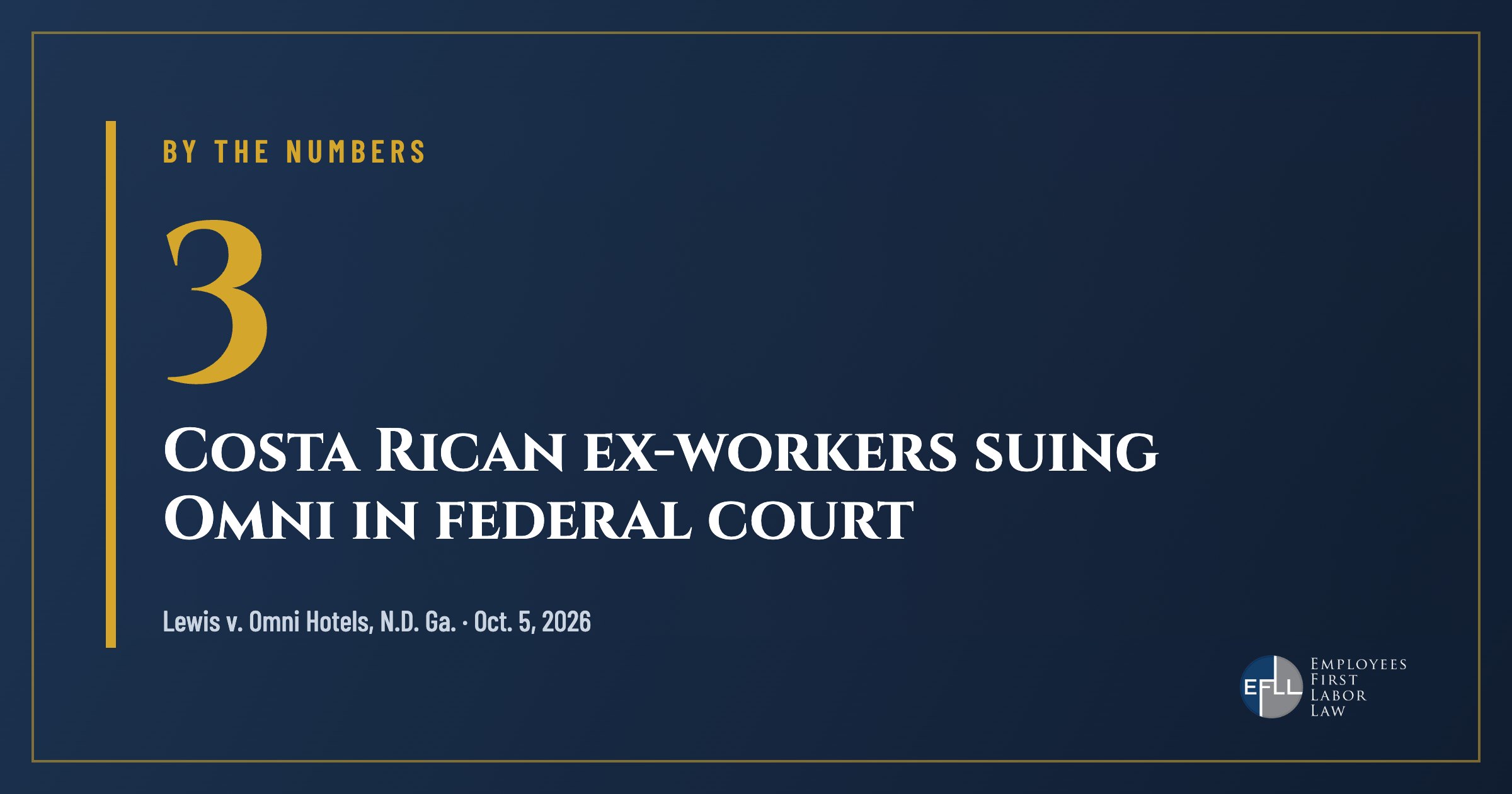
Three former workers from Costa Rica sued Omni Hotels Management Corporation in federal court in Atlanta on Oct. 5, 2026, alleging that the company broke federal wage law and then removed them from employer-sponsored housing after they complained about their pay.
The case, filed in the U.S. District Court for the Northern District of Georgia, names the company doing business as the Omni Hotel at The Battery Atlanta. The complaint’s allegations have been only partially reported, so details such as the workers’ jobs, visa status and the pay they claim are not public. These are allegations only.
The story still matters in California, where many hotel and resort workers live in housing their employer provides or arranges. This post covers what has been reported, why California law gives hotel workers stronger protection than the federal law in the Atlanta case, and what to do if your employer threatens your housing after you speak up about pay.
- Three Costa Rican former workers sued Omni on Oct. 5, 2026, under the federal Fair Labor Standards Act, alleging wage violations and retaliation.
- The suit says Omni removed them from employer-sponsored housing after they complained about pay. These are allegations only.
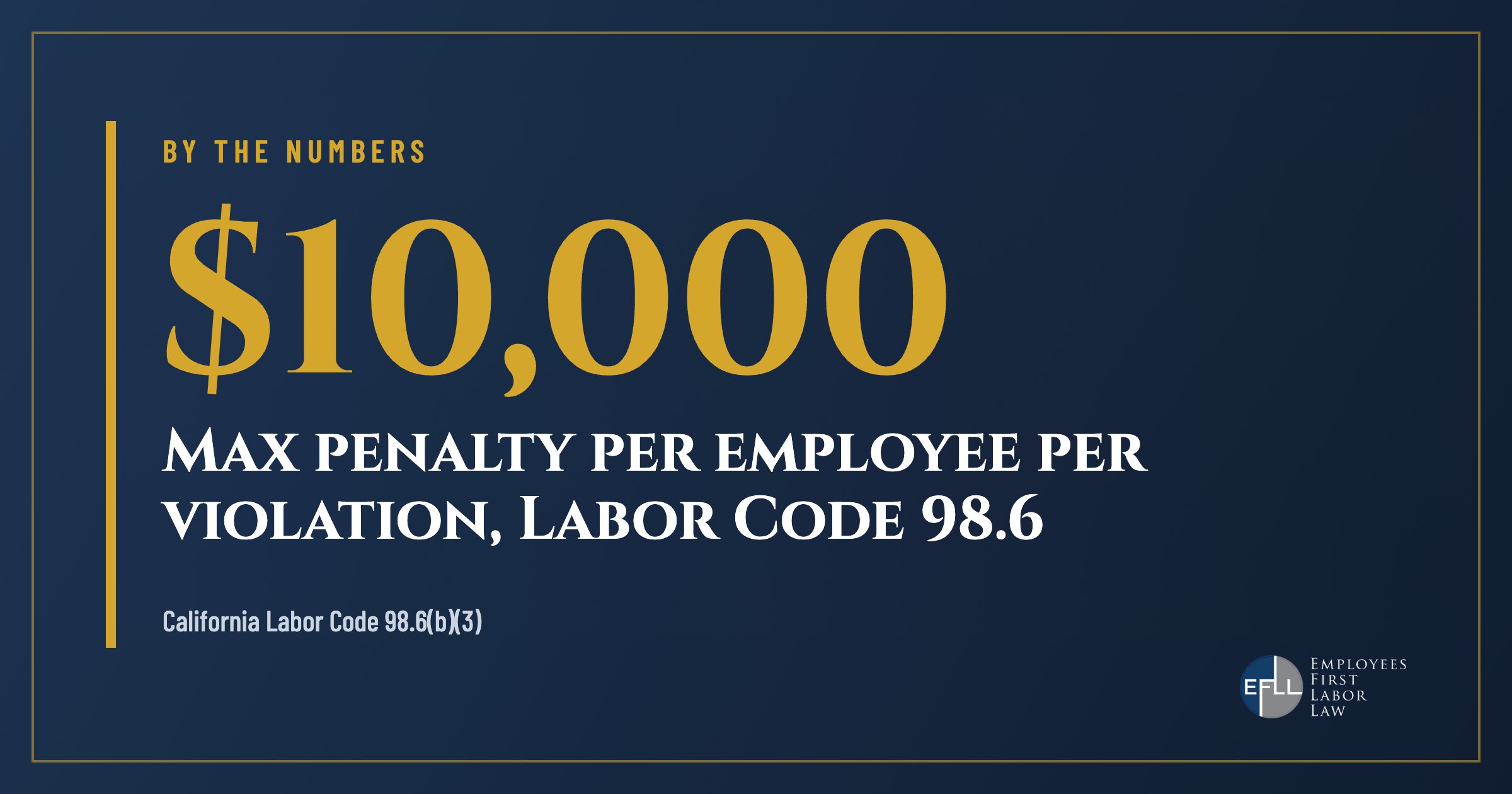
- In California, Labor Code 98.6 bars any adverse action for a wage complaint and carries a penalty of up to $10,000 per employee for each violation.
- California protects workers regardless of immigration status, and AB 2495 broadens the ban on immigration-related retaliation starting Jan. 1, 2027.
- If your employer controls your housing, do not move out on a verbal order. Get advice first.
What happened
According to the federal court docket, the three plaintiffs filed a complaint with a jury demand on Oct. 5, 2026, against Omni Hotels Management Corporation, doing business as the Omni Hotel at The Battery Atlanta. The case is Lewis et al. v. Omni Hotels Management Corporation, No. 1:26-cv-05735, and it is assigned to U.S. District Judge Eleanor L. Ross. The claim is brought under the Fair Labor Standards Act’s provision for minimum wage and overtime lawsuits.
Law360 reported the next day that the workers are from Costa Rica and that they claim Omni retaliated against them for raising pay complaints by booting them from employer-sponsored housing. The full complaint is not freely available, and as of this writing, no other news outlet has reported further details. We could not confirm what visa program, if any, brought the workers to Atlanta or what positions they held. Nothing in the lawsuit has been proven.
| Item | Detail | Source |
|---|---|---|
| Filed | Oct. 5, 2026 | Court docket |
| Court | U.S. District Court, Northern District of Georgia | Court docket |
| Case number | 1:26-cv-05735 | Court docket |
| Defendant | Omni Hotels Management Corporation, d/b/a Omni Hotel at The Battery Atlanta | Court docket |
| Plaintiffs | Three former workers from Costa Rica | Court docket; Law360 |
| Claims | Federal wage violations and retaliation, including removal from employer-sponsored housing | Law360 |
| Not yet reported | Visa type, job titles, amount claimed, Omni’s response | — |
What this means for California workers
The Atlanta case is brought under federal law. That law does bar retaliation: the Fair Labor Standards Act makes it illegal to fire or otherwise discriminate against a worker for complaining about pay, and the U.S. Department of Labor says that includes oral complaints.
California workers start from a stronger position. State law adds daily overtime, higher minimum wages, strict rules on charging workers for housing, steep penalties for retaliation and specific protection against immigration threats. Hotel workers in several Southern California cities also have their own, higher minimum wage.
When your employer is also your landlord, a pay complaint can feel like a risk to the roof over your head. California law does not let an employer use that leverage to punish you.
Your rights in California
Retaliation for a wage complaint is illegal
Labor Code 98.6 says an employer may not fire you or “in any manner discriminate, retaliate, or take any adverse action” against you because you complained, orally or in writing, about unpaid wages or exercised your rights under the Labor Code. If the employer acts within 90 days of your complaint, the law presumes the action was retaliatory, and the employer must prove otherwise. The penalty is up to $10,000 per employee for each violation, paid to the worker, on top of lost wages. Taking away housing because you complained may count as an adverse action, depending on the facts. Read our guide to Labor Code 98.6 retaliation for wage complaints.
Labor Code 1102.5 separately protects workers who report what they reasonably believe is a violation of law to a government agency or to a supervisor, and it carries its own penalty of up to $10,000 per violation. See our whistleblower retaliation guide.
Immigration threats and your status
Most California wage and retaliation protections apply regardless of immigration status (Labor Code 1171.5). Labor Code 1019 already makes it an unfair immigration-related practice to retaliate by threatening to contact immigration authorities, demanding extra documents, or threatening a false police report. A worker can sue for damages and penalties, a winning worker recovers attorney’s fees, and a court can suspend the employer’s business licenses.
AB 2495, signed Sept. 29, 2026, and effective Jan. 1, 2027, widens Section 1019 to cover conduct tied to a worker’s perceived immigration status that would reasonably discourage them from using their rights. Our post on AB 2495 and immigration threats at work explains the change, and our workplace immigration rights guide covers the notice you should receive each year.
Employer housing: what your employer can and cannot do
Hotels are covered by Wage Order 5, the public housekeeping order. Under it, an employer cannot credit lodging against your minimum wage without a voluntary written agreement, and the credit is capped. For 2026, the cap is $79.46 a week for a room occupied alone and $65.59 for a shared room. If you must live at the workplace as a condition of the job, the employer cannot charge more than those amounts. See our Wage Order 5 guide for hotel workers.
Whether you have tenant rights in employer housing depends on your arrangement. A recent Los Angeles appellate ruling held that housing tied to a job is not a protected tenancy once employment lawfully ends, and the eviction statute (Code of Civil Procedure 1161) allows removal of an employee-occupant after the job ends. But that does not give an employer a free hand while you still work there. Taking housing away because you complained about pay can support a retaliation claim under Labor Code 98.6. If you are a tenant, Civil Code 1942.5 bars retaliation against a tenant who lawfully exercises legal rights, and Civil Code 789.3 bars a landlord from changing the locks, shutting off utilities or removing your belongings to force you out.
Hotel minimum wages in Southern California
Local hotel wage laws are often higher than the state’s $16.90 minimum. In Los Angeles, covered hotels must pay $25.00 an hour plus a $4.25 health benefit payment starting July 1, 2026 (see our Los Angeles minimum wage guide). Long Beach hotels with 100 or more rooms must pay $26.50 (see our Long Beach guide), and Santa Monica’s hotel rate is $25.00 (see our Santa Monica guide).
If your hotel or resort employer cut your hours, fired you or pushed you out of employer housing after you raised a pay issue, find out what California law allows. Get a free, confidential consultation.
What to do now
- Put your pay complaint in writing. A short email or text to a manager or HR, with the date, creates a record of protected activity.
- Keep your pay records. Save pay stubs and schedules, and check for lodging or meal deductions.
- Find your housing paperwork. Look for any lease, housing agreement or written lodging credit agreement, and note whether you pay rent.
- Do not leave on a verbal order. Ask for any move-out demand in writing, and do not hand over keys or belongings until you get advice.
- Write down threats. If anyone mentions your visa, immigration status or calling authorities, record what was said, when and by whom.
- Act quickly. A retaliation complaint with the Labor Commissioner generally must be filed within one year. A lawyer can tell you whether a court case is the better route.
Frequently asked questions
Can my employer kick me out of company housing because I complained about pay?
Using housing to punish a wage complaint may violate Labor Code 98.6, and if it happens within 90 days of your complaint, the law presumes retaliation. Whether you also have tenant protections depends on your housing agreement and whether you still work there.
Am I protected if I am on a work visa or undocumented?
Yes, for most wage and retaliation rights. California law applies regardless of immigration status, and threats to report you to immigration authorities for asserting your rights are illegal under Labor Code 1019.
Can my hotel deduct rent from my pay?
Only within limits. Under Wage Order 5, a lodging credit against minimum wage requires a voluntary written agreement and is capped at $79.46 a week for a single room in 2026. Other deductions may also be restricted, so have a lawyer review your pay stubs.
Sources
- Justia Dockets: Lewis et al. v. Omni Hotels Management Corporation, No. 1:26-cv-05735 (N.D. Ga.)
- Law360 Employment Authority: Omni Evicted Foreign Workers After Pay Gripes, Suit Says
- U.S. Department of Labor: Fact Sheet #77A, Prohibiting Retaliation Under the FLSA
- California Labor Code 98.6
- California Labor Code 1019
- LegiScan: California AB 2495 (2025–2026), Chapter 748
- California IWC Wage Order 5 (Public Housekeeping Industry)
- California DIR: 2026 Minimum Wage and Meals and Lodging Credits
- California Labor Commissioner: Retaliation complaint code sections
- California Civil Code 1942.5
- California Civil Code 789.3
- HRD: California court blocks tenant protections for fired employees in company housing
Related guides
 Workers only. Never employers.
At Employees First Labor Law, we represent California workers only, never employers. Our team has recovered more than $200 million for our clients, and we prepare every case as if it is going to trial. We have offices in Pasadena, Irvine, Long Beach, Pomona, Riverside, Bakersfield and Fresno, and we serve workers throughout California. Meet our team.





If you work at a California hotel, resort or other hospitality employer and were punished for raising a pay issue, including losing employer-provided housing or facing immigration threats, we can review your situation at no cost. We help California workers recover unpaid wages and pursue retaliation claims, whatever their immigration status.
- ✅ Free, confidential consultation
- ✅ We represent workers only, never employers
- ✅ Se habla español: Empleados Primero
This article provides general information about California law and is not legal advice for any specific situation. Reading it does not create an attorney-client relationship. Past results do not guarantee a similar outcome.


