

Updated October 2026 · 10 min read
To take stress leave in California, tell your employer you need medical leave (in writing is best), get a note from your doctor or other health care provider saying you can’t do your job for a period of time, and use the California Family Rights Act (CFRA), the federal FMLA or a disability accommodation to protect your job while you are off. California law doesn’t use the phrase “stress leave.” The protection comes from leave and disability laws that cover mental health conditions, such as anxiety or depression, that a provider is treating.
Getting the request right matters. If you qualify, CFRA gives you up to 12 weeks off with your job held for you, and State Disability Insurance (SDI) can replace roughly 70% to 90% of your wages, up to $1,765 a week in 2026. If you simply stop showing up, your employer may treat the time as unexcused absences.
Thinking about a workers’ comp stress claim instead? See our stress leave workers’ comp guide. This page covers job-protected time off; that guide covers benefits when the job itself caused a psychiatric injury.
Below: who qualifies, the doctor’s note, how to ask, pay, returning to work, and what to do if your employer says no.
- California has no law called “stress leave,” but CFRA, FMLA and FEHA protect time off for a mental health condition your provider is treating.
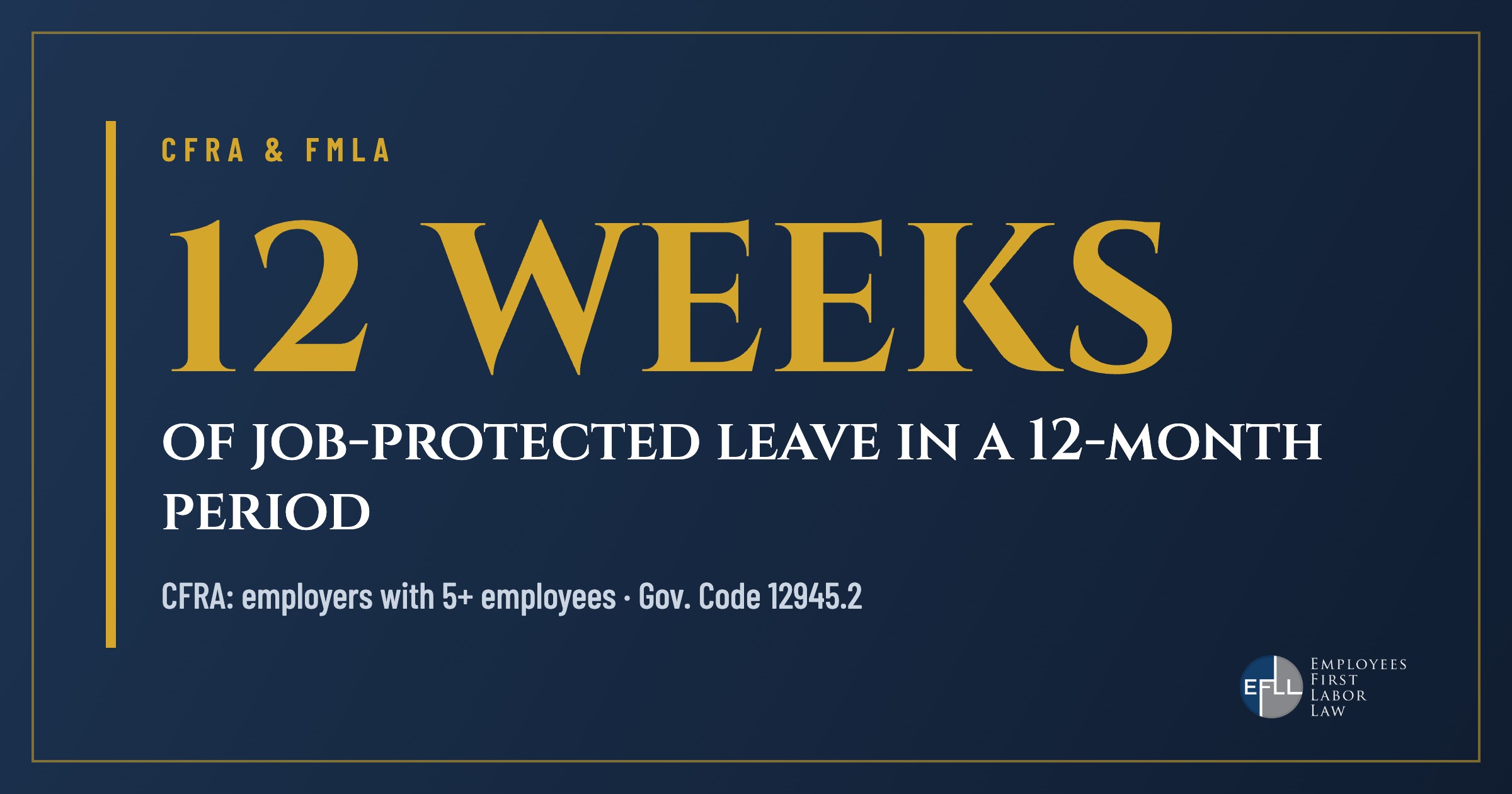
- CFRA gives up to 12 weeks of job-protected leave at employers with 5+ employees if you have worked there more than 12 months and at least 1,250 hours.
- Your doctor’s note does not need your diagnosis. For CFRA it only needs the start date, the probable duration and a statement that you can’t perform your job.
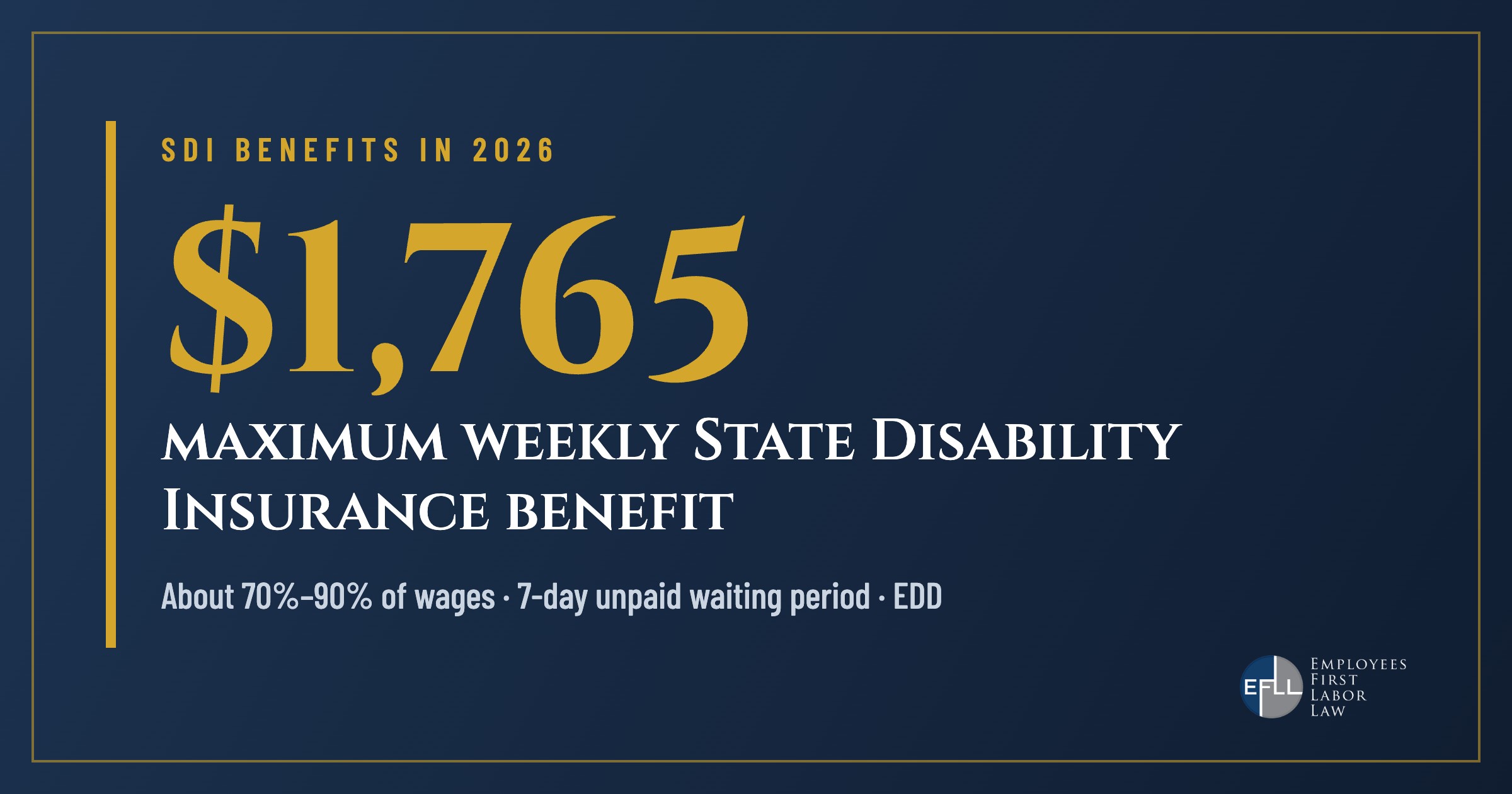
- SDI can replace about 70%–90% of your wages, up to $1,765 a week in 2026, after a 7-day unpaid waiting period.
- Denied, disciplined or fired? You generally have 3 years to file a complaint with the California Civil Rights Department.
Is “stress leave” a legal right in California?
There is no single law called stress leave. Several laws work together:
- CFRA (Government Code 12945.2): up to 12 workweeks of job-protected leave for your own “serious health condition,” which expressly includes a mental condition.
- FMLA: similar federal leave at larger employers, running at the same time as CFRA.
- FEHA: employers with 5 or more employees must reasonably accommodate a mental disability, and time off can be an accommodation.
- Paid sick leave (Labor Code 246): short absences for your own health.
- Pregnancy disability leave (Government Code 12945): if your condition is related to pregnancy or childbirth.
The question is not whether you feel stressed. It is whether a provider is treating a health condition that keeps you from working. Under CFRA and FMLA, a serious health condition involves inpatient care or continuing treatment by a health care provider. Under FEHA, a mental disability is a mental or psychological condition that “limits” a major life activity, including working, which simply means it makes the activity difficult (Government Code 12926(j)).
A hard week or a demanding manager usually isn’t enough on its own. When stress becomes a condition your provider is treating, the law can protect your time off.
Which laws protect mental health leave in California
Many workers qualify under more than one law, and they often run at the same time.
| Law | Who is covered | What you get | Paid? |
|---|---|---|---|
| CFRA (Gov. Code 12945.2) | Employers with 5+ employees; you worked there more than 12 months and at least 1,250 hours in the past year | Up to 12 workweeks per 12 months; same or comparable job back; group health coverage continues | No, but you can use sick leave, vacation or PTO and apply for SDI |
| FMLA (federal) | Employers with 50+ employees; 12 months, 1,250 hours, and 50 employees within 75 miles of your worksite | Up to 12 workweeks; counts against CFRA at the same time | No |
| FEHA accommodation (Gov. Code 12940(m)) | Employers with 5+ employees; no minimum time on the job | Leave, extra leave, or schedule and duty changes, unless it causes undue hardship | Usually no |
| Paid sick leave (Labor Code 246) | Most California employees | At least 40 hours or 5 days a year | Yes |
| SDI (EDD) | Workers who paid into SDI and can’t do their regular work for at least 8 days | Up to 52 weeks of benefits; no job protection by itself | About 70%–90% of wages, up to $1,765 a week |
For more on the two leave laws, see FMLA vs. CFRA in California.
Who qualifies for mental health leave under CFRA and FMLA
CFRA covers employers that directly employ 5 or more people. You qualify with more than 12 months of service and at least 1,250 hours in the 12 months before the leave. You can take it all at once or in separate periods, such as days for flare-ups or therapy appointments.
FMLA covers private employers with 50 or more employees, plus public agencies and schools. You need 12 months with the employer, 1,250 hours in the past 12 months, and at least 50 employees within 75 miles of where you work.
The U.S. Department of Labor says a mental health condition can be a serious health condition, for example one that keeps you from working for more than three consecutive days with ongoing treatment, or a chronic condition, such as anxiety or depression, that causes occasional periods of incapacity and needs treatment at least twice a year.
💡 Example: Maria has worked full time for two years at a company with 30 employees. FMLA doesn’t apply because the employer has fewer than 50 employees, but CFRA does. If her doctor certifies that her anxiety keeps her from doing her job, she can take up to 12 weeks off and return to the same or a comparable position.
Not eligible for CFRA yet? FEHA has no minimum length of service, so your employer may still have to give you time off as a reasonable accommodation. See what qualifies as a disability under FEHA.
Talk with an employment attorney in a free, confidential consultation. We can review whether your employer violated CFRA, FMLA or FEHA.
What to tell your doctor to get stress leave, and what the note must say
There are no magic words, and your provider decides whether leave is medically appropriate. Be honest and specific about how your symptoms affect your work, such as trouble sleeping or concentrating, or not being able to do core parts of your job. Bring your job description.
For CFRA leave for your own condition, a certification is sufficient if it includes three things (Government Code 12945.2(j)):
- The date your condition began.
- Its probable duration.
- A statement that, because of the condition, you are unable to perform the functions of your position.
Your diagnosis does not have to be on it. California’s CFRA regulations bar employers from asking for more, such as symptoms or a diagnosis, than the regulations allow (2 CCR 11091). The Department of Labor says the same for FMLA: a diagnosis is not required. For an accommodation, once your employer has reasonable medical documentation, it may not ask about the underlying medical cause (2 CCR 11069).
Your employer must give you at least 15 calendar days to return the certification. It may not contact your provider except to confirm the note is authentic, and if it has a good-faith reason to doubt the note, it can ask for a second opinion at its own expense.
How to request stress leave: step by step
- Check your eligibility and your handbook. Note how long you’ve worked there, roughly how many hours, and your employer’s leave procedures.
- See your health care provider and ask for a certification with the start date, probable duration and the statement that you can’t perform your job.
- Tell your employer why you need leave. Under the CFRA regulations, even verbal notice can be enough, and you don’t have to say “CFRA” or “FMLA.” Put it in writing anyway so there is a record.
- Give notice as early as you can. For planned leave, your employer can require 30 days’ notice. If the need isn’t foreseeable, notice as soon as practicable is enough.
- Get the answer in writing. Your employer must respond to a CFRA request within five business days. Keep copies of everything.
- Apply for SDI no earlier than 9 days and no later than 49 days after your disability begins.
Sample request you can adapt:
Subject: Request for medical leave
Dear [HR manager],
I am requesting a medical leave of absence beginning [date] because of a health condition that currently prevents me from performing my job. My health care provider expects I will need leave through approximately [date]. Please treat this as a request for leave under the California Family Rights Act and, if it applies, the FMLA. If I am not eligible for that leave, please treat it as a request for a reasonable accommodation under FEHA.
I will provide a certification from my provider. Please send me any forms you need and confirm my leave in writing.
Thank you,
[Your name]
Getting paid during stress leave: sick leave, SDI and PTO
CFRA and FMLA protect your job, not your paycheck. Pay usually comes from three places.
Paid sick leave. Most employers must provide at least 40 hours or 5 days a year, and you can use it for the diagnosis, care or treatment of an existing health condition, including a mental health condition. The Labor Commissioner says an employer cannot deny paid sick leave solely because you didn’t bring a doctor’s note. See California paid sick leave rights.
Vacation and PTO. During CFRA leave for your own condition, you may choose, or your employer may require you, to use accrued vacation, PTO or sick leave.
State Disability Insurance. SDI pays about 70% to 90% of your wages, depending on income, up to $1,765 a week in 2026, for up to 52 weeks. You must be under the care of a licensed health professional, which includes psychologists, within the first eight days, and the first seven days are an unpaid waiting period. The EDD tells your employer you filed but does not share your medical information. SDI replaces wages only; it does not hold your job. See SDI, paid family leave and job protection.
💡 Example: Jordan earns $1,000 a week, or $13,000 in his highest-paid quarter. That falls in the EDD’s 90% band, so his estimated SDI benefit is about $900 a week after the seven-day waiting period. The EDD sets the exact amount when it approves the claim.
Your employer must also keep your group health coverage going during CFRA leave, for up to 12 workweeks.
Returning to work after stress leave
When CFRA leave ends, your employer must return you to the same or a comparable position, with the same or similar duties and pay at the same or a similar location. You keep your seniority.
Your employer may require a return-to-work release from your provider only if it requires one from everyone returning from medical leave. It can’t make a fitness-for-duty exam a condition of your return from CFRA leave, and it can’t impose a “100% healed” rule without assessing whether you can do the job with an accommodation.
Need more time? If your CFRA or FMLA leave runs out, extending it can be a reasonable accommodation under FEHA if it is likely to let you return and doesn’t create an undue hardship, though an employer need not provide indefinite leave (2 CCR 11068(c)). If you can return with changes, such as a modified schedule, ask for them through the interactive process.
If your employer denies your leave, retaliates or fires you
An employer may not interfere with or deny CFRA rights, or fire or discipline you for taking CFRA leave (Government Code 12945.2(k) and (q)). It also may not fail to accommodate a disability, skip the interactive process, or retaliate against you for asking for an accommodation.
Warning signs we often see:
- Firing or disciplining someone soon after they ask for leave
- Saying stress or anxiety “doesn’t count”
- Ignoring a doctor’s note or demanding your diagnosis
- Counting protected leave as unexcused absences
- Pressuring you to come back early or to resign
Save your emails, texts and doctor’s notes, keep a written timeline, and don’t resign before getting advice. A FEHA or CFRA claim generally must be filed with the California Civil Rights Department (CRD) within 3 years, and you then generally have 1 year after the right-to-sue notice to file a lawsuit. See how to file a CRD complaint and how we handle failure-to-accommodate cases.
Stress leave vs. a workers’ comp stress claim
Stress leave protects your job while you take time off, whatever caused your condition. A workers’ compensation psychiatric claim pays benefits when the job itself caused the injury, and it is harder to win: under Labor Code 3208.3, work events must generally be the predominant cause, you usually need at least six months with the employer, and injuries substantially caused by a lawful, good-faith personnel action are not covered. If work caused your condition, read our stress leave workers’ comp guide.
Frequently asked questions
What do I say to my doctor to get stress leave?
Describe your symptoms honestly and explain how they affect your ability to do your job. For CFRA, the note only needs the start date, the probable duration and a statement that you can’t perform your job.
How long can I be on stress leave in California?
Up to 12 workweeks in a 12-month period under CFRA and FMLA, which run at the same time. More leave may be available as a FEHA reasonable accommodation if it is likely to let you return.
Is stress leave paid in California?
The leave itself is unpaid, but you can usually use paid sick leave, vacation or PTO, and apply for SDI, which pays about 70% to 90% of wages, up to $1,765 a week in 2026.
Can I be fired for taking stress leave?
Not for taking protected leave or asking for an accommodation. An employer can still act for legitimate reasons unrelated to your leave, so timing and documents matter.
Do I have to tell my employer my diagnosis?
No. A CFRA certification does not need a diagnosis, and employers may not demand one. Medical information you share must be kept confidential.
Can I take a mental health day or a short break from work?
Yes. Paid sick leave can cover a mental health day, and CFRA and FMLA leave can be taken in separate blocks, such as for therapy appointments or flare-ups.
Related guides
 Workers only. Never employers.
At Employees First Labor Law, we represent California workers only, never employers. Our team has recovered more than $200 million for our clients, and we prepare every case as if it is going to trial. We have offices in Pasadena, Irvine, Long Beach, Pomona, Riverside, Bakersfield and Fresno, and we serve workers throughout California. Meet our team.






If your employer denied your stress leave, pushed you to come back early, or disciplined or fired you after you asked for time off, we can help. We represent California workers in leave, disability discrimination, failure-to-accommodate and retaliation cases.
- ✅ Free, confidential consultation
- ✅ We represent workers only, never employers
- ✅ Se habla español: Empleados Primero
This article provides general information about California law and is not legal advice for any specific situation. Reading it does not create an attorney-client relationship. Past results do not guarantee a similar outcome.