

In this guide12 sections
- 1. What happened in Del Mar
- 2. California’s rules for paychecks
- 3. Penalties when a paycheck bounces or is late
- 4. How to file a wage claim with the Labor Commissioner
- 5. Deadlines to know
- 6. Evidence to keep
- 7. If the business closes or runs out of money
- 8. PAGA and group claims
- 9. Protection against retaliation
- Laws this article relies on
- Frequently asked questions
- Talk to a California employment lawyer
If your paycheck bounces in California, you are still owed the wages, and penalties may be added. A paycheck must be cashable on demand, a bounced one may trigger up to 30 days of extra wages as a penalty, and you can file a wage claim with the Labor Commissioner on your own. Some deadlines are only one year, so act quickly.
- A paycheck must be negotiable and payable in cash on demand, with funds behind it for at least 30 days (Labor Code §212).
- If a paycheck bounces for lack of funds or no account, your wages may continue as a penalty for up to 30 days (Labor Code §203.1).
- File a Labor Commissioner claim for penalties tied to a bounced check within one year; most unpaid wage claims have two to four years.
- If the business closes, your final wages are due right away, and owners or managers who cause certain violations can sometimes be held personally liable (Labor Code §558.1).
- Your employer cannot retaliate against you for asking about pay or filing a claim (Labor Code §§98.6, 1102.5).
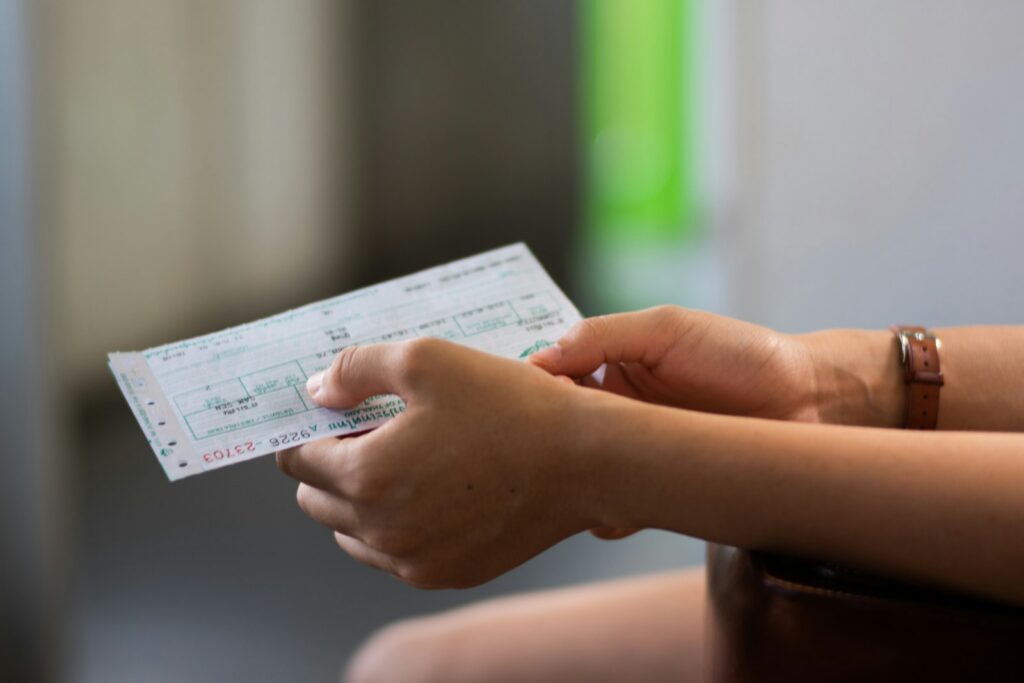
1. What happened in Del Mar
NBC 7 San Diego reported on Oct. 13, 2026, that former employees of Jimmy O’s, a bar and restaurant in Del Mar, say repeated bounced paychecks left them struggling to pay rent, buy groceries and cover basic bills. The employees told NBC 7 the restaurant closed on Oct. 5 and had not reopened, and the station reported that two workers are now pursuing wage theft claims with the state.
Watch the NBC 7 San Diego report: “Del Mar restaurant workers pursue wage theft claims” (NBC 7 San Diego, October 13, 2026)
One former employee told NBC 7 that six or seven of her paychecks bounced and that her bank account went more than $1,000 negative. She said she had to tell her landlord the rent would be late, which brought late fees, and NBC 7 reported that the problems made it hard to afford school lunches for her children. She said she was removed from a workplace group chat after repeatedly raising the bounced checks with management. Another former employee said six of his paychecks bounced and that he was also removed from the group chat. Both spoke anonymously, citing fear of retaliation.
The workers also told NBC 7 that taxes were withheld from their checks even though they never gave the business their Social Security numbers or completed payroll onboarding. These are the workers’ allegations; they have not been proven, and no decision on their claims has been reported. NBC 7 said it reached out to Jimmy O’s ownership multiple times for comment but did not receive a response by the reporting deadline. Telemundo 20 San Diego carried the same report on Oct. 14, 2026. Here is what California law generally says about bounced and late paychecks.
2. California’s rules for paychecks
Under Labor Code §204, most workers must be paid at least twice a month on regular paydays set in advance. Pay for work done from the 1st through the 15th is generally due between the 16th and 26th of that month, and pay for the 16th through month-end is due between the 1st and 10th of the next month. Our guide to late paychecks and payday rules covers the timing in detail.
When an employer pays by check, Labor Code §212 requires that the check be negotiable and payable in cash, on demand, without a discount. The employer must have enough funds or credit at the bank when the check is issued and for at least 30 days afterward. If a paycheck is dishonored, the bank’s protest notice can serve as presumptive evidence that the employer knew the funds were not there.
Every paycheck must also come with an itemized wage statement listing gross and net wages, hours worked, each hourly rate, the pay period, the employer’s legal name and address, and every deduction, including tax withholding (Labor Code §226). See our guide to California pay stub requirements.
3. Penalties when a paycheck bounces or is late
A bounced check does not cancel what you are owed, and several penalties may apply depending on the facts.
| Problem | Law | What California law generally provides |
|---|---|---|
| Paycheck bounces (no account or not enough funds) | Labor Code §203.1 | Wages continue as a penalty from the due date, at the same rate, until paid or until an action is filed, for up to 30 days, if you presented the check within 30 days of receiving it. No penalty if the employer proves the problem was unintentional. |
| Dishonored check service charge | Civil Code §1719 | Service charge of up to $25 for the first bad check and $35 for each later one; if a certified-mail demand goes unpaid for 30 days, triple damages from $100 to $1,500. Recovering this in a §1719 action rules out the §203.1 penalty. |
| Wages paid late during employment | Labor Code §§204, 210 | $100 per employee for a first violation; $200 per employee plus 25% of the withheld wages for a willful or repeat violation. |
| Final wages not paid when the job ends | Labor Code §§201–203 | Waiting-time penalty of a day’s wages for each day late, up to 30 days, for a willful failure to pay. |
| Missing or inaccurate wage statements | Labor Code §226(e) | Actual damages or $50 for the first pay period and $100 for each later one, whichever is greater, up to $4,000, plus attorney’s fees and costs. |
| Payroll records not provided on request | Labor Code §226(b), (f) | Records due within 21 calendar days of a request; $750 penalty for failing to comply. |
Keep every bank notice. It shows when each check was presented and why it was returned, which the Labor Commissioner asks for.
Hypothetical example. Jordan, a line cook, earns $20 an hour and usually works 8-hour shifts, so a day’s wages are $160. His Oct. 1 paycheck bounces when he deposits it. Under §203.1 he may be owed the unpaid wages plus $160 for each day they go unpaid, capped at 30 days, or $4,800, unless the employer shows the bounce was unintentional. If the restaurant then closes without paying his final wages, a separate §203 waiting-time penalty may also come into play. Which penalties apply, and whether they overlap, depends on the facts.
4. How to file a wage claim with the Labor Commissioner
The Labor Commissioner’s Office handles wage claims, and you do not need a lawyer to file one. You can file online, by email, by mail or in person, and California’s labor laws protect all workers regardless of immigration status. The general process looks like this:
- File the claim. List each unpaid paycheck, its date and amount, and the penalties you seek.
- Attach copies, not originals. For a check you could not cash, the office asks for a copy of the bounced check or bank documentation showing why it was rejected.
- Attend the settlement conference. Missing it without good cause can get your claim dismissed.
- Go to the hearing if there is no settlement. Testimony is under oath, and only evidence presented at the hearing is considered.
- Watch for the decision. If neither side appeals in time, the award can become an enforceable court judgment.
Compare the options in our guide to a Labor Commissioner wage claim vs. hiring a lawyer.
5. Deadlines to know
| Claim | General deadline |
|---|---|
| Penalties for a bounced paycheck or for not providing payroll records | 1 year |
| Wages promised orally above minimum wage | 2 years |
| Minimum wage, overtime and other statutory wage claims | 3 years |
| Wages under a written contract | 4 years |
| Unfair Competition Law lawsuit seeking unpaid wages as restitution | 4 years |
| Waiting-time penalties after the job ends (§203) | Same as the underlying wage claim |
| Retaliation complaint with the Labor Commissioner | 1 year from the retaliatory act |
6. Evidence to keep
- Every paycheck (photograph front and back) and pay stub.
- Bank notices showing returned checks, overdrafts and fees.
- Your own record of shifts and hours.
- Texts, emails and group-chat screenshots about pay, saved before you lose access.
7. If the business closes or runs out of money
A closure does not erase wages already earned. When your job ends because the business shuts down, your final wages are generally due immediately (Labor Code §201), and a willful failure to pay can trigger waiting-time penalties. Our guide to final paycheck rules explains how they are calculated.
Collecting from a closed business can be harder. Under Labor Code §558.1, an owner, director, officer or managing agent who violates, or causes a violation of, certain wage laws, including §§203 and 226 and the minimum wage and overtime rules, may be held personally liable as the employer. If the employer files for bankruptcy, wage claims are generally handled in the bankruptcy case, where federal law gives wages earned within 180 days before the filing (or before the business stopped operating, if earlier) priority up to $17,150 per worker for cases filed on or after April 1, 2025.
Keep the check, bank notices and pay stubs, then get advice on your options.
8. PAGA and group claims
When several coworkers are affected, the Private Attorneys General Act lets an aggrieved employee seek civil penalties on behalf of the state and other workers, starting with a written notice through the state’s online PAGA portal. Some claims can also proceed as class actions. See our overview of wage theft and legal solutions.
9. Protection against retaliation
Your employer cannot fire, demote, cut hours or otherwise punish you for complaining about unpaid wages or filing a claim (Labor Code §98.6). If the employer takes action against you within 90 days of a protected complaint, the law presumes retaliation unless the employer rebuts it. Labor Code §1102.5 also protects you for reporting what you reasonably believe is a legal violation to a government agency or a supervisor, with a civil penalty of up to $10,000 per employee for each violation. See also our guide to restaurant worker rights in California.
Laws this article relies on
| Law | What it does here |
|---|---|
| Labor Code §212 | Paychecks must be negotiable |
| Labor Code §203.1 | Bounced check penalty |
| Labor Code §558.1 | Personal liability for certain listed violations, such as unpaid minimum wage or final-pay penalties |
| Labor Code §§98.6, 1102.5 | Retaliation protection |
News sources: NBC 7 San Diego (October 13, 2026); Telemundo 20 San Diego (October 14, 2026).
Frequently asked questions
My paycheck bounced. Can my employer just give me a new check?
It should pay you right away, but a replacement check does not automatically erase penalties. Under §203.1, the penalty may run from the original due date until paid, up to 30 days.
Should I keep depositing a check that bounced?
Present every paycheck within 30 days of receiving it, because the §203.1 penalty depends on that. Repeated attempts may add bank fees, so keep the returned-check notice and ask in writing to be paid in good funds.
Can I quit if my paychecks keep bouncing?
You can. If you quit without notice, your final wages are due within 72 hours, or on your last day if you gave at least 72 hours’ notice. Whether you qualify for unemployment after quitting depends on EDD’s review of your reasons.
Do I need a lawyer to file a wage claim?
No. The Labor Commissioner’s Office says you do not need a lawyer, and you do not need a Social Security number to file. A lawyer may help when many workers are affected, when owners may be personally liable, or when the business has closed.
Talk to a California employment lawyer
Employees First Labor Law represents workers exclusively. If your paycheck bounced, arrived late or never came, we offer free virtual consultations to review your options. Contact us or call (310) 853-3461.
This article is general information about California law as of 2026, not legal advice for your situation. Reading it does not create an attorney-client relationship.
