
Updated October 11, 2026 · 8 min read
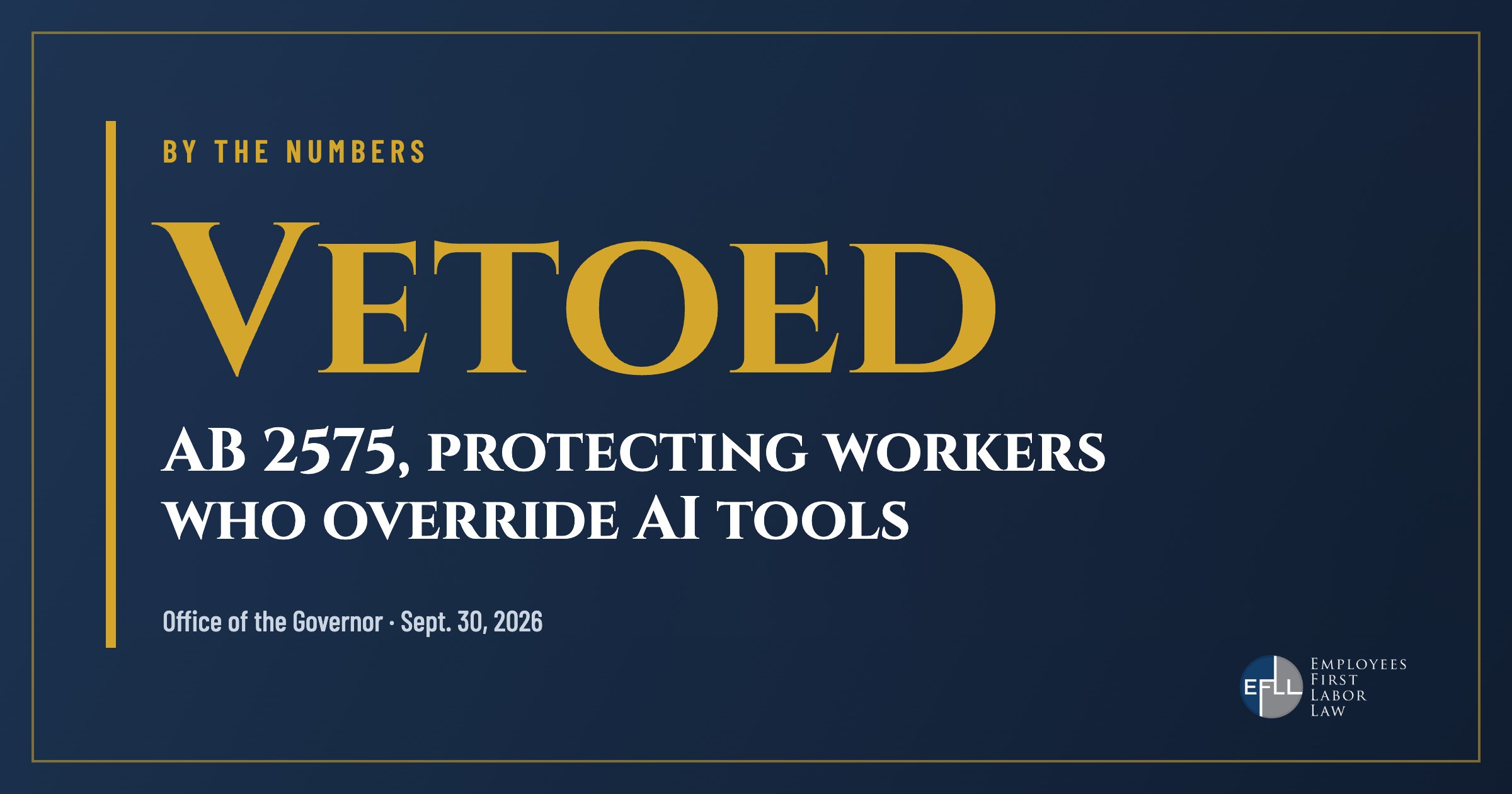
On Sept. 30, 2026, Gov. Gavin Newsom vetoed AB 2575, a bill that would have barred health care employers from retaliating against nurses and other direct-care workers solely because they overrode, or relied on, a recommendation from an AI clinical decision support system.
The same day, he signed AB 1979, which requires hospitals, clinics and medical offices to take reasonable steps so that a licensed provider keeps independent professional judgment when AI informs patient care. He also vetoed SB 903, which would have limited AI in mental health therapy, and signed a package of workplace AI bills, including SB 947, SB 951, AB 1883 and AB 1331.
The California Nurses Association, which co-sponsored AB 2575, warned that nurses who act against a faulty algorithm can still be disciplined. That risk is real, but existing California law already protects health care workers who speak up about patient safety.
This post covers what AB 2575 would have done, why it was vetoed, what AB 1979 actually requires, and the protections nurses and other health care workers still have when they push back on an algorithm.
- Newsom vetoed AB 2575 on Sept. 30, 2026. It would have protected direct-care workers from retaliation based solely on overriding or relying on an AI clinical tool, enforced by the Labor Commissioner.
- According to reporting on his veto message, Newsom said the Labor Commissioner lacks the medical expertise to judge clinical standards of care.
- He signed AB 1979, effective Jan. 1, 2027, which requires facilities to take reasonable steps to preserve licensed providers’ independent judgment. It has no anti-retaliation clause of its own.
- Health care workers who report unsafe care are still protected by Health & Safety Code 1278.5 and Labor Code 1102.5, and by Labor Code 6310 when worker safety is involved.
- Put your concern in writing to someone with authority. A written, patient-focused record is what makes these protections work.
What happened
AB 2575 was introduced on Feb. 20, 2026, by Assemblymember Liz Ortega (D-Hayward). The California Nurses Association and the California Federation of Labor Unions co-sponsored it. The California Hospital Association, the California Medical Association and the California Chamber of Commerce opposed it.
According to the enrolled text, the bill would have added a new article to the Labor Code (starting at Section 2820). It declared that a worker providing direct patient care is free to use professional judgment within their scope of practice. It barred employers from retaliating or discriminating against that worker based solely on the worker’s override of, or reliance on, the output of a clinical decision support system. Workers would still have had to meet the standard of care and stay within their scope of practice.
Workers could have filed retaliation complaints with the Labor Commissioner. A separate Civil Code provision would have stopped AI developers and deployers from arguing in a patient-injury lawsuit that a clinician’s failure to override the tool cut off their own liability.
The bill passed the Senate 21–10 and the Assembly concurred 51–16 on Aug. 31. According to CalMatters, Newsom vetoed it in part because the Labor Commissioner lacks the medical expertise to enforce its anti-retaliation rules. The California Health Care Foundation reported that his message also called the bill’s “solely based on” standard impractical. CNA president Sandy Reding said the governor had vetoed the one bill that would have protected nurses for using their judgment. The state labor federation said it will bring the bill back next year.
| Date | Event | Source |
|---|---|---|
| Feb. 20, 2026 | AB 2575 introduced by Asm. Liz Ortega | LegiScan |
| May 27, 2026 | Assembly passes AB 2575, 48–15 | LegiScan |
| Aug. 31, 2026 | Senate passes AB 2575, 21–10; Assembly concurs, 51–16 | LegiScan |
| Sept. 30, 2026 | AB 2575 and SB 903 vetoed; AB 1979, SB 947, SB 951, AB 1883 and AB 1331 signed | Governor’s office; CalMatters |
| Jan. 1, 2027 | AB 1979 takes effect | California Health Care Foundation |
| July 1, 2027 | SB 947 (“No Robo Bosses”) takes effect | California Health Care Foundation; HR Dive |
What this means for California workers
No California statute will spell out that overriding an AI recommendation, by itself, is protected. Hospitals can keep using AI tools such as sepsis alerts and acuity scoring.
AB 1979 helps, but it is narrower than some coverage suggests. Starting Jan. 1, 2027, it requires health facilities, clinics, physicians’ offices and group practices to take reasonable steps to ensure a licensed provider can still exercise independent professional judgment when a clinical decision support system informs care. It also bars AI from independently performing clinical functions that legally require a license. The text does not use the phrase “final say,” and it has no anti-retaliation clause or private lawsuit right. Enforcement runs mainly through licensing boards.
For workers, AB 1979 still matters. Once it takes effect, a facility that pressures staff to defer to an algorithm in place of their own clinical judgment may be violating state law, and reporting a suspected violation of law is protected activity. Separately, if your employer uses an automated system to discipline or fire you, the “No Robo Bosses” law (SB 947) will require human review starting July 1, 2027.
Your rights when you push back on AI
Health & Safety Code 1278.5: the health care whistleblower law
Health & Safety Code 1278.5 bars a health facility from retaliating against an employee, medical staff member or other health care worker who presents a grievance, complaint or report to the facility, its medical staff, an accrediting body or a government agency about the quality of care, services or conditions. Writing up an AI recommendation you believe was unsafe, and reporting it to your manager or a patient safety committee, can fit that description.
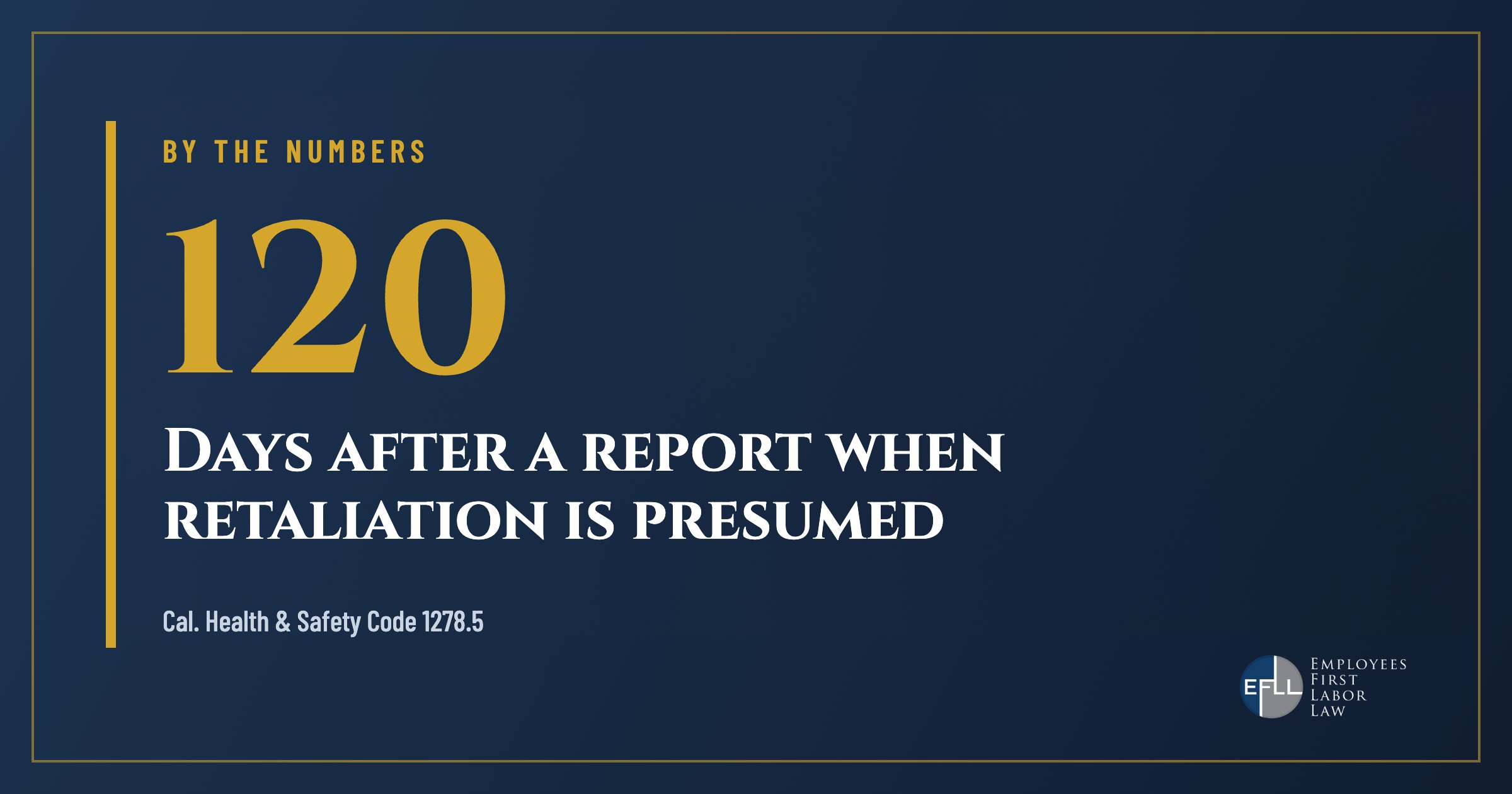
If you are fired, demoted, suspended or threatened within 120 days of that report, and the people responsible knew about it, the law presumes retaliation. Remedies can include reinstatement, lost wages and benefits, and legal costs, and the facility can face a civil penalty of up to $25,000 per violation. The law covers licensed health facilities such as hospitals; nursing homes fall under a separate statute, and clinics or doctors’ offices may not be covered. See our guide to Health & Safety Code 1278.5.
Labor Code 1102.5: reporting or refusing a violation of law
Labor Code 1102.5 protects any California employee who discloses information they have reasonable cause to believe shows a violation of a state or federal law or regulation, whether to a government agency, a supervisor or someone with authority to investigate. It also protects employees who refuse to take part in an activity that would violate a law or regulation. That could include patient care regulations and, from 2027, AB 1979. Penalties include up to $10,000 per violation, paid to the employee, and courts can award attorney’s fees. Read more in our Labor Code 1102.5 guide.
Labor Code 6310: when worker safety is involved
Labor Code 6310 protects complaints about unsafe working conditions or work practices to your employer, your union or Cal/OSHA, with reinstatement and lost wages as remedies. It is about employee safety, not patient safety. It may apply when an AI tool affects your own safety, for example if acuity-driven staffing leaves too few people on a unit with a known violence risk. See our Labor Code 6310 guide.
FEHA and your union contract
The Fair Employment and Housing Act applies if discipline over an AI dispute is also tied to a protected trait, such as age, disability or race, or to a past discrimination complaint. If you are in a union, your contract may require just cause for discipline and may give you a grievance process or a formal objection form. CNA, for example, uses Assignment Despite Objection forms to document unsafe assignments; depending on your contract, a similar written objection may work for AI concerns. Our guide to nurse labor laws in California covers staffing, breaks and overtime.
If you raised a patient-safety concern about an AI tool and then faced discipline, a schedule cut or termination, you may have a whistleblower claim. Get a free, confidential consultation.
What to do now
- Chart your clinical reasoning. When you depart from an AI recommendation, document your assessment and why you acted as you did, following your facility’s charting rules.
- Report the concern in writing. Send a short, factual email or incident report to your manager, house supervisor or patient safety committee. Focus on patient safety, not the software.
- Keep your own record. Note dates, times, who you told and what they said. Do not take patient records or protected health information home; describe events without patient identifiers.
- Use your union process. If you are represented, file an objection form or grievance and loop in your representative early.
- Watch the calendar. Write down any discipline, schedule change or negative review after your report. The 120-day window under 1278.5 matters, and a retaliation complaint to the Labor Commissioner generally must be filed within one year.
- Talk to a lawyer before you resign or sign anything. Our overview of retaliation claims in California explains how these cases work.
Frequently asked questions
Can my hospital fire me for overriding an AI recommendation?
There is no California statute that protects the override by itself. But if you reported or objected to what you believed was unsafe care, or refused to take part in a violation of law, firing you for that may be illegal retaliation under Health & Safety Code 1278.5 or Labor Code 1102.5. It depends on the facts.
Does AB 1979 give nurses the final say over AI?
Not in those words. Starting Jan. 1, 2027, it requires facilities to take reasonable steps so licensed providers keep independent professional judgment, and it bars AI from independently performing licensed clinical functions. It does not include its own anti-retaliation rule.
Why did Newsom veto AB 2575?
According to reporting on his veto message, he said the Labor Commissioner lacks the medical expertise to judge clinical standards of care, and that the bill’s “solely based on” standard was impractical.
Sources
- CalMatters: On AI, Newsom gives labor only some of what it demanded
- California Health Care Foundation: 2026 health care AI bills signed and vetoed
- LegiScan: AB 2575 (Ortega) status and votes
- LegiScan: AB 2575 enrolled text
- LegiScan: AB 1979 (Bonta) chaptered text, Chapter 854, Statutes of 2026
- Office of the Governor: AI bills signed Sept. 30, 2026
- Portside / California Nurses Association: reaction to the AB 2575 veto
- Capitol Weekly: AB 2575, rage against the machine
- California Health & Safety Code 1278.5
- California Labor Code 1102.5
- California Labor Code 6310
Related guides
 Workers only. Never employers.
At Employees First Labor Law, we represent California workers only, never employers. Our team has recovered more than $200 million for our clients, and we prepare every case as if it is going to trial. We have offices in Pasadena, Irvine, Long Beach, Pomona, Riverside, Bakersfield and Fresno, and we serve workers throughout California. Meet our team.

If you are a nurse or other health care worker who was written up, suspended or fired after challenging an AI recommendation or reporting unsafe care, we can review what happened at no cost. We help California health care workers pursue whistleblower and retaliation claims, including reinstatement, lost wages and penalties.
- ✅ Free, confidential consultation
- ✅ We represent workers only, never employers
- ✅ Se habla español: Empleados Primero
This article provides general information about California law and is not legal advice for any specific situation. Reading it does not create an attorney-client relationship. Past results do not guarantee a similar outcome.


