

Updated October 7, 2026 · 7 min read
California’s Civil Rights Department took Tesla to trial on Sept. 21, 2026, in Alameda County Superior Court, alleging years of racial harassment and pay and promotion discrimination against Black workers at the Fremont factory. The trial is scheduled to run through Oct. 30. Tesla denies the allegations. No ruling has been made.
This is the state’s own enforcement case, not a private lawsuit, and it is being heard by a judge rather than a jury. It matters well beyond one factory. The same California laws the state is relying on protect workers across the state (most apply to employers with five or more employees, and the ban on harassment applies to employers of any size), whether you build cars in Fremont, stock shelves in Riverside or answer phones in Fresno.
Below we explain what has been reported so far, what the case does and does not decide, and what California law says you can do if you are dealing with racial slurs, a race-based pay gap or retaliation at work.
- California’s Civil Rights Department opened its trial against Tesla on Sept. 21, 2026, alleging racial harassment and discrimination against Black workers at the Fremont factory.
- It is a bench trial before Judge Peter Borkon in Alameda County, scheduled to run through Oct. 30; Tesla denies wrongdoing and no ruling has been reported.
- The state cites an analysis finding Black workers earned about $1,533 less per month than white workers from June 2018 to June 2024.
- Under FEHA, employers must stop coworker harassment they know or should know about, and retaliating against workers who report it is illegal.
- You generally have three years to file with the CRD; don’t wait for the Tesla verdict to protect your own claim.
What happened
The state agency, then called the Department of Fair Employment and Housing, filed the lawsuit in February 2022 after an investigation of nearly three years, according to Electrek. The case is California Civil Rights Department v. Tesla Inc., No. 22CV006830, before Judge Peter Borkon in Oakland, Bloomberg Law reported.
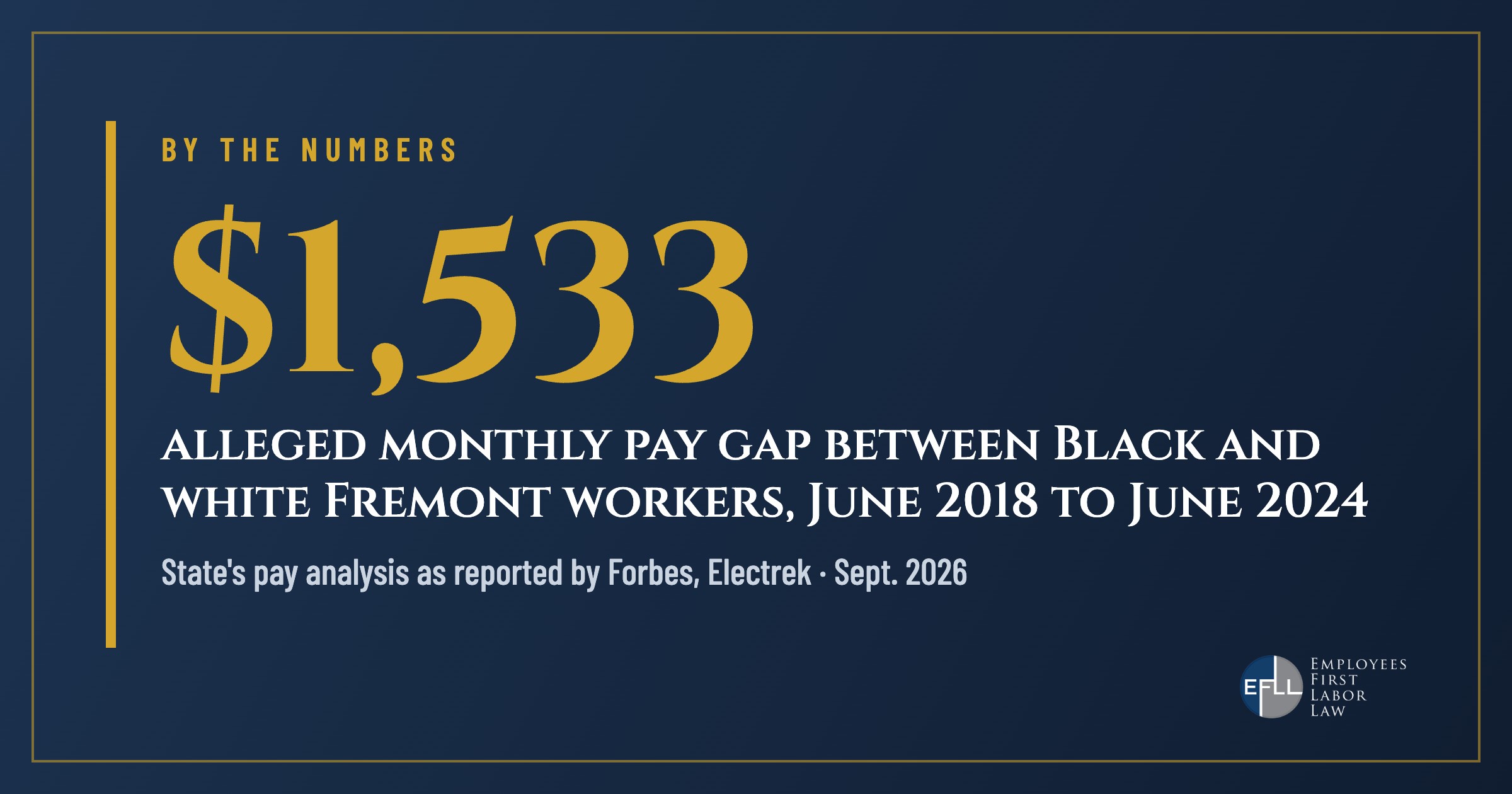
The state alleges that supervisors and coworkers at Fremont used racial slurs, that racist graffiti including swastikas appeared in common areas and restrooms, and that management did not act on complaints. It also alleges Black workers were steered into harder, lower-paying jobs, disciplined more harshly and passed over for promotion. A pay analysis cited by the state found Black workers earned about $1,533 less per month than white workers between June 2018 and June 2024, according to Forbes, Electrek and HR Grapevine.
In opening statements, state attorney Brett Watson described the factory as “segregated, profane, and relentlessly racialized,” Bloomberg Law reported. Tesla’s trial lawyer argued that the state lacks the data to prove harassment was standard practice, that a handful of years-old anecdotes is not enough, and that the state’s evidence ignores the context in which some language was used. Tesla says it does not tolerate discrimination and has fired employees found to have engaged in misconduct.
Reporting published Sept. 28 described testimony from a former security manager who said a white coworker repeatedly directed a racial slur at her, that she reported it to human resources, and that she left the company the same day. Another former worker testified that he was disciplined after reporting a slur, HR Grapevine reported. These are allegations and testimony, not findings.
In this first phase, the judge will decide whether Tesla is liable under California civil rights law and whether to order changes to its employment practices; civil penalties would be taken up in a later phase, Bloomberg Law reported. The state is also seeking damages, according to HR Grapevine.
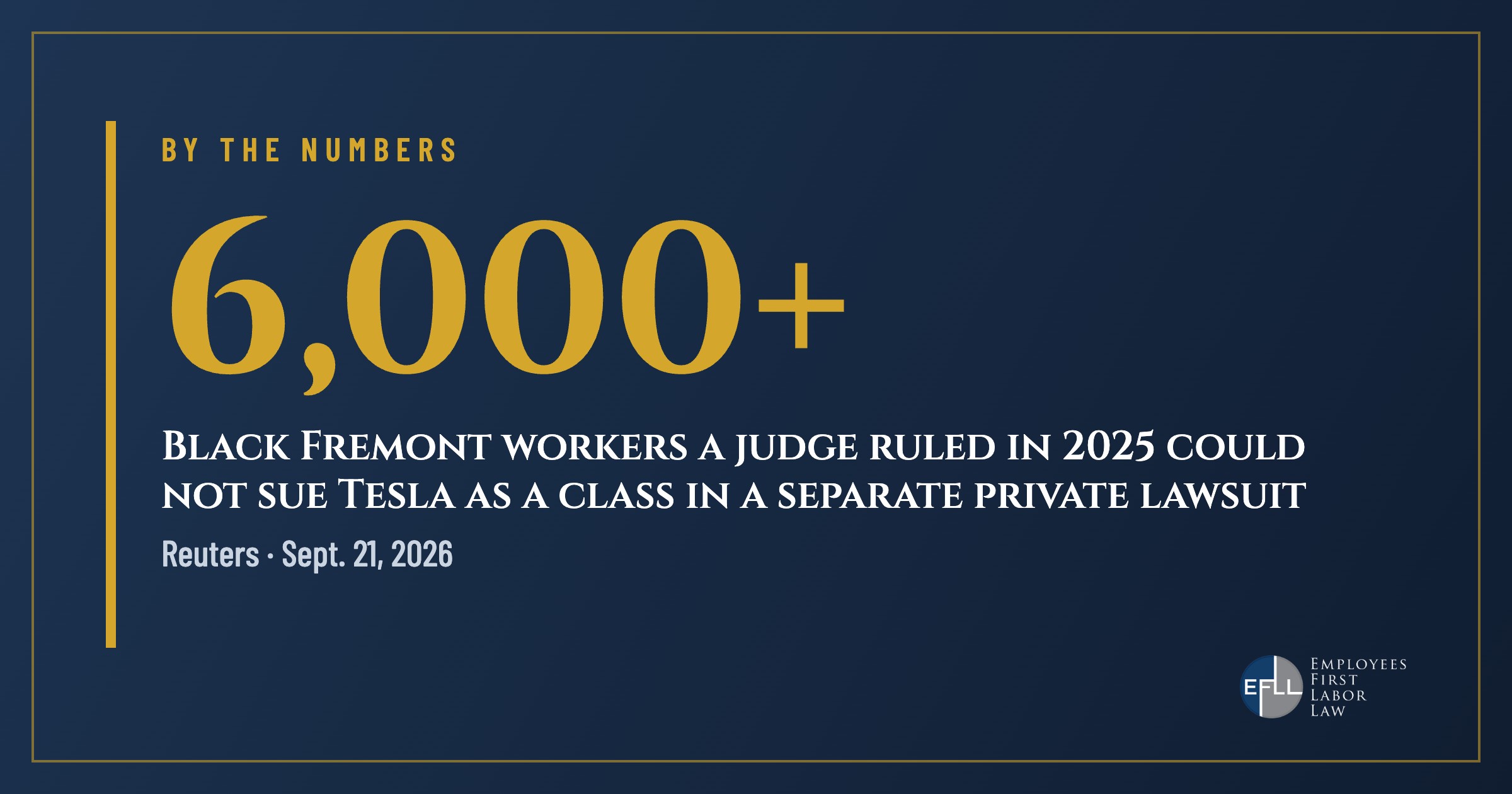
This is not a class action. The state sued in its own name. In a separate private lawsuit brought by workers, Vaughn v. Tesla, Judge Borkon ruled in 2025 that more than 6,000 Black workers could not sue Tesla as a class, reversing an earlier ruling, Reuters reported. Bloomberg Law reported that the lead plaintiff in that case, Marcus Vaughn, reached a confidential settlement before a trial set for summer 2026.
| Date | Event |
|---|---|
| 2021 | A federal jury awards former Fremont worker Owen Diaz $137 million; a judge later cuts the award, a 2023 retrial sets it at about $3.2 million, and the case later settles on undisclosed terms |
| February 2022 | State files suit in Alameda County Superior Court after a roughly three-year investigation |
| 2023 | The federal EEOC files its own racial harassment and retaliation lawsuit against Tesla |
| 2025 | In the separate private Vaughn lawsuit, Judge Borkon rules that more than 6,000 Black workers cannot sue as a class |
| Sept. 21, 2026 | Bench trial opens in Oakland |
| Sept. 28, 2026 | Coverage of former workers’ testimony about slurs and unanswered HR complaints |
| Oct. 30, 2026 | Scheduled end of trial; a decision would follow |
Video: KTVU FOX 2 San Francisco, Sept. 23, 2026 — “Tesla faces trial over alleged discrimination against Black workers.”
What this means for California workers
The trial is a test of how far a state agency can go in proving a company-wide pattern of race discrimination at a very large workplace. Whatever the outcome, it will not decide individual claims for most workers. If you worked at any California employer and experienced racial harassment or unequal pay, your rights do not depend on this case, and waiting for the verdict could cost you your filing deadline.
Three points stand out for workers. First, harassment does not have to come from a boss to be illegal. California employers must act when they know, or should know, that coworkers are harassing someone. Second, a pay gap can be its own claim, separate from harassment. Third, reporting to HR is protected. If the reporting led to write-ups, schedule cuts or termination, that may be retaliation under California law.
Many workers have signed arbitration agreements that send individual claims to private arbitration. A government agency suing in its own name is generally not bound by an employee’s agreement, which is one reason this case is being tried in open court. Whether your own claim can go to court depends on the paperwork you signed and the type of claim.
Your rights against race discrimination and harassment at work
California’s Fair Employment and Housing Act (FEHA) bans discrimination based on race in hiring, pay, job assignments, promotion, discipline and firing (Gov. Code § 12940(a)). It applies to employers with five or more employees.
- Harassment. Racial harassment is illegal under Gov. Code § 12940(j), and it covers employers of any size. An employer is generally strictly liable for harassment by a supervisor. For harassment by coworkers, the employer is liable if it knew or should have known and failed to take immediate and appropriate corrective action. The Legislature has said a single incident can be enough if it is severe (Gov. Code § 12923).
- Duty to prevent. Employers must take all reasonable steps to prevent discrimination and harassment (Gov. Code § 12940(k)).
- Retaliation. It is illegal to punish you for opposing or reporting discrimination (Gov. Code § 12940(h)). Our guide to being fired after complaining to HR explains how these cases are proven.
- Equal pay. California’s Equal Pay Act requires equal pay for substantially similar work regardless of race or ethnicity (Labor Code § 1197.5). You may also discuss your wages with coworkers (Labor Code § 232).
- Damages. FEHA does not cap compensatory damages, and punitive damages are available in appropriate cases. You may also recover lost pay and attorney fees.
To sue under FEHA, you generally must first file a complaint with the Civil Rights Department within three years and obtain a right-to-sue notice, then file in court within one year (Gov. Code §§ 12960, 12965). Our step-by-step guide on how to file a CRD complaint and get a right-to-sue notice walks through the process, and our comparison of CRD vs. EEOC explains which agency fits your situation.
💡 Example: Suppose Marcus is paid $1,500 a month less than white coworkers doing substantially similar work. Over 24 months, that gap adds up to $36,000 in wages, before any interest or other damages. (Hypothetical, for illustration only.)
California law requires your employer to stop harassment and pay you equally, and protects you when you report it. Call us for a free, confidential consultation.
What to do now
- Write it down. Record each slur, comment or incident: date, who said it, who saw it. Keep notes off company devices.
- Save evidence of pay. Keep pay stubs, offer letters and job postings. Note coworkers in similar roles and what you know about their pay.
- Report it in writing. Email HR or a manager and keep a copy. A written report helps show the company knew. Our guide to HR investigations explains what happens next.
- Watch for retaliation. Note any write-up, schedule change, demotion or firing after you complained.
- Request your records. You can ask for your personnel file and payroll records.
- Mind the deadline. You generally have three years to file with the CRD. Do not wait for the Tesla ruling.
- Talk to a lawyer before signing anything. Severance agreements often include a release of claims.
Frequently asked questions
Has Tesla been found liable?
No. As of Oct. 7, 2026, no decision had been reported, and the trial is scheduled to run through Oct. 30. The state’s claims are allegations, and Tesla denies them. We will update this post when the court rules.
I worked at the Fremont factory. Am I part of this case?
Not as a party. The state brought this case in its own name, and it is not a class action. The 2025 ruling that more than 6,000 workers could not sue as a class came in a separate private lawsuit. If you believe you were affected, speak with a lawyer about your own claim and deadlines.
Is it illegal if coworkers, not managers, used slurs?
It can be. Your employer is responsible for coworker harassment if it knew or should have known and did not take prompt, effective action to stop it.
What if the harassment made me quit?
If conditions were so intolerable that a reasonable person would feel forced to resign, the law may treat it as a firing. See our guide to constructive discharge.
Does it cost money to talk to a lawyer?
Our consultations are free and confidential. We handle discrimination cases on a contingency-fee basis and will explain the fee agreement in writing before you decide anything.
Sources
- Reuters (via Yahoo Finance): Tesla faces major trial for alleged bias against Black workers, after years of lawsuits
- Bloomberg Law: Tesla Workers Endure Rampant Racism, California Says at Trial
- Forbes: Tesla’s lawyers argue context matters in court case
- HR Grapevine: Tesla trial hears claims of racial harassment and unanswered HR complaints
- Electrek: Tesla goes to trial over racism claims against Black workers
- Drive Tesla: Tesla faces California trial over discrimination claims involving 6,000 Black workers
Related guides
 Workers only. Never employers.
At Employees First Labor Law, we represent California workers only, never employers. Our team has recovered more than $200 million for our clients, and we prepare every case as if it is going to trial. We have offices in Pasadena, Irvine, Long Beach, Pomona, Riverside, Bakersfield and Fresno, and we serve workers throughout California. Meet our team.





If you were harassed, underpaid or punished for speaking up because of your race, you may have a claim under California law no matter where you work. Our attorneys can review your situation for free and help you file with the CRD before your deadline.
- ✅ Free, confidential consultation
- ✅ We represent workers only, never employers
- ✅ Se habla español: Empleados Primero
This article provides general information about California law and is not legal advice for any specific situation. Reading it does not create an attorney-client relationship. Past results do not guarantee a similar outcome.


