

Updated October 7, 2026 · 8 min read
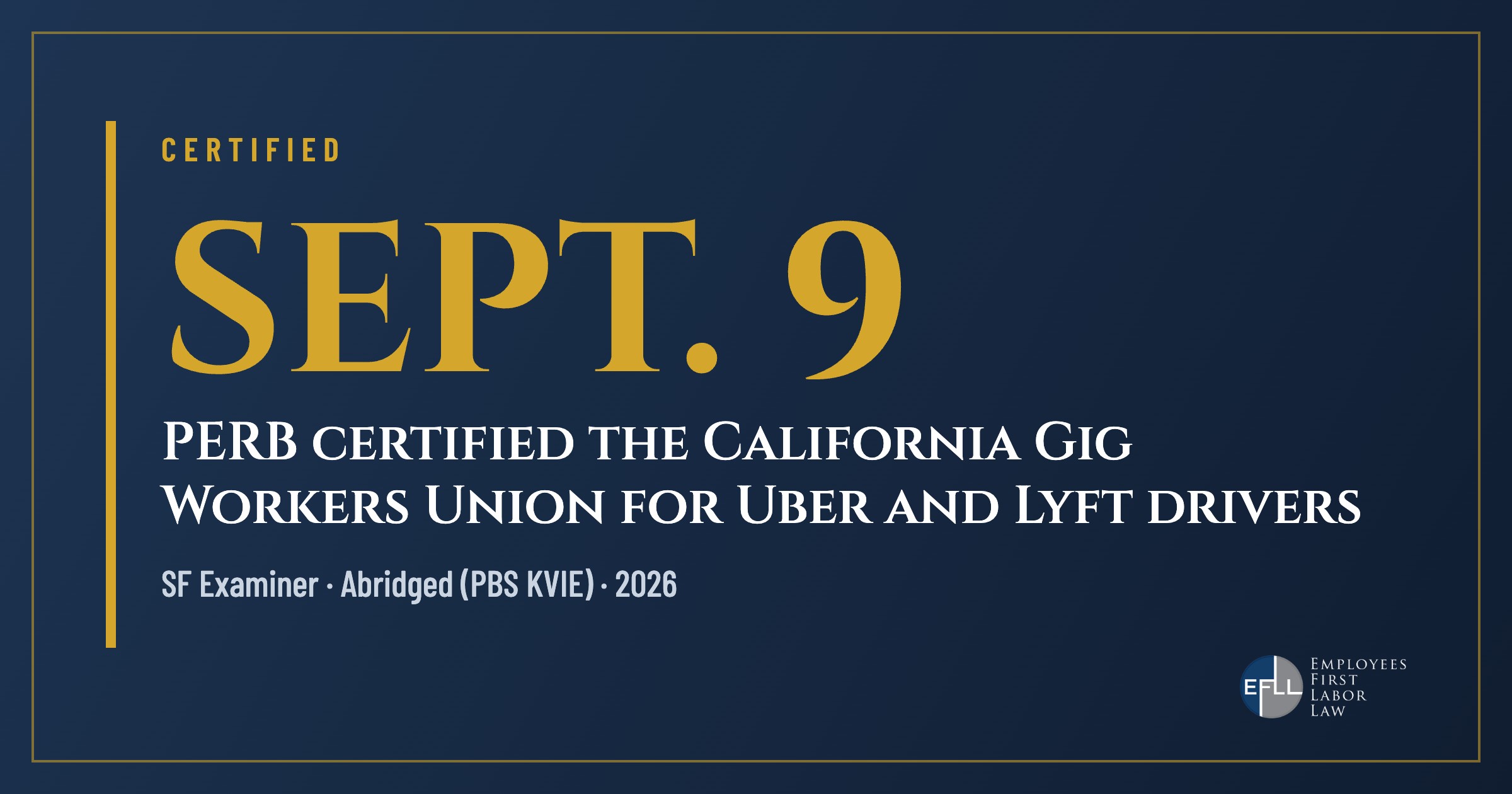
California’s Public Employment Relations Board (PERB) certified the California Gig Workers Union on Sept. 9, 2026, as the bargaining representative for Uber and Lyft drivers statewide, and organizers now plan to survey drivers on what to demand in a first contract. In reporting published Sept. 28, Abridged, the Sacramento news service of PBS KVIE, laid out what drivers want at the table: better pay per trip, a fair process before an account is deactivated, and a real person to talk to when something goes wrong.
If you drive for Uber or Lyft in California, this is the first time a union has the legal right to negotiate your pay and working conditions with both companies at the same table. You are still an independent contractor, and nothing about your pay has changed yet. But the talks that follow could shape what you earn per trip and how you can fight a deactivation for years to come.
Below: what happened, how bargaining works under Assembly Bill 1340, the rights you already have under Proposition 22, and what to do now.
- PERB certified the California Gig Workers Union on Sept. 9, 2026, as the bargaining representative for Uber and Lyft drivers statewide.
- The union will bargain with Uber and Lyft together and plans a statewide driver survey first; organizers expect talks to begin by the end of 2026.
- Nothing changes in your pay yet, and you remain an independent contractor under Prop 22.
- Prop 22 already guarantees at least 120% of the applicable minimum wage for engaged time plus a per-mile payment.
- Save your earnings statements, fare screenshots and any deactivation notices now.
What happened
Gov. Gavin Newsom signed AB 1340 (Wicks, Berman) on Oct. 3, 2025, and it took effect Jan. 1, 2026. It adds the Transportation Network Company Drivers Labor Relations Act to the Business and Professions Code, starting at section 7470. The law grew out of a deal among Uber, Lyft, SEIU California, legislative leaders and the governor, and a companion bill, SB 371, lowered the underinsured-motorist coverage the companies must carry, according to KQED and CapRadio. AB 1340 lets app-based rideshare drivers who are classified as independent contractors choose a union and bargain as a group, with PERB, the state labor board, running the process.
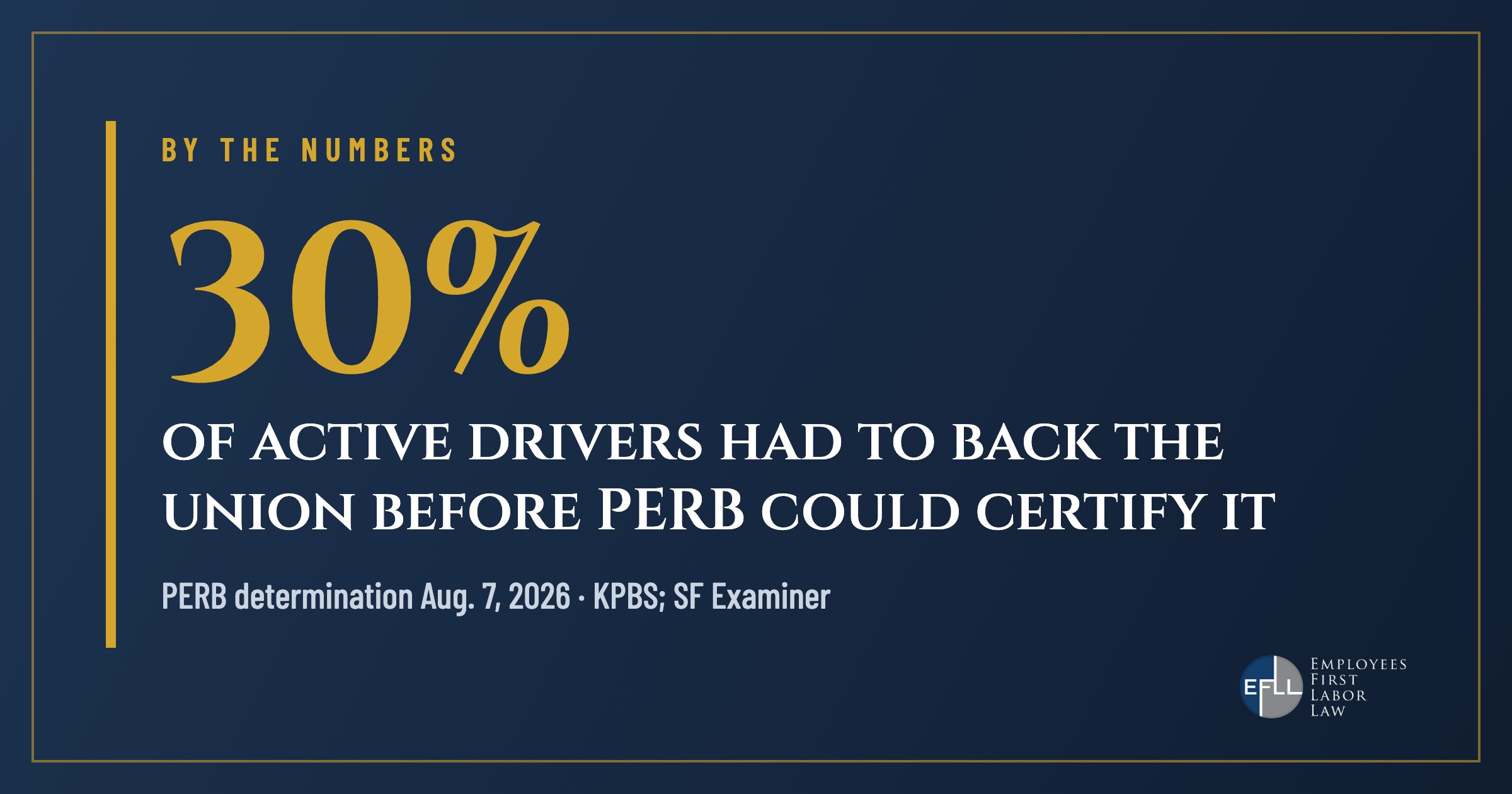
The California Gig Workers Union (CGWU), which is backed by the Service Employees International Union, filed its petition with PERB in May, KQED reported. On Aug. 7, PERB found the union had the support of at least 30% of active drivers, according to KPBS. That opened a 30-day window in which a group of at least 30% of active drivers could have opposed the union and demanded a vote. The San Francisco Examiner reported that no such group came forward, and PERB certified the union on Sept. 9.
The union can bargain on a sectoral basis, meaning one negotiation with Uber and Lyft together covering drivers who work for either app or both, the Examiner reported. Estimates of how many drivers that covers vary widely: the Examiner cited 100,307 “active” drivers under PERB’s definition and an SEIU estimate of 300,000 to 350,000 drivers in total, while earlier coverage of the law used a figure of about 800,000. Uber called certification the next step in carrying out AB 1340, and Lyft said it would negotiate in good faith, according to the Examiner and KPBS.
Before talks begin, the union plans a statewide driver survey, meetings to collect grievances, and negotiator training, the Examiner reported. A San Francisco driver working with SEIU told the paper he expects bargaining to start by the end of the year, with pay and a better deactivation appeals process near the top of the list. In the Abridged report, one Sacramento Lyft driver said a Sacramento-to-Berkeley trip that once paid him about $80 now pays about $40. Drivers also raised card-withdrawal fees and the lack of a live person on the help line.
Not every driver group is on board. Rideshare Drivers United, a separate grassroots group, said in an Aug. 10 statement that the law’s process disadvantages driver-led unions, and the cofounder of a San Diego driver group told KPBS his members’ views were mixed and raised concerns about dues. CGWU has said it will not collect dues until a contract is ratified. One Los Angeles driver and organizer described her schedule to KPBS: “I was working more than 12-hour days, six to seven days a week.”
| Date | Milestone |
|---|---|
| Oct. 3, 2025 | Gov. Newsom signs AB 1340 |
| Jan. 1, 2026 | AB 1340 takes effect |
| May 2026 | CGWU files its petition with PERB |
| Aug. 7, 2026 | PERB finds the union has support from at least 30% of active drivers |
| Sept. 9, 2026 | PERB certifies CGWU as the drivers’ bargaining representative |
| Sept. 28, 2026 | Drivers outline priorities; union plans a statewide survey before bargaining |
| By end of 2026 | Organizers expect first-contract talks with Uber and Lyft to begin |
Video: CBS 8 San Diego, Aug. 2026 — “California Uber and Lyft drivers win union recognition.”
What this means for California workers
Your pay does not change yet. Certification gives the union a seat at the table. It does not set any new rate. AB 1340 requires the parties to bargain in good faith, but, as Capital & Main has noted, it does not force either side to agree to a contract.
The law has a built-in path if talks stall. According to the San Francisco Examiner’s summary of AB 1340, the steps look like this:
| Stage | Time allowed |
|---|---|
| Negotiation before either side can ask PERB for a mediator | 210 days |
| Agreeing on a mediator | Up to 22 days |
| Mediation | Up to 75 days |
| Arbitrator’s recommended settlement (if requested) | Up to 105 days |
| Window before the union can ask PERB to approve the settlement | 20 days |
| PERB general counsel review and recommendation | Up to 60 days |
| Board decision to approve or reject | Up to 21 days |
Added together, a contested process could run well over a year from the first bargaining session. A voluntary deal could come sooner.
You stay an independent contractor. None of the 2025 legislation reclassifies drivers as employees. Your status is still governed by Proposition 22, so wage-and-hour rules such as overtime and meal breaks still do not apply to app work that meets Prop 22’s conditions.
Delivery drivers are not covered. AB 1340 applies to rideshare drivers, not food or grocery delivery workers, KQED reported. If you do both, the bargaining covers your rideshare driving, not your delivery work.
Your rights as a rideshare driver in California
- Prop 22 earnings floor. Prop 22 (Business and Professions Code section 7448 and following) lets qualifying app companies treat drivers as contractors, but it requires an earnings guarantee of at least 120% of the applicable minimum wage for “engaged time,” plus a per-mile payment for engaged miles (section 7453). The California Supreme Court upheld Prop 22 in 2024. Engaged time generally runs from accepting a request to completing it, so waiting between rides is not counted.
- Prop 22’s conditions matter. Contractor status under Prop 22 depends on the company meeting conditions such as not requiring set hours or minimum acceptance rates and letting you work for other apps (section 7451). Work outside those conditions may fall under California’s ABC test. Our guide to independent contractor misclassification and the ABC test explains how that test works.
- Older claims are separate. Claims for work before Prop 22 took effect at the end of 2020 follow different rules, which is why the recent Lyft $272.5 million driver settlement covered 2016 through 2020.
- Union rights under AB 1340. PERB enforces the law, oversees elections and decides unfair practice charges. If a company refuses to bargain in good faith, the remedy is an unfair practice charge filed with PERB, which can take time to resolve.
- Injuries on the app. Instead of workers’ compensation, Prop 22 requires occupational accident insurance for injuries while you are online (section 7455). If you were hurt on the road, see our guide on car accidents while driving for work, and read our coverage of the $40 million Uber arbitration award for how rideshare liability works.
- If you also have a regular job. As an employee in your other job, you are protected from punishment for organizing or complaining about pay. Our page on retaliation claims in California covers those protections.
Your rights under Prop 22 don’t wait for a union contract. Talk to our team in a free, confidential consultation.
What to do now
- Answer the union’s driver survey. It will help set the bargaining agenda. If pay, deactivations or fees matter to you, say so in specifics.
- Save your weekly earnings statements. Download the summaries that show engaged time, engaged miles and any Prop 22 “adjustment” payments.
- Screenshot fares and payouts. When a rider’s receipt and your payout look far apart, keep both.
- Keep every deactivation notice. Save emails, in-app messages and your appeal. Deadlines in the app’s appeal process can be short.
- Report injuries right away. Notify the company and file under its occupational accident policy promptly, and get medical care.
- Get advice if you think you are owed money. If an app controls your hours or you worked before 2021, you may have claims that have nothing to do with the union. A free consultation can sort that out.
Frequently asked questions
Does the union make me an Uber or Lyft employee?
No. AB 1340 lets drivers bargain while remaining independent contractors. Your classification is still governed by Prop 22.
Do I have to pay union dues now?
CGWU has said it will not collect dues until drivers ratify a contract, according to KPBS.
Does this cover DoorDash, Instacart or Uber Eats?
No. AB 1340 covers rideshare drivers who transport passengers. Delivery work is not part of this bargaining unit, though Prop 22’s earnings guarantee generally applies to app-based delivery too.
When could my pay actually change?
Only after a contract is reached, either by agreement or through the law’s mediation, arbitration and PERB approval steps. Organizers expect talks to begin by the end of 2026, so any change is likely well into 2027 or later.
Can I be deactivated for supporting the union?
PERB decides unfair practice charges under AB 1340, and a deactivation you believe was tied to union support is the kind of complaint that may be raised there. Keep records of any deactivation that follows union activity and get advice quickly.
Sources
- Abridged (PBS KVIE): California’s Lyft and Uber drivers union is official. What changes do drivers want? (Sept. 28, 2026)
- San Francisco Examiner: Uber, Lyft drivers’ union now official (Sept. 9, 2026)
- KPBS: California Uber, Lyft drivers set to form union, not all San Diego rideshare workers on board (Aug. 11, 2026)
- KQED: California Uber, Lyft drivers take step toward bargaining table (May 13, 2026)
- Capital & Main (via Portside): After years-long battle, California rideshare drivers win certification. Can they win a contract?
- Office of the Governor: Law signed by Governor Newsom helps pave the way for the world’s largest union of rideshare drivers (Aug. 17, 2026)
- CDF Labor Law: New California law allows for unionization of certain gig independent contractors
Related guides
 Workers only. Never employers.
At Employees First Labor Law, we represent California workers only, never employers. Our team has recovered more than $200 million for our clients, and we prepare every case as if it is going to trial. We have offices in Pasadena, Irvine, Long Beach, Pomona, Riverside, Bakersfield and Fresno, and we serve workers throughout California. Meet our team.







If you drive for a rideshare or delivery app and your pay, a deactivation or an on-the-job injury doesn’t add up, we can review your records and explain your options. Consultations are free and confidential.
- ✅ Free, confidential consultation
- ✅ We represent workers only, never employers
- ✅ Se habla español: Empleados Primero
This article provides general information about California law and is not legal advice for any specific situation. Reading it does not create an attorney-client relationship. Past results do not guarantee a similar outcome.


