

Updated October 7, 2026 · 7 min read
On September 30, 2026, Governor Gavin Newsom vetoed Assembly Bill 1940, which would have written perimenopause, menopause, postmenopause and related medical conditions into the definition of “sex” in California’s Fair Employment and Housing Act (FEHA). The bill had cleared the Senate 30–1 and the Assembly 65–9 before it reached his desk.
The veto means California will not add an express menopause category to its civil rights law in 2027. It does not mean workers going through menopause are unprotected. According to news reports of his veto message, Newsom said these conditions are already covered by existing civil rights law, and FEHA’s rules on disability, sex, age, harassment and retaliation still apply to anyone whose employer treats them unfairly because of menopause symptoms.
This post explains what AB 1940 would have done, why it was vetoed, the related sex-discrimination bill Newsom did sign, and how current California law protects you at work today.
- Governor Newsom vetoed AB 1940 on Sept. 30, 2026. It would have added perimenopause, menopause and postmenopause to FEHA’s definition of sex.
- The bill had passed the Senate 30–1 and the Assembly 65–9; according to news reports, Newsom said it would raise litigation risk without meaningfully adding protection.
- He signed AB 2563, which standardizes the definition of sex discrimination, including gender-stereotype bias, effective Jan. 1, 2027.
- Menopause-related mistreatment can still violate FEHA as disability, sex or age discrimination, harassment, or retaliation.
- Ask for accommodations in writing, document what happens, and keep the three-year CRD filing deadline in mind.
What happened
AB 1940 was introduced on February 13, 2026, by Assemblymember Lisa Calderon (D-Whittier) with a bipartisan list of coauthors. According to the enrolled bill text, it would have added perimenopause, menopause, postmenopause and related medical conditions to the list of conditions that FEHA treats as part of “sex” (Government Code section 12926). That list already includes pregnancy, childbirth and breastfeeding. The bill also would have carried the change into the Unruh Civil Rights Act and required the Civil Rights Department (CRD) to update its workplace discrimination poster by July 1, 2027.
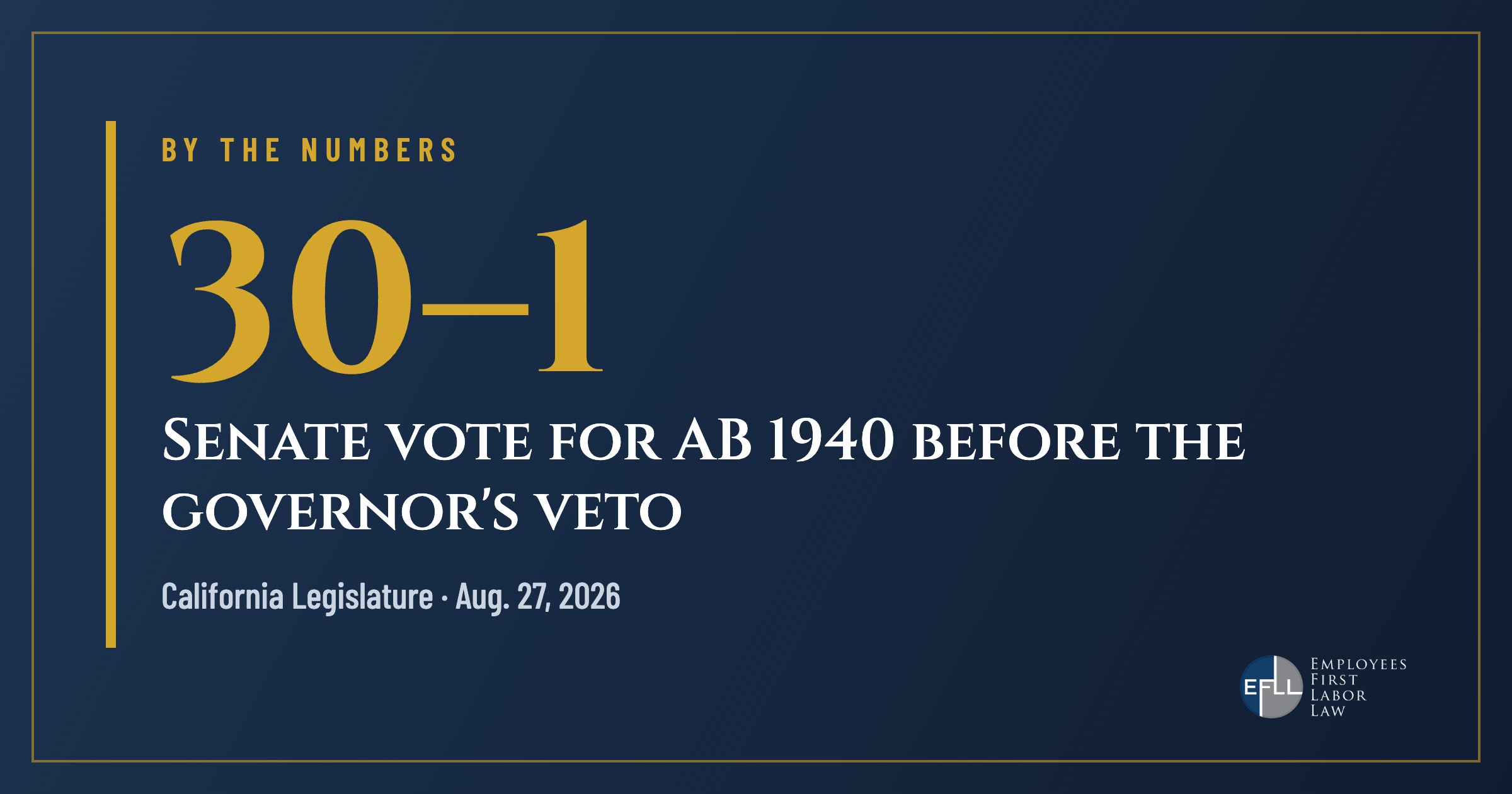
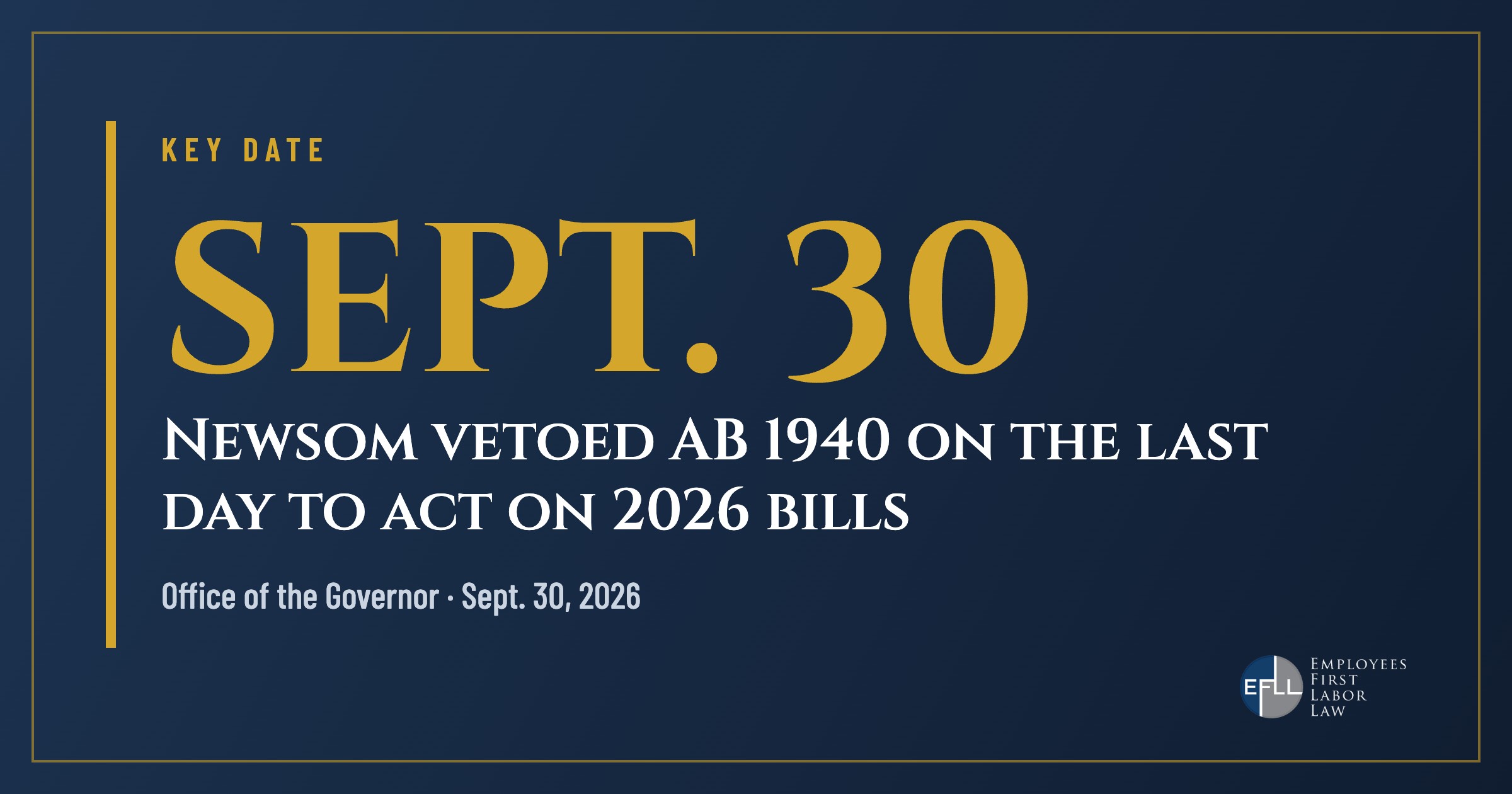
The bill passed the Assembly in May, passed the Senate 30–1 on August 27, and won final Assembly approval 65–9 on August 28, according to the Legislature’s records. It was presented to the governor on September 8 and vetoed on September 30, the last day he could act on bills from the session. The governor’s office listed the veto in its September 30 legislative update.
Bloomberg Law reported on October 1 that Newsom said he supported the goal of protecting workers from menopause-related bias but feared the bill would substantially increase litigation risk without meaningfully increasing protections. According to that report, he also said the conditions in the bill are already covered by state civil rights law. Law360 likewise reported that the governor viewed the change as redundant and likely to invite unnecessary litigation.
On the same day, Newsom signed AB 2563 by Assemblymember Blanca Pacheco (D-Downey). According to the governor’s office and employer-side law firm summaries, AB 2563 creates a uniform definition of sex discrimination across California codes and makes clear that it includes discrimination for not conforming to sex or gender stereotypes. It takes effect January 1, 2027. AB 1940 contained language designed to fold menopause into that new definition if both bills became law; because AB 1940 was vetoed, that language never takes effect.
| Key fact | Details |
|---|---|
| Bill | AB 1940 (Calderon), “Unlawful practices: discrimination: menopause” |
| Introduced | February 13, 2026 |
| Final votes | Senate 30–1 (Aug. 27, 2026); Assembly concurrence 65–9 (Aug. 28, 2026) |
| Sent to governor | September 8, 2026 |
| Outcome | Vetoed September 30, 2026; it does not become law |
| Companion bill | AB 2563 (Pacheco), sex discrimination scope: signed Sept. 30, 2026; effective Jan. 1, 2027 |
| What still protects you | FEHA disability, sex, age, harassment and retaliation rules (Gov. Code 12940) |
What this means for California workers
Menopause usually arrives in a person’s 40s or 50s, often at the peak of a career, and symptoms such as hot flashes, sleep disruption, migraines, heavy bleeding, anxiety and brain fog can affect work for years. Supporters of AB 1940 wanted a clear, named protection so workers would not have to fit their experience into another legal box.
With the veto, that box-fitting is still how these cases work. A worker who is mocked, passed over, written up or let go because of menopause symptoms generally has to frame the claim under an existing FEHA category: sex discrimination or harassment, disability discrimination and failure to accommodate, age discrimination, or retaliation. That can be done, and California’s definitions are broader than federal law, but the facts and the paper trail matter more.
The new AB 2563 helps at the margins. Starting January 1, 2027, the statute will state plainly that treating someone worse for not fitting stereotypes about their sex is sex discrimination. Comments that an older woman is “too emotional,” “past her prime” or “not the same since the change” can be evidence of both sex and age bias.
Nothing about the veto changes the deadlines or remedies for FEHA claims, which include lost wages, emotional distress damages, and in many cases attorney’s fees. The legislature could also take up the issue again in a future session under a new governor.
How current California law protects you
Disability and accommodation. FEHA protects workers with a physical or mental disability, and California’s definition is broader than the federal ADA: a condition only has to limit a major life activity, not substantially limit it (Gov. Code 12926 and 12926.1). Severe menopause symptoms, or conditions linked to menopause such as migraines, anxiety or depression, may qualify. If they do, an employer with five or more employees must provide reasonable accommodation, such as a fan, a cooler workstation, flexible breaks, a modified schedule or remote work where feasible, and must engage in a timely, good-faith interactive process (Gov. Code 12940(m) and (n)). Learn more about reasonable accommodation and the interactive process and disability discrimination.
Sex and age discrimination. FEHA bars employment decisions based on sex, gender and age (40 and older) (Gov. Code 12940(a)). Menopause-related jokes, assumptions about stamina or reliability, or replacing a woman in her 50s with a younger worker can support a claim, especially when combined. See our overview of workplace discrimination.
Harassment. Repeated or severe comments about a worker’s body, hormones or “the change” can be sex-based harassment. FEHA’s harassment rules cover employers of any size (Gov. Code 12940(j)).
Leave. If symptoms rise to a serious health condition that requires treatment or time off, you may be entitled to up to 12 weeks of job-protected leave under the California Family Rights Act at employers with five or more employees (Gov. Code 12945.2), plus paid sick leave of at least 40 hours or five days a year (Labor Code 246).
Retaliation. Asking for an accommodation, taking protected leave or complaining about discrimination is protected activity. Your employer may not punish you for it (Gov. Code 12940(h) and (m)(2)). If that happened to you, read fired after complaining to HR.
💡 Example: Dana, 52, asks her manager for a desk fan and permission to step away briefly during hot flashes. Her manager refuses, comments that she is “not keeping up anymore,” and moves her biggest accounts to a younger colleague. AB 1940 would not have been needed to challenge this. Under current law, Dana may have claims for failure to accommodate, failure to engage in the interactive process, and sex and age discrimination.
California law may still protect you through its disability, sex and age discrimination rules. Talk to our team in a free, confidential consultation.
What to do now
- Talk to your doctor and get documentation. A short note describing your limitations and what would help (not your full medical history) gives your request weight.
- Ask for accommodation in writing. Email HR or your manager, say what you need and why, and keep a copy. A written request starts the interactive process.
- Write down comments and changes. Note dates, exact words, witnesses, and any change in duties, pay, schedule or reviews after you raised your health needs.
- Keep your records. Save performance reviews, emails, texts and pay stubs somewhere personal, not only on a work device.
- Watch the deadline. You generally have three years from the discriminatory act to file a complaint with the CRD, then one year after a right-to-sue notice to file in court. See how to file a CRD complaint and get a right-to-sue notice.
- Get advice before you resign or sign anything. A severance agreement may waive these claims. An employment lawyer can review it first.
Frequently asked questions
Is menopause discrimination illegal in California after the veto?
Treating a worker badly because of menopause can still be illegal, but there is no menopause category by name. The claim usually rests on FEHA’s protections for sex, disability, age, harassment or retaliation, depending on the facts.
Does AB 1940 take effect at all?
No. A vetoed bill does not become law unless the Legislature overrides the veto by a two-thirds vote in each house, which is rare in California. The menopause language that was tied to AB 2563 also does not take effect.
What did Newsom sign instead?
He signed AB 2563, which standardizes the definition of sex discrimination across state law and makes clear it includes discrimination for not conforming to sex or gender stereotypes. It takes effect January 1, 2027.
Can I ask for accommodations for hot flashes or other symptoms?
Yes. If your symptoms limit a major life activity, they may count as a disability under FEHA’s broad definition, and your employer must consider reasonable accommodations and talk with you in good faith about options.
How long do I have to act?
For most FEHA claims, you have three years from the discriminatory act to file with the CRD. After you receive a right-to-sue notice, you generally have one year to file a lawsuit.
Sources
- Bloomberg Law: Newsom Vetoes Bill Banning Menopause-Related Employment Bias (Oct. 1, 2026)
- Law360: Calif. Gov. Vetoes Expanded Menopause Bias Protections (Oct. 1, 2026)
- Office of the Governor: Governor Newsom issues legislative update 9.30.2026
- Office of the Governor: AB 1940 veto message
- California Legislature (via LegiScan): AB 1940 enrolled bill text
- LegiScan: AB 1940 bill history and votes
- National Law Review (Ogletree Deakins): California Governor Signs Array of Employment Bills, Vetoes Menopause Protected Category Bill
- Jackson Lewis: California employment law changes for 2027 and beyond
Related guides
 Workers only. Never employers.
At Employees First Labor Law, we represent California workers only, never employers. Our team has recovered more than $200 million for our clients, and we prepare every case as if it is going to trial. We have offices in Pasadena, Irvine, Long Beach, Pomona, Riverside, Bakersfield and Fresno, and we serve workers throughout California. Meet our team.




If your employer refused a reasonable accommodation, mocked your symptoms, or pushed you out after you raised health needs, you may have a FEHA claim for lost pay and emotional distress. Our attorneys represent California workers only, and your consultation is free.
- ✅ Free, confidential consultation
- ✅ We represent workers only, never employers
- ✅ Se habla español: Empleados Primero
This article provides general information about California law and is not legal advice for any specific situation. Reading it does not create an attorney-client relationship. Past results do not guarantee a similar outcome.


