
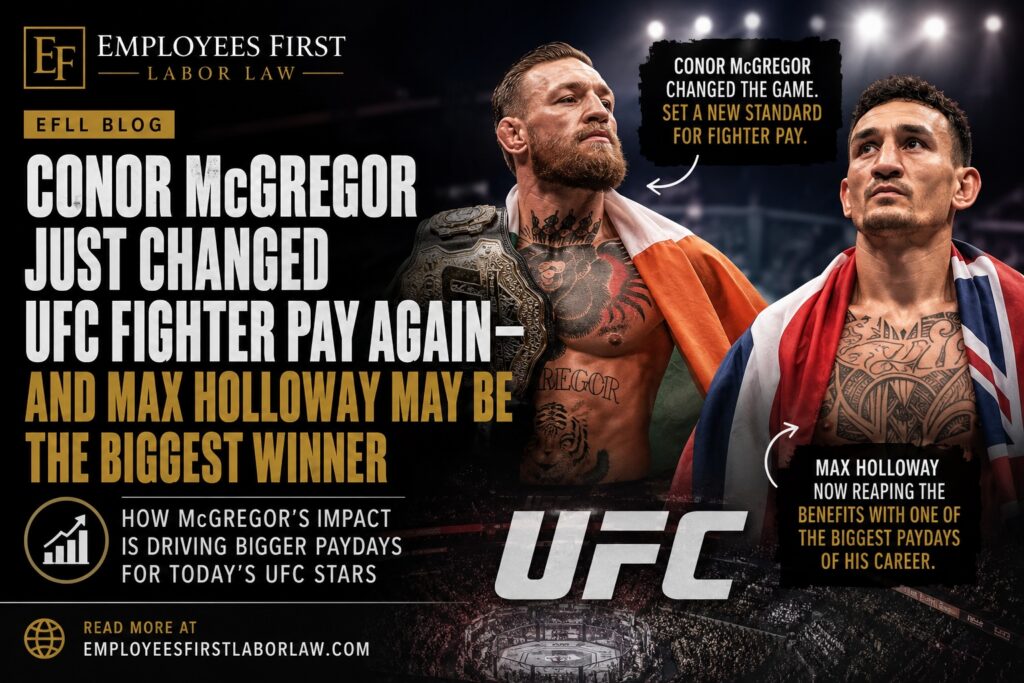
For years, UFC fighters have argued that they deserve a larger share of the revenue they generate. Despite the UFC becoming a multi-billion-dollar enterprise, fighter compensation has remained one of the most controversial issues in professional sports.
Then came Conor McGregor.
Love him or hate him, McGregor fundamentally changed what elite UFC fighters can earn.
A New Standard for Superstar Pay
When Conor McGregor entered the UFC, fighter purses looked dramatically different. While championship fighters earned respectable money, very few athletes were making life-changing paydays.
McGregor changed that by becoming more than just a fighter—he became a global attraction.
His pay reportedly climbed from a few million dollars per event to well over $20 million when pay-per-view points, sponsorships, and bonuses were included for his biggest fights. His trilogy with Dustin Poirier generated some of the highest-selling UFC pay-per-views in history, creating enormous revenue for the promotion.
More importantly, McGregor proved something that every fighter now benefits from:
Elite UFC stars have significant negotiating leverage when they become must-see attractions.
Max Holloway Is Now Benefiting
Fast forward to today.
Max Holloway has quietly become one of the UFC’s most valuable athletes.
Following years of championship success, unforgettable performances, and his iconic “BMF” fights, Holloway has developed into one of the promotion’s biggest draws.
Reports surrounding his recent headline event indicate Holloway earned one of the largest purses of his career, reflecting just how valuable established stars have become in today’s UFC.
That kind of payday simply wasn’t common before McGregor reset expectations.
The Ripple Effect
McGregor’s influence extends well beyond his own bank account.
Today, fighters such as:
- Max Holloway
- Dustin Poirier
- Israel Adesanya
- Sean O’Malley
- Alex Pereira
have all been able to negotiate substantially larger compensation packages than comparable stars from previous generations.
When a promoter realizes that certain athletes can drive millions of pay-per-view purchases, sponsorship dollars, ticket sales, and media attention, their value changes dramatically.
That’s basic economics.
Fighter Pay Still Faces Criticism
Despite these improvements for elite stars, most UFC athletes still earn a relatively small percentage of the promotion’s overall revenue compared to athletes in leagues such as the NFL, NBA, MLB, or NHL.
Numerous analysts have estimated that UFC fighters collectively receive a significantly smaller share of league revenues than players in the major North American sports leagues, where collectively bargained agreements often allocate roughly half of league revenue to athletes.
Only a handful of fighters command the kind of leverage necessary to negotiate exceptional compensation.
Why This Matters
At Employees First Labor Law, we spend every day advocating for workers to receive fair compensation for the value they create.
Whether you’re an employee, executive, or professional athlete, the principle is the same:
When your work creates enormous value, you deserve to be fairly compensated.
Conor McGregor demonstrated what can happen when a worker possesses extraordinary leverage and isn’t afraid to use it.
Max Holloway—and many of today’s UFC superstars—are now enjoying the financial benefits of the path McGregor helped forge.
The conversation surrounding UFC fighter pay is far from over, but one thing is difficult to dispute:
Conor McGregor didn’t just change the sport. He changed the economics of fighting.
Get Help From EMPLOYEES FIRST LABOR LAW