
Worked for All About Parking? You May Be Owed Wages & Tips.
All About Parking is one of the largest parking operators in California, running valet stands, garages, and lots at hotels, restaurants, hospitals, airports, and event venues across the state. Valets and parking attendants report withheld or pooled-away tips, unpaid time before and after shifts, missed meal and rest breaks, illegal paycheck deductions, and unpaid overtime. California law protects you & strict deadlines apply.
 100% Free
consultation
100% Free
consultation Exclusively for workers
 100% confidential
 Se habla
español
Se habla
español
Common Wage Violations Reported by Valets & Parking Attendants
Valet work creates its own wage and hour problems: you handle cash and tips, you’re often the only person on the stand, you’re on your feet (or running) all shift, and your day is stretched by setup, close-out, and split shifts. If any of the following sound familiar, you may have a claim for unpaid wages and penalties
- Tip Theft & Tip Pooling Violations
- Illegal Paycheck Deductions
- Off-the-Clock Work
- Meal & Rest Break Violations
- Unpaid Overtime, Split Shifts & Reporting Time
- Other Wage Violations
Request A Free Consultation:
Get A Free, Confidential Case Review
Tell us briefly what happened. A member of our team will follow up.

Tip Theft & Tip Pooling Violations
Under California Labor Code § 351, tips are your property — not the company’s. Common violations:
- The company keeps some or all of the tips or "service charges" customers pay for valet service
- Managers or supervisors take a cut of the tip pool
- Tips shared with employees who don't serve the customer
- Credit-card tips paid late, or reduced by card processing fees — both illegal
- Tips counted toward your minimum wage — not allowed in California
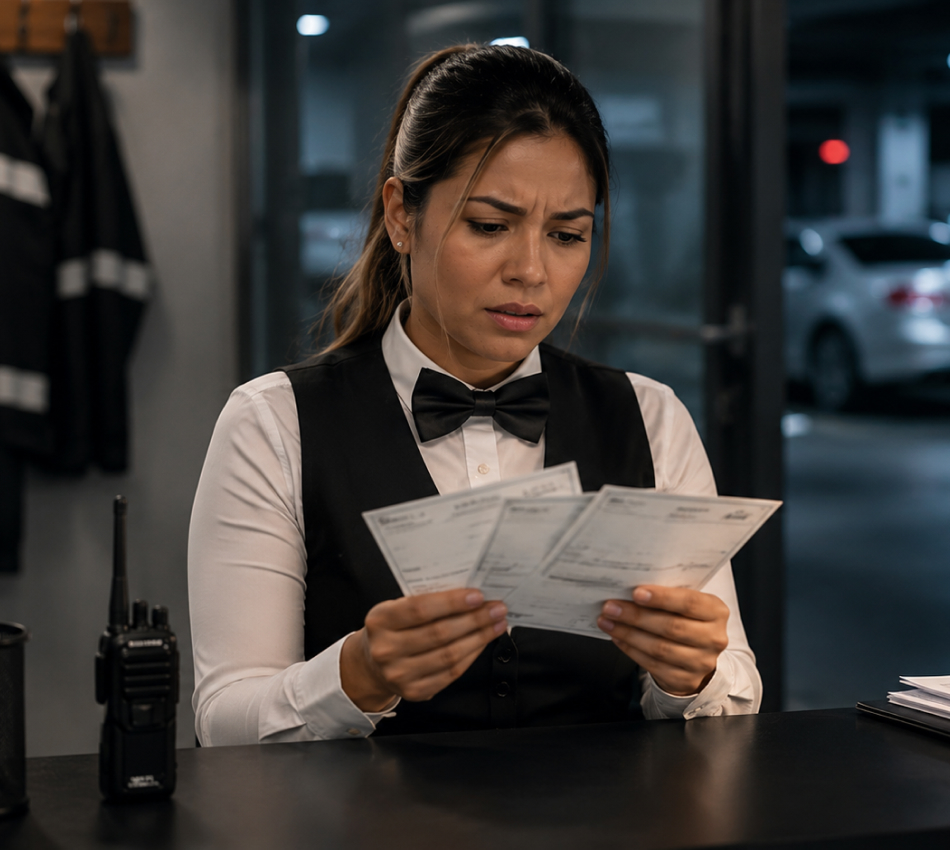
Illegal Paycheck Deductions
- Charged for cash drawer or ticket shortages at the end of your shift
- Made to pay for vehicle damage, lost keys, or lost tickets out of your wages or tips — ordinary mistakes are the employer's cost of doing business, not yours
- Deductions for uniforms, name tags, or equipment

Off-the-Clock Work
California requires pay for all hours worked. Common examples for valets:
- Setting up the stand before clocking in — cones, signs, podium, key box
- Counting the bank, reconciling tickets and cash after clocking out
- Staging or retrieving cars before your shift officially starts
- Walking between remote lots, garages, and the stand off the clock
- Staying late to close out because your relief is late — or never comes
- Time-clock rounding that shaves minutes off every shift

Meal & Rest Break Violations
- Unable to be relieved: you're the only valet on the stand, so you never get a real, duty-free 30-minute meal break
- "Breaks" interrupted every time a car pulls up or a guest needs their keys
- Pressured to sign an "on-duty meal agreement" that may not be valid for your location
- No paid, duty-free 10-minute rest break for every 4 hours worked
- No extra hour of premium pay when a break is missed, short, late, or interrupted

Unpaid Overtime, Split Shifts & Reporting Time
- No overtime (1.5x) for hours over 8 in a day or 40 in a week; no double time over 12 hours
- Split shifts: working the lunch rush, going home, and coming back for dinner or an event may entitle you to an extra hour of pay (split-shift premium)
- Reporting time pay: sent home early because the event or venue was slow? You may be owed at least half your scheduled shift
- Hours split between locations or entities to avoid overtime

Other Wage Violations
- Unreimbursed expenses: uniforms and required dry cleaning, non-slip shoes, personal cell phone used for valet apps or texting guests, mileage between locations (Labor Code § 2802)
- Misclassified as an "independent contractor" when you're really an employee
- Inaccurate or incomplete wage statements (pay stubs) — including unreported cash tips
- Final paycheck paid late or missing wages and tips after you quit or are terminated — up to 30 days of "waiting time" penalties
Beyond Wages: Discrimination, Accommodation & Retaliation
Wage claims aren't the only rights parking employees have. California's Fair Employment and Housing Act (FEHA) and whistleblower laws provide powerful additional protections.

Failure to Accommodate a Disability (FEHA)
If you have a medical condition or injury, your employer must engage in a good-faith "interactive process" and provide reasonable accommodations — such as modified duties, a seated post, schedule changes, or medical leave. Officers are sometimes told "there's no light duty" and pushed out, denied a post they can perform, or terminated while on medical leave. That can be unlawful.

Whistleblower Retaliation
California Labor Code § 1102.5 protects you when you report — internally or to a government agency — what you reasonably believe is unlawful conduct: unsafe post conditions, understaffing that violates client contracts or safety rules, wage violations, harassment, or falsified reports. If you were disciplined, reassigned to a worse post, had hours cut, or were terminated after speaking up, you may have a retaliation claim.

Discrimination & Wrongful Termination
It is illegal to treat you worse because of race, national origin, sex, pregnancy, age (40+), disability, religion, sexual orientation, or other protected characteristics — in post assignments, hours, discipline, promotion, or termination.
See If All About Parking Owes You Unpaid Wages — and Tips
Free. Confidential. No obligation. No fee unless we recover.
What You May Be Able to Recover
Depending on the facts of your case, California law may entitle you to:
- Stolen or withheld tips and gratuities
- Repayment of illegal deductions for shortages, damage, or uniforms
- Unpaid wages for all off-the-clock hours
- Unpaid overtime and double time
- One hour of premium pay for each day a meal break was missed, short, late, or interrupted
- One hour of premium pay for each day a rest break was denied
- Split-shift premiums and reporting time pay
- Reimbursement of work expenses
- Waiting time penalties — up to 30 days of wages
- Wage statement penalties
- Interest and, in many cases, attorneys' fees
- Lost pay and emotional distress damages in FEHA and retaliation cases
- Civil penalties under PAGA on behalf of you and other valets
Deadlines matter. Wage claims are generally subject to a three-year statute of limitations (up to four years for some claims), and FEHA claims require a timely administrative complaint. The longer you wait, the more you may lose.
Why Employees First Labor Law?

Employees come first
Standing up for workers' rights is what we do — it's in our name.
No fee unless we recover
We take these cases on contingency. You owe nothing up front.
Free, confidential review
No obligation. Find out where you stand with zero risk.

Got A Question?
We’ve Answers.
How much does it cost to talk to you or hire you?
Nothing up front. The consultation is free, and we handle these cases on a contingency fee — we only get paid if we recover money for you.
The customer pays a "valet charge" or tips on a card. Is that money mine?
Tips left for you — cash or card — are your property under California law, and card tips must be paid in full, without deductions for processing fees, by the next regular payday. Mandatory “service charges” are treated differently than tips, but depending on how they’re advertised and distributed, employees may still have claims. Tell us how it worked at your location and we’ll sort it out.
I was charged for a shortage / a scratched car / a lost ticket. Is that legal?
Almost never. California employers generally cannot deduct business losses — shortages, breakage, vehicle damage, lost tickets — from your wages or tips unless they can prove dishonesty, willful misconduct, or gross negligence. Ordinary mistakes are the company’s cost of doing business.
Can All About Parking fire me for contacting a lawyer or making a claim?
Retaliation for asserting your wage rights, filing a complaint, or participating in an investigation is illegal under California law. If an employer retaliates, that creates an additional claim — with additional damages. We take retaliation extremely seriously and will act quickly to protect you.
I'm paid as an "independent contractor." Do I still have rights?
Very possibly. California’s strict ABC test means most valets and parking attendants are employees, no matter what the paperwork says. Misclassified workers can recover unpaid minimum wage, overtime, break premiums, and expenses.
Some of my tips were in cash and never reported. Can you still help?
Yes. Unreported cash tips don’t erase your rights. Your employer must keep time and pay records, and your own recollection, schedules, texts, and coworker statements all help establish what you’re owed.
I still work there. Should I wait until I leave?
No — waiting can cost you money, because each week that passes may push older violations past the legal deadline. Current employees bring these claims regularly, and the law protects you from retaliation. Everything you tell us is confidential.
How long will my case take?
It depends on the claims and whether the case resolves through negotiation or litigation. Some matters resolve in months; others take longer. We’ll give you a realistic assessment after reviewing your situation.

OFFICE LOCATIONS
Pasadena
1 S. Fair Oaks Ave., Suite 200, Pasadena, CA 91105
18100 Von Karman Ave, Suite 850, Irvine, CA 92612
One World Trade Center, 8th Floor, Long Beach, CA 90831
2655 N. Pine Street, Pomona, CA 91767
11801 Pierce St., Suite 200, Riverside, CA 92505
4900 California Ave B-210, Bakersfield, CA 93309
8050 N Palm Ave Suite 347, Fresno, CA 93711