

Wage & Hour · California
Wage & Hour Claim Calculator
Estimate unpaid overtime, missed breaks and penalties in three steps


Updated for 2026 California law
Find out what unpaid wages and penalties may be worth under California law. Answer a few questions about your job and what went wrong. The calculator shows each claim, how it was estimated and the law behind it. It is free and anonymous.
What the calculator estimates
| Claim | California rule | Law |
|---|---|---|
| Minimum wage | The unpaid difference plus an equal amount in liquidated damages | Labor Code 1194, 1194.2 |
| Overtime | 1.5 times your regular rate after 8 hours in a day or 40 in a week; double time after 12 hours | Labor Code 510 |
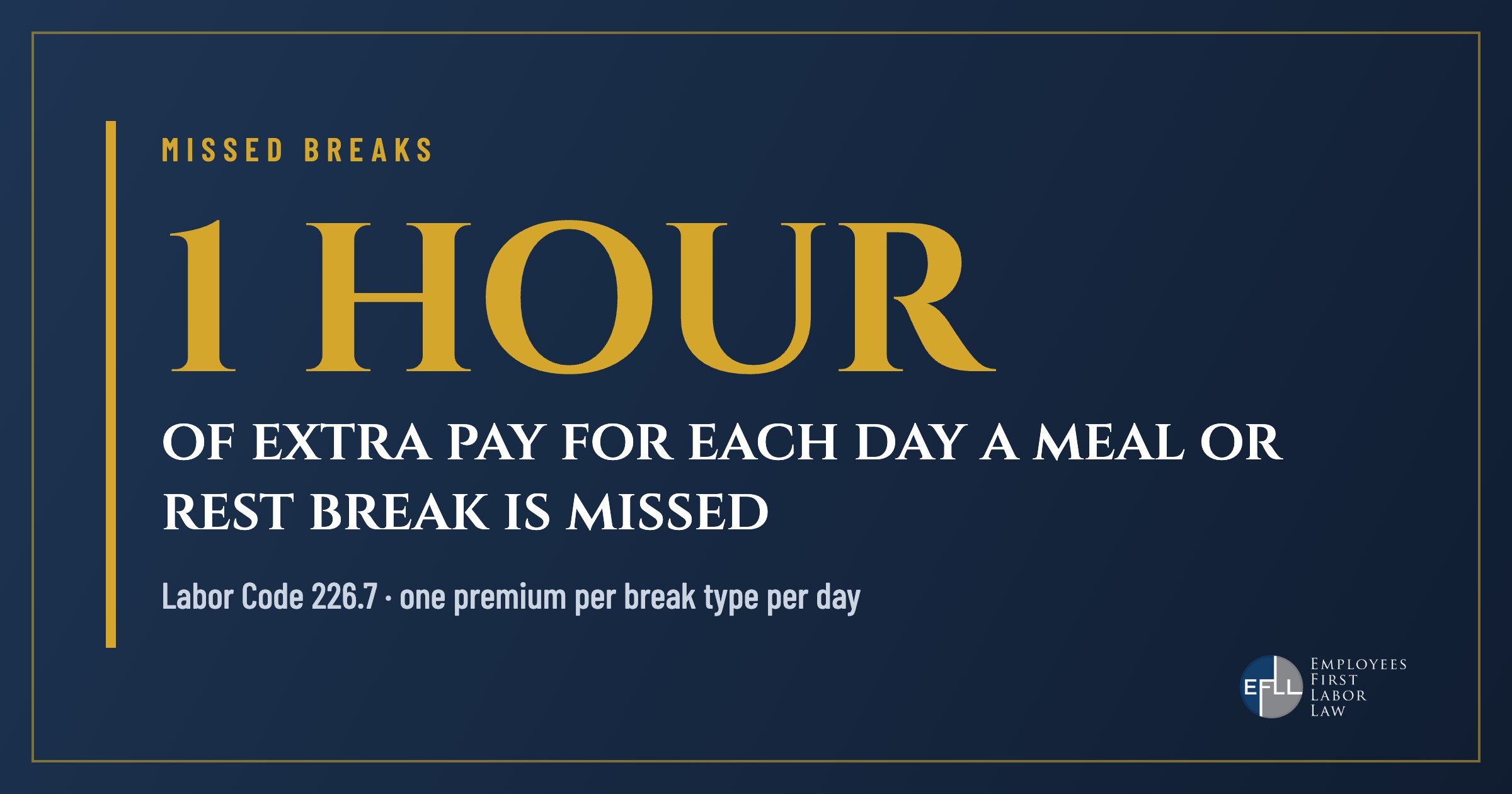
| Meal and rest breaks | One extra hour of pay for each day a meal break is missed, and one for each day a rest break is missed | Labor Code 226.7, 512 |
| Work expenses | Reimbursement for necessary costs such as mileage and a personal phone | Labor Code 2802 |
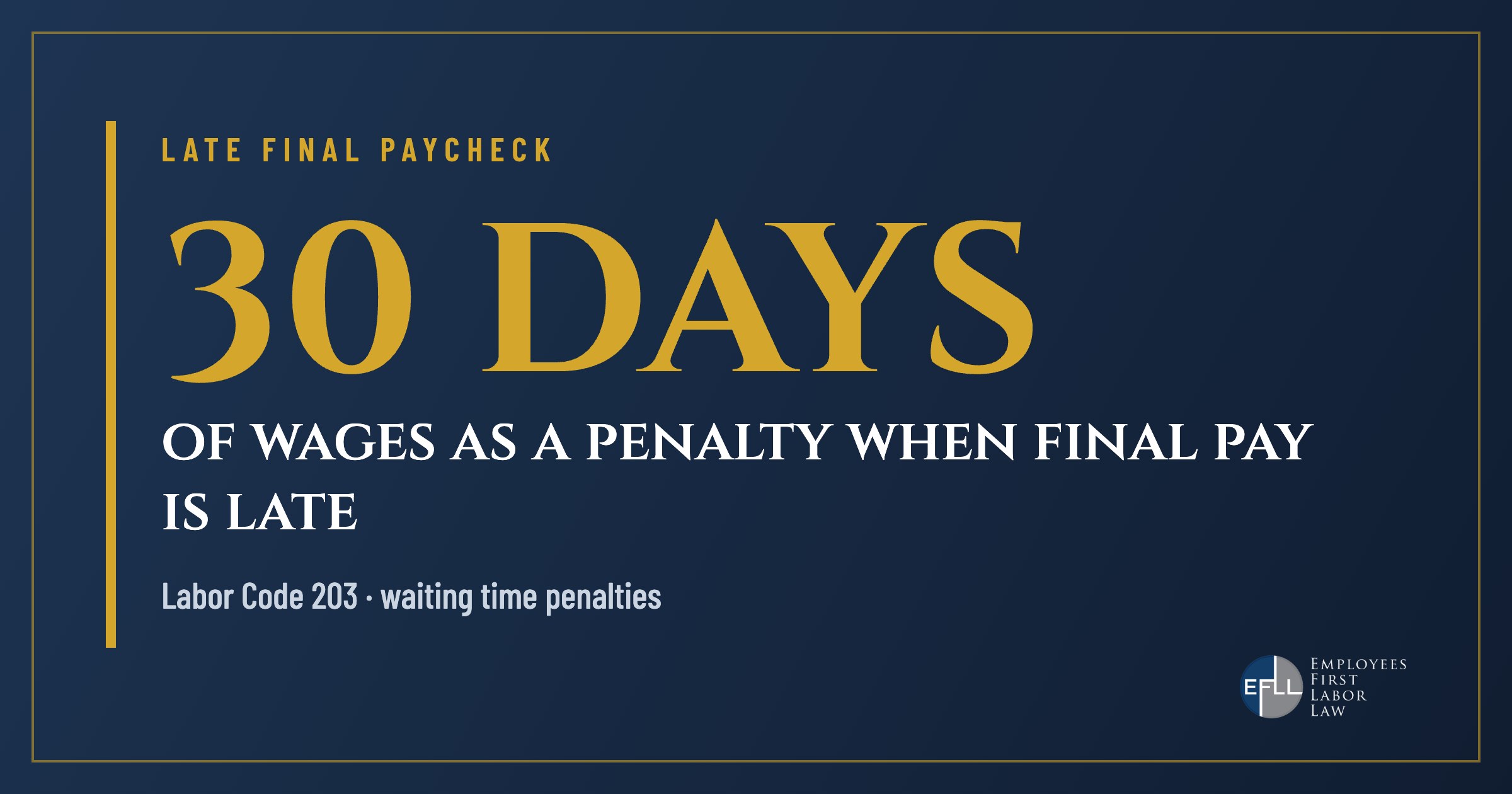
| Late final pay | A day’s wages for each day late, up to 30 days | Labor Code 203 |
| Pay stubs | $50 for the first bad pay period, $100 for each after, up to $4,000 | Labor Code 226(e) |
How far back you can recover
Most wage claims, including unpaid wages, overtime and break premiums, can generally go back three years (Code of Civil Procedure 338). Adding a claim under California’s Unfair Competition Law can extend recovery of unpaid wages to four years (Business and Professions Code 17208). Pay stub penalties are limited to one year.
Every day you wait, the oldest part of your claim can expire. If you think you are owed money, talk to a lawyer soon.
Records that help prove your claim
- Pay stubs and any W-2 forms
- Your own notes of hours worked, start and end times, and missed breaks
- Texts, emails or app messages sent outside your shift
- Mileage logs and phone bills for work use
- Your offer letter, handbook and any arbitration agreement
You also have the right to request copies of your payroll records and personnel file. See how to request your records.
Our wage and hour attorneys review pay stubs and time records for free. If you have a claim, there is no fee unless we recover money for you.
Common reasons workers are underpaid
Some of the most common problems we see are off-the-clock work before or after a shift, automatic meal deductions for breaks that never happened, unpaid overtime for workers wrongly treated as salaried or exempt, and missing reimbursements for mileage and phones. Many workers have more than one claim at the same time.
Frequently asked questions
Is the calculator result what I will receive?
No. It is an estimate based on your answers and today’s minimum wage. Your actual recovery depends on your records, your employer’s defenses and whether interest, attorney fees or PAGA penalties apply.
Do I need to still work there to make a claim?
No. Former employees can bring wage claims, and leaving the job can add waiting time penalties if your final pay was late or short.
Can my employer retaliate against me for asking about my pay?
No. California law prohibits retaliation for complaining about unpaid wages or filing a claim (Labor Code 98.6).
Should I file with the Labor Commissioner or hire a lawyer?
It depends on the size and type of claim. Read our comparison: Labor Commissioner wage claim vs. a lawyer.
Related guides
 Workers only. Never employers.
At Employees First Labor Law, we represent California workers only, never employers. Our team has recovered more than $200 million for workers, and we prepare every case as if it is going to trial. We have offices in Pasadena, Irvine, Long Beach, Pomona, Riverside, Bakersfield and Fresno, and we serve workers throughout California. Meet our team.




If your employer shorted your pay, skipped your breaks or paid you late, we can calculate exactly what you are owed and recover it for you.
- ✅ Free, confidential consultation
- ✅ No fee unless we win
- ✅ Se habla español: Empleados Primero
This page provides general information about California law and is not legal advice for any specific situation. Reading it does not create an attorney-client relationship. Past results do not guarantee a similar outcome.